Algeria
 Egypt
 Libya
 Morocco
 Sudan
 Tunisia
 Benin
 Burkina Faso
 Cabo Verde
 Côte d'Ivoire
 Ghana
 Guinea
 Guinea-Bissau
 Liberia
 Mali
 Mauritania
 Niger
 Nigeria
 Senegal
 Sierra Leone
 The Gambia
 Togo
 Cameroon
 Central African Republic
 Chad
 Equatorial Guinea
 Gabon
 Republic of the Congo
 São Tomé and Príncipe
 Burundi
 Comoros
 Djibouti
 Eritrea
 Ethiopia
 Kenya
 Madagascar
 Malawi
 Mauritius
 Mozambique
 Rwanda
 Seychelles
 Somalia
 South Sudan
 Tanzania
 Uganda
 Angola
 Botswana
 Eswatini
 Lesotho
 Namibia
 South Africa
 Zambia
 Zimbabwe
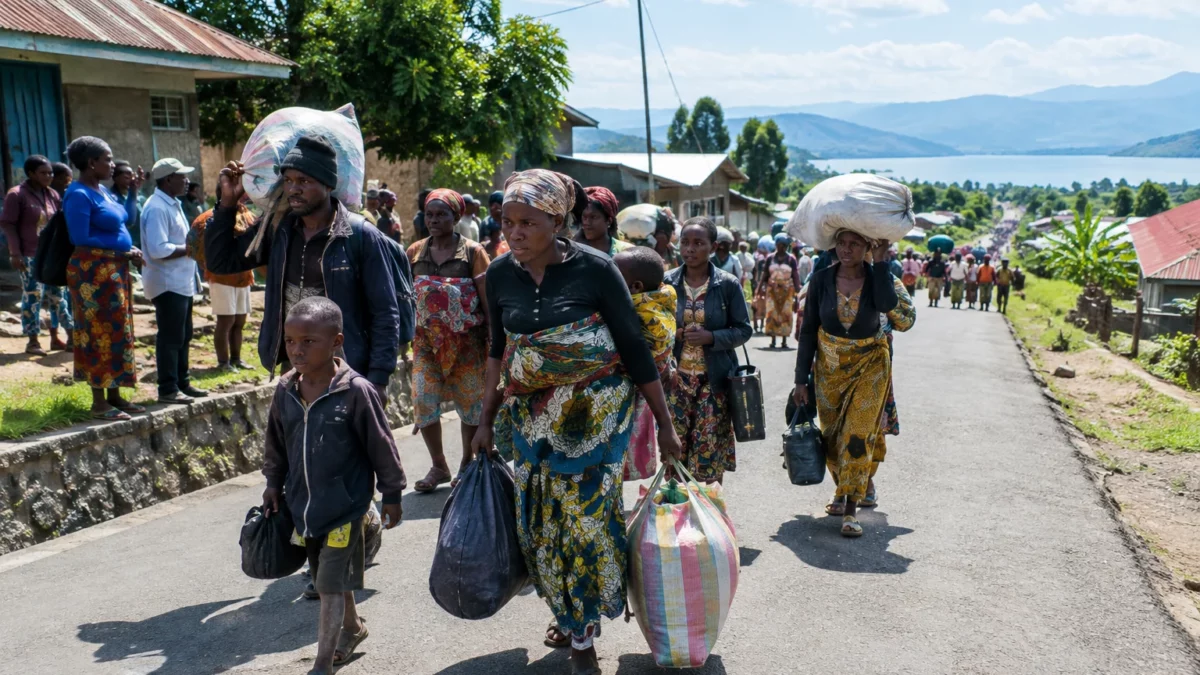
When front lines shift in eastern Democratic Republic of the Congo, families often have to leave before they even know where they can find shelter. In South Kivu, fighting around Kalehe and the movements of armed groups are putting pressure on residents, schools and basic services.
A local crisis in a regional conflict
South Kivu lies at the crossroads of several armed dynamics. The fighting involves the Armed Forces of the DRC (FARDC), so-called Wazalendo groups, which fight alongside the army, and the Front for the Refoundation of the Nation (FRN), a political-military coalition created in October 2026 and linked to former president Joseph Kabila. The movement says it succeeded the Congo River Alliance, which includes M23. The FRN claims this lineage in its own documents.
The conflict extends beyond provincial borders. The territories of Kalehe, Kabare, Uvira and Fizi have been affected by clashes or displacement. Fighting in the highlands and around Bunyakiri is part of a wider crisis, in which armed alliances and control positions are changing rapidly. The DRC belongs to both the East African Community and the Southern African Development Community, two regional organisations whose mediation and security efforts are directly affected by instability in the country’s east.
Population movements as fighting unfolds
In Kalehe, Congolese forces backed by the Wazalendo have carried out operations to retake localities where the FRN had advanced. Local media have reported clashes and residents leaving the area around Bunyakiri and neighbouring villages. On 11 November, the army said it had stopped the group’s advance and retaken several positions. However, fighting continued on various fronts, according to local press reports.
Displacement is not confined to Kalehe. Residents have also fled areas of Uvira and Fizi amid air strikes and clashes near the highlands. The precise number of new departures remains difficult to establish. A report published by the Congolese organisation RDC Analyse anticipated continued displacement in November in several South Kivu territories, including Kalehe, Fizi, Uvira and Kabare.
In Kalehe territory, Actualité.cd reported on 7 November that about 12,000 displaced people had arrived in Minova, Numbi and Murambi. This figure, attributed to information gathered locally, is not a consolidated tally for the province as a whole. Repeated movements make counting difficult: some families move for a second time, while others find shelter with relatives without being registered at a collective site.
Schools and health centres at the heart of accusations
The FRN accuses the Congolese army of striking schools, health facilities and civilian homes in the highlands. The army, for its part, says armed groups use school and medical buildings to store weapons and ammunition. These opposing accusations have not been independently established in the information available. They should therefore be treated as statements by the parties, not as verified facts.
Protecting civilian infrastructure remains an immediate concern. When fighting approaches villages, schools close or lose their pupils. Health centres may lack staff, medicines or safe access. Families fleeing sometimes abandon their fields and businesses, while those who host them share resources that are already limited.
In Bunyakiri, Simon Weteshi Mihona, head of the Girls’ Reporters Club, a local civil society organisation, describes needs for shelter, food, drinking water and hygiene products. He also warns of children being deprived of schooling and increased risks of sexual violence for women and girls. These details are based on his testimony and have not been accompanied by an independent numerical assessment.
Humanitarian response hampered by insecurity
Host families play an essential role, but they too are exposed to fighting and pressure on local resources. A lack of latrines and drinking water increases health risks. For humanitarian organisations, insecurity and difficulties reaching villages slow the assessment of needs and delivery of aid.
The situation also varies from place to place. Residents near combat routes risk having to flee again. In areas less directly affected, host families may bear a lasting burden without adequate support. Children and female-headed households are particularly exposed when accommodation, schooling and access to healthcare deteriorate.
The implications extend beyond South Kivu. Tensions involving armed groups and forces from neighbouring countries carry a risk of regional spillover, particularly near the Burundian border. They are also testing diplomatic initiatives focused on the Congolese crisis. For residents, however, the emergency is measured first by the safety of roads, the possibility of returning home and the resumption of essential services.
In the coming days, developments in the fighting around Kalehe, Uvira and Fizi will determine whether displacement intensifies. Independent monitoring of civilian casualties, host locations and humanitarian needs will be necessary to distinguish verified figures from statements by the belligerents.