Algeria
 Egypt
 Libya
 Morocco
 Sudan
 Benin
 Burkina Faso
 Cabo Verde
 Côte d'Ivoire
 Ghana
 Guinea
 Guinea-Bissau
 Liberia
 Mali
 Mauritania
 Niger
 Nigeria
 Senegal
 Sierra Leone
 The Gambia
 Togo
 Cameroon
 Central African Republic
 Chad
 DR Congo
 Equatorial Guinea
 Gabon
 Republic of the Congo
 São Tomé and Príncipe
 Burundi
 Comoros
 Djibouti
 Eritrea
 Ethiopia
 Kenya
 Madagascar
 Malawi
 Mauritius
 Mozambique
 Rwanda
 Seychelles
 Somalia
 South Sudan
 Tanzania
 Uganda
 Angola
 Botswana
 Eswatini
 Lesotho
 Namibia
 South Africa
 Zambia
 Zimbabwe
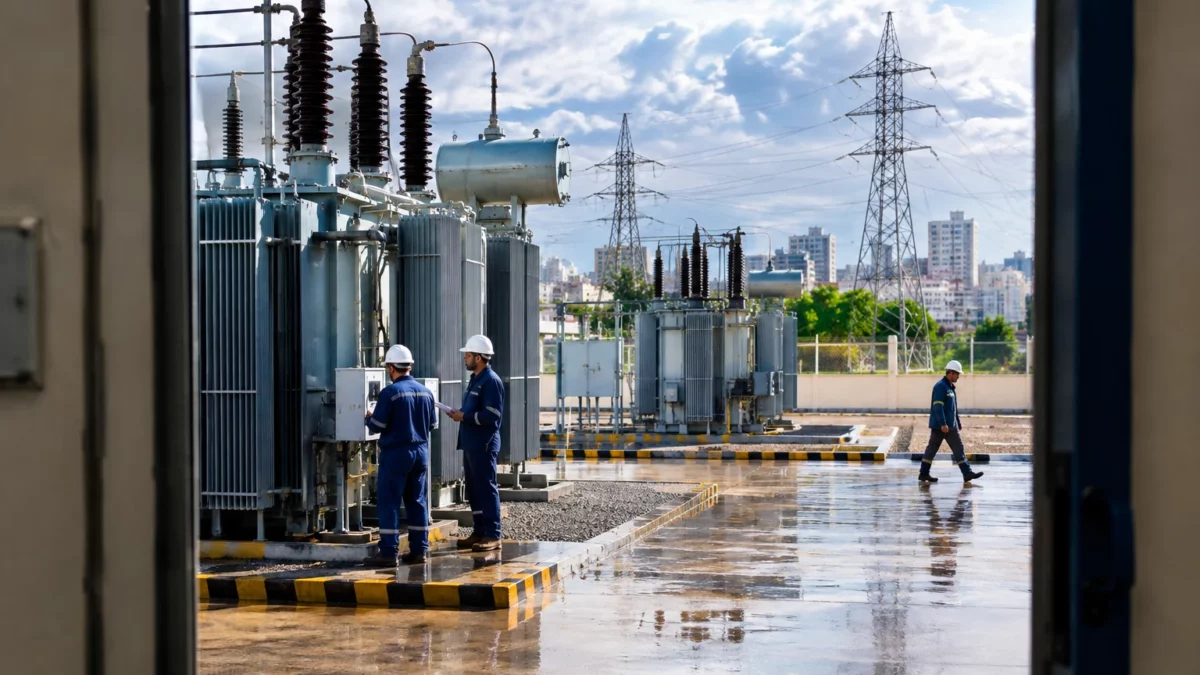
For households and factories alike, a power cut in the middle of a heatwave does not stop at the switch. It can also disrupt access to water, healthcare and production. After the power cuts of summer 2026, Tunisia is therefore seeking to prepare for the next consumption peak before the intense heat of 2027.
A network under pressure in a country dependent on gas
The challenge goes beyond an isolated outage. Tunisian electricity generation relies heavily on natural gas, whose supply and availability directly affect the network’s capacity. Demand, meanwhile, rises during heatwaves, when air conditioners and other equipment are used more.
Data from the National Observatory of Energy and Mines show that peak demand reached 5,089 megawatts in 2026, up 5% from 2025. At the end of September, renewable energy accounted for 8.3% of electricity generation, while gas supplied 91.3%. Electricity imports, mainly from Algeria, covered 11% of the local market’s needs over this period. Tunisia’s official energy statistics thus illustrate two linked challenges: meeting a rising peak and reducing the vulnerability of a system concentrated around gas.
This dependence also gives the issue a regional dimension. Exchanges with Algeria already contribute to Tunisia’s supply. Electricity security is therefore not determined solely by national power plants: it also depends on available fuels, interconnections and co-operation between North African neighbours. For the Arab Maghreb Union, energy remains a practical area in which regional interdependencies matter.
From the summer’s lessons to preparations for 2027
On 19 November, the Council of Joint Chambers brought together public-sector representatives and nearly 90 industrial exporters in Tunis. The head of the Tunisian Company of Electricity and Gas (STEG), the Ministry of Industry, professional organisations and renewable energy stakeholders were among those announced as participants. The aim was to examine the difficulties of summer 2026 and prepare for industry’s needs the following year, Tunisian media reported. The report on the meeting in Tunis highlights production stoppages, risks to equipment and delivery delays reported by exporting companies.
The director-general of STEG said, according to the Tunisian news agency TAP, that preparations to secure supply for summer 2027 had begun in September 2026. The announcement marks a shift from reviewing past experience to planning, but does not in itself guarantee there will be no further cuts. TAP reports that preparations began ahead of time.
Interim Industry Minister Slah Zouari told parliament that a programme was intended to reduce peak demand from 6,000 to 5,700 megawatts, a targeted reduction of 300 megawatts. This is an announced objective, not a result already achieved. Its delivery will depend on the measures selected, their timetable and their effective implementation.
An energy roadmap published by the Tunisian Order of Engineers also sets a short-term target: mobilising around 1,000 megawatts of additional contributions to cover the summer 2027 peak. The document proposes a range of complementary measures and notes that the system’s safety margin is insufficient. This 1,000-megawatt target is a planning objective, separate from the demand reduction announced by the minister. The Tunisian Order of Engineers’ roadmap links emergency measures with longer-term reforms: diversifying energy sources, strengthening networks, storage and managing consumption.
The consequences extend beyond industrial sites
Exporting companies face an immediate concern: an interruption can halt a production line and make it harder to meet deadlines. But the effects are unevenly distributed. Larger organisations can sometimes install generators or adjust their working hours; small businesses often have fewer resources to absorb an outage. Households, shops and essential services also depend on network continuity.
Electricity and water are closely linked. Pumping stations need power, as does some healthcare equipment. Human Rights Watch documented the consequences of the 2026 cuts and noted that public data on their impact remained limited. The organisation also reported interruptions in several regions, although these observations alone do not establish a complete national picture. Its investigation into water and electricity shortages highlights the importance of protecting hospitals, pumping stations and populations most exposed to heat.
The response cannot therefore be limited to asking users to reduce their consumption. It requires checking the availability of generating units, securing gas supplies, anticipating peaks and making networks more flexible. In the medium term, growth in solar and other renewables can diversify the energy mix, but their contribution also depends on the capacity to store and transmit electricity.
A test of preparedness for the state and its partners
The Tunis meeting brought industrialists and public officials around the same table. This dialogue could help identify the needs of exposed sectors more effectively. Commitments will, however, have to be judged by their results: the capacity actually available, the means of reducing peak demand and the transparency of information about incidents.
For North African neighbours, Tunisia’s experience is a reminder that regional interconnection can support supply, but cannot replace investment in national networks. For Tunisians, the test will be more direct: will electricity and water remain available during the next heatwaves, in the capital as well as in the regions? Summer 2027 will provide a concrete deadline for measuring the gap between announcements, completed work and the actual security of services.