Algeria
 Egypt
 Libya
 Morocco
 Sudan
 Benin
 Burkina Faso
 Cabo Verde
 Côte d'Ivoire
 Ghana
 Guinea
 Guinea-Bissau
 Liberia
 Mali
 Mauritania
 Niger
 Nigeria
 Senegal
 Sierra Leone
 The Gambia
 Togo
 Cameroon
 Central African Republic
 Chad
 DR Congo
 Equatorial Guinea
 Gabon
 Republic of the Congo
 São Tomé and Príncipe
 Burundi
 Comoros
 Djibouti
 Eritrea
 Ethiopia
 Kenya
 Madagascar
 Malawi
 Mauritius
 Mozambique
 Rwanda
 Seychelles
 Somalia
 South Sudan
 Tanzania
 Uganda
 Angola
 Botswana
 Eswatini
 Lesotho
 Namibia
 South Africa
 Zambia
 Zimbabwe
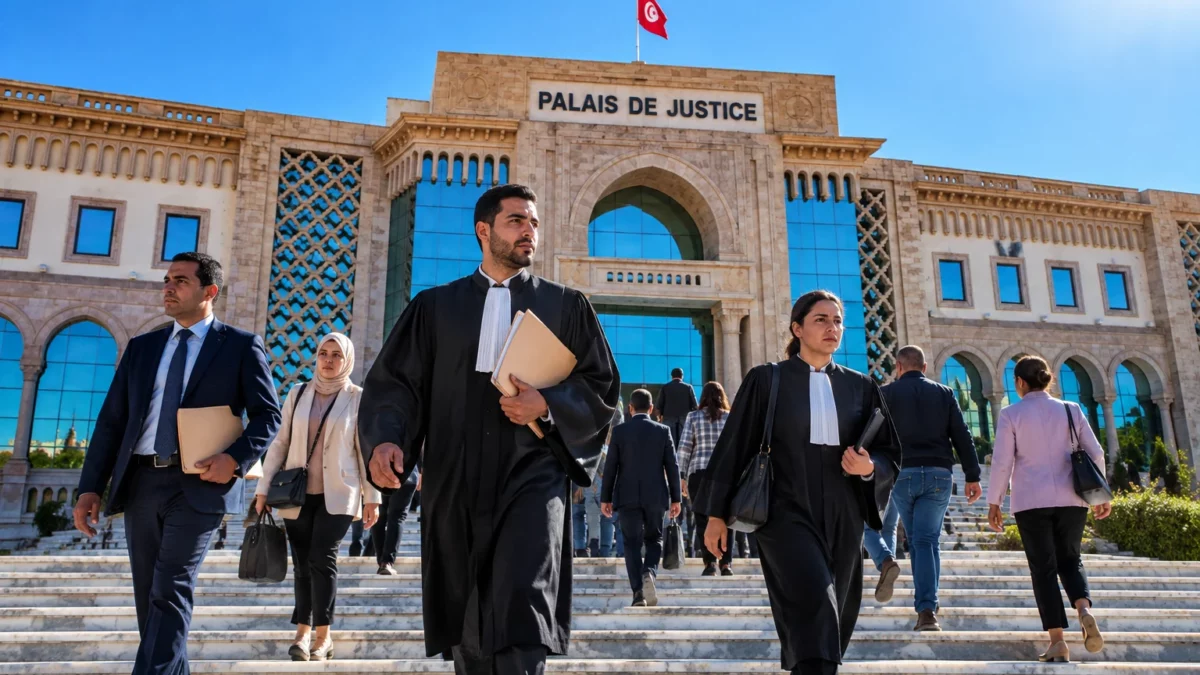
In Tunisia, transitional justice cases are now at the heart of criminal proceedings targeting former officials of the Truth and Dignity Commission (IVD). A new conviction of Sihem Bensedrine has renewed a central question: how can responsibility for past abuses be established without undermining the right to truth or the guarantees of a fair trial?
A verdict linked to an arbitration agreement
On 20 November 2026, a criminal chamber specialising in financial corruption cases in Tunis sentenced the former president of the IVD to five years in prison. In the same case, former Commission member Khaled Krichi received a four-year sentence. Mabrouk Korchid, a former minister, was sentenced to six years, with immediate enforcement, according to information available on the ruling. Tunisian media outlet Babnet reports the sentences handed down to the former officials.
The case concerns alleged irregularities in the IVD’s work, particularly over an arbitration and reconciliation agreement concluded with businessman Lazhar Sta as part of transitional justice. The accusations and the court’s decision should not be conflated: the alleged acts are part of the criminal case, while the agreement fell within the Commission’s mandate. The available information does not make it possible to detail here the judicial grounds relied on for each defendant.
This sentence comes on top of those handed down against Bensedrine on 26 June 2026 in two other cases. Amnesty International and Human Rights Watch say she was then sentenced to a total of 25 years in prison. She remained free pending the examination of her appeals, according to Amnesty. Those earlier convictions and the new verdict concern separate cases. Amnesty International reviews the prosecutions and earlier sentences.
An institution born after the revolution
Established by the 2013 organic law, after the 2011 revolution, the IVD was tasked with collecting victims’ testimonies and investigating violations committed under the regimes of Habib Bourguiba and Zine El Abidine Ben Ali. Transitional justice here refers to a set of mechanisms aimed at establishing the truth, determining responsibility, and organising reparations and reforms.
The Commission has completed its mandate, but debate over its methods, findings and the follow-up to its report remains sensitive. It affects those facing prosecution, victims awaiting truth or reparation, and the institutions responsible for enforcing the law. A case involving a reconciliation agreement also raises questions about the balance between financial compensation, individual accountability and transparency.
The political context shapes how these trials are received. Since President Kaïs Saïed concentrated more power in 2021, human rights organisations have denounced restrictions on civic space and expressed concern about judicial independence. These criticisms reflect their assessment of the context, not a judicial finding about Bensedrine’s cases. Human Rights Watch outlines its concerns about the convictions and the transitional justice process.
Trials, appeals and defence rights
Human rights organisations have challenged the way some proceedings were conducted. Amnesty says that, in the cases heard in June, Bensedrine and her lawyers were not given the indictment or able to examine the grounds for the charges at the start of the trial. This complaint relates to those earlier proceedings; on its own, it does not establish what happened in the case heard on 20 November.
The human rights defender had already announced her intention to appeal the June convictions. The new verdict will also lead to further legal proceedings, but the information consulted does not yet specify the timetable for any appeal or the procedural status of each of the other convicted defendants. In Tunisia, these distinctions matter: a sentence handed down at first instance, its enforcement and its possible confirmation on appeal are separate stages.
The debate therefore goes beyond the fate of three former officials. It also concerns the courts’ ability to examine corruption allegations while guaranteeing the rights of the defence, and public institutions’ ability to account for decisions made in the name of victims. These two requirements do not cancel each other out: establishing responsibility requires procedures that are transparent and fair.
A regional dimension to watch
Tunisia is a member of the Arab Maghreb Union (AMU), a regional organisation in North Africa, and the African Union. The monitoring of these cases is therefore relevant to continent-wide debates on the rule of law, institutional accountability and mechanisms for justice after periods of authoritarian rule. The point is not to equate different national trajectories, but to observe how each country balances truth, prosecutions and reparations.
The next steps will be decisive: the progress of appeals, the detailed grounds for the rulings and the treatment of reconciliation agreements. They will make it possible to assess more fully whether these cases address established irregularities while respecting procedural rights, or whether they contribute to shrinking the space for remembrance and reparation work. For victims and defendants alike, the credibility of justice will depend on the clarity of decisions and their impartial implementation.