Algeria
 Egypt
 Libya
 Morocco
 Sudan
 Benin
 Burkina Faso
 Cabo Verde
 Côte d'Ivoire
 Ghana
 Guinea
 Guinea-Bissau
 Liberia
 Mali
 Mauritania
 Niger
 Nigeria
 Senegal
 Sierra Leone
 The Gambia
 Togo
 Cameroon
 Central African Republic
 Chad
 DR Congo
 Equatorial Guinea
 Gabon
 Republic of the Congo
 São Tomé and Príncipe
 Burundi
 Comoros
 Djibouti
 Eritrea
 Ethiopia
 Kenya
 Madagascar
 Malawi
 Mauritius
 Mozambique
 Rwanda
 Seychelles
 Somalia
 South Sudan
 Tanzania
 Uganda
 Angola
 Botswana
 Eswatini
 Lesotho
 Namibia
 South Africa
 Zambia
 Zimbabwe
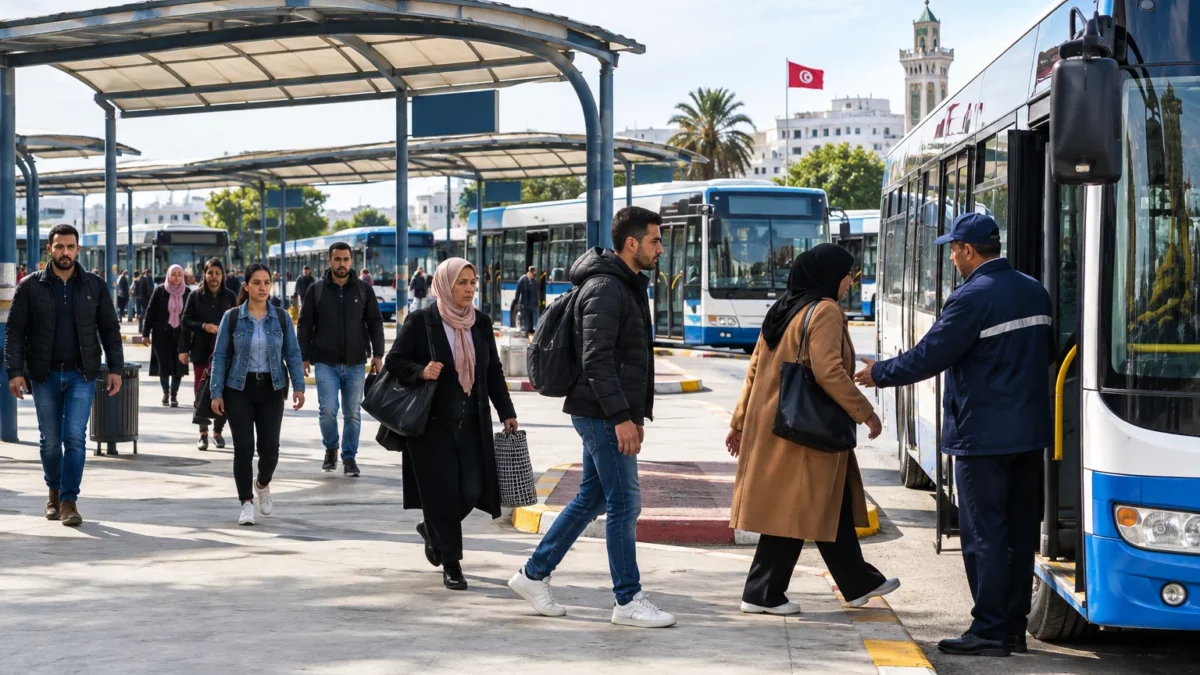
In the national accounts, positive annual growth can coexist with a quarterly decline. That is the mixed signal sent by Tunisia’s economy as preparations for the 2027 budget approach: activity is still expanding, but is losing momentum and remains uneven across sectors.
A quarterly decline despite annual growth
Gross domestic product (GDP), which measures the value of goods and services produced, rose by 1.9% year on year in the third quarter of 2026. But compared with the previous quarter, it fell by 0.1%. These preliminary estimates were published on 15 November by the National Institute of Statistics (INS).
The movement is part of a gradual slowdown in 2026. Annual growth was 2.6% in the first quarter, then 2.3% in the second. Over the first nine months, it stood at 2.2%, according to sectoral data reported by Tunisian media outlet Business News. The third-quarter figure is also below the 2.4% reported by the INS for the same period in 2025.
This does not mean the whole economy is contracting. Rather, it shows that growth in some sectors is not enough to offset weakness in others. The detailed data available point to very different trends in services, agriculture, industry and construction.
Services grow, while mining and construction drag
Services grew by 2.8% year on year. Accommodation and food services, telecommunications and transport were among the activities that expanded. Agriculture also recorded growth of 1.9%. These results support activity, but have not brought about a general acceleration.
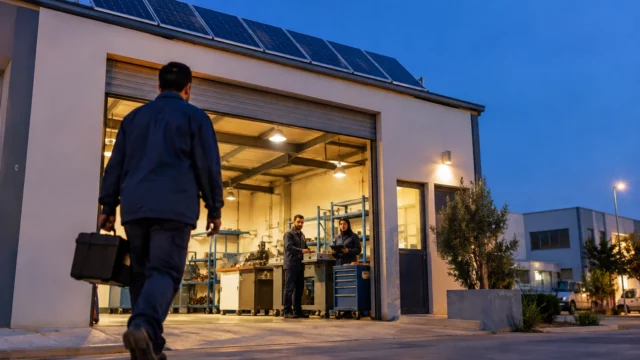
Manufacturing industry grew by 0.8%. Mechanical and electrical industries expanded by 5.5%, while food processing rose by 2.2%. By contrast, the sector encompassing energy, mining, water and sanitation contracted by 0.5%. Mining value added plunged by 34.6%, a decline that Business News links in particular to the slowdown in phosphate extraction.
Construction is another weak spot: its value added fell by 3.7% year on year. This decline weighs on companies in the sector and the jobs linked to it. It contrasts with the performance of export-oriented industries and services, whose benefits are not necessarily distributed in the same way across regions and categories of workers.
Business News reported these sectoral figures based on the INS estimates. The institute’s publicly available statement confirms overall GDP trends, but does not include these breakdowns in its published text. The distinction matters: the aggregate results are confirmed by the national statistics agency, while the activity-level details here are based on a media report.
A budget target dependent on investment
The Tunisian government is targeting growth of 3.1% in 2027. The Minister of Economy and Planning, Samir Abdelhafidh, presented this target as part of the economic budget guidelines, also reported by Tunisian news agency TAP and daily newspaper La Presse de Tunisie. It is a target, not an outcome already secured.
The authorities are relying in particular on a recovery in public and private investment, an improved business climate and the development of higher-value-added sectors. They have also cited projects related to energy and water security, as well as digital infrastructure. For these announcements to have a lasting effect, they will need to translate into funded and implemented projects capable of supporting activity beyond a handful of sectors.
Financing conditions make this ambition more challenging. Tunisia is seeking to mobilise external resources, while discussions with the International Monetary Fund on a reform programme have not resulted in an agreement since 2023. This impasse does not by itself sum up the country’s economic constraints, but it closes off a potential source of funding and adds to uncertainty over the terms for accessing external resources.
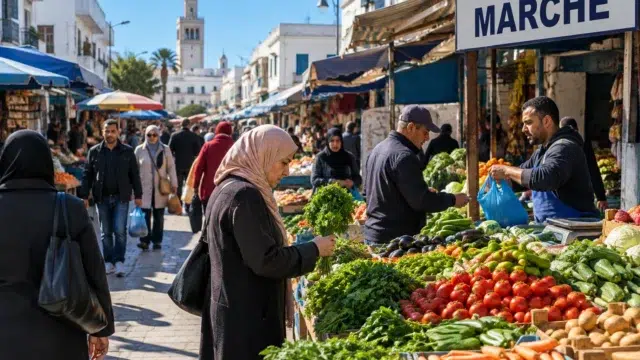
For businesses, the question is a practical one: will they be able to finance equipment, inventories and recruitment? For households, an increase in GDP does not automatically guarantee higher incomes or more jobs. In Tunis, where institutions and a large share of services are concentrated, the effects may differ from those felt in mining, agricultural or industrial regions.
Tunisia’s challenge in its North African neighbourhood
Tunisia is a member of the Arab Maghreb Union (AMU), a regional organisation in North Africa. Its economy is also closely linked to trade with its Mediterranean partners and the European market. Changes in external demand, energy prices and regional production chains can therefore affect exports, industry and investment decisions.
Across the continent, this trajectory is a reminder that growth targets should be examined in terms of their composition: which sectors are expanding, which are contracting, and where are jobs being created? For Tunisia, the next test will be whether the investments announced for 2027 can broaden the recovery beyond services, while addressing financing needs and the difficulties facing mining and construction.
The INS confirms that activity is still growing year on year, but is slightly down on the previous quarter. The challenge in the coming months will be to turn the government’s 3.1% target into observable results, without confusing a budget forecast with a recovery that is already under way.