Algeria
 Egypt
 Libya
 Morocco
 Sudan
 Tunisia
 Benin
 Burkina Faso
 Cabo Verde
 Côte d'Ivoire
 Ghana
 Guinea
 Guinea-Bissau
 Liberia
 Mali
 Mauritania
 Niger
 Nigeria
 Senegal
 Sierra Leone
 The Gambia
 Togo
 Cameroon
 Central African Republic
 Chad
 Equatorial Guinea
 Gabon
 Republic of the Congo
 São Tomé and Príncipe
 Burundi
 Comoros
 Djibouti
 Eritrea
 Ethiopia
 Kenya
 Madagascar
 Malawi
 Mauritius
 Mozambique
 Rwanda
 Seychelles
 Somalia
 South Sudan
 Tanzania
 Uganda
 Angola
 Botswana
 Eswatini
 Lesotho
 Namibia
 South Africa
 Zambia
 Zimbabwe
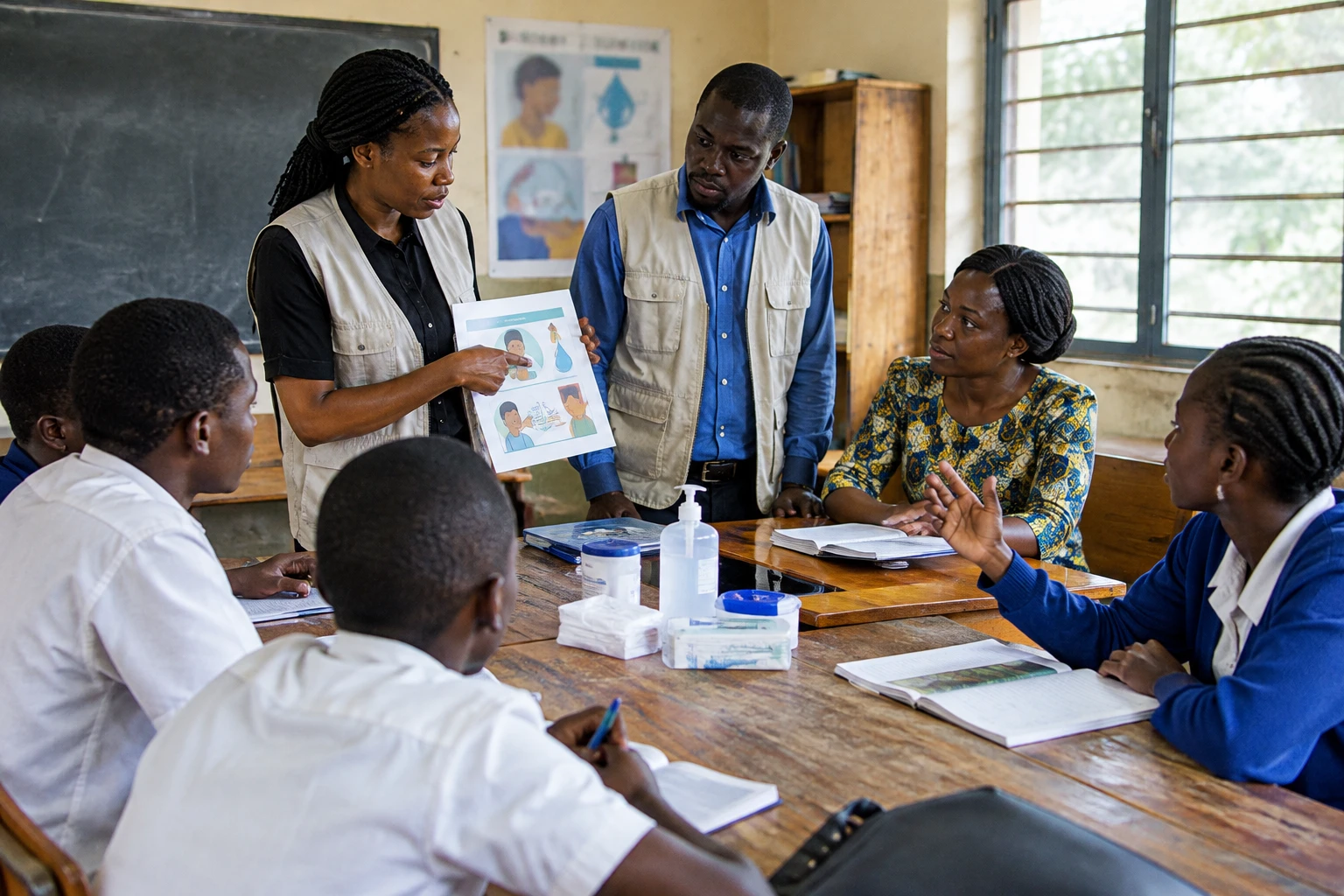
In Bunia, protecting pupils from Ebola involves more than teaching them to recognise the symptoms. It also means establishing prevention habits in schools where children and adults mix every day, as the outbreak continues to weigh heavily on Ituri.
Prevention also starts in schools
In the east of the Democratic Republic of the Congo, schools are both places of learning and important points of contact for families. An awareness campaign was held in Bunia with the participation of the Ministry of Health, UNICEF and the Africa Centres for Disease Control and Prevention, known as Africa CDC.
The sessions explain how the virus is transmitted, which signs should raise the alarm and why it is important to seek medical help promptly. They also aim to give pupils the opportunity to ask questions and share reliable information with those around them. A message understood at school can thus reach several generations of the same family.
César Muhila, head of a school in Bunia, praised the pupils’ involvement in the campaign. He believes these discussions can help his school better protect itself. His testimony illustrates the importance of speaking directly to the communities concerned, rather than circulating only general instructions.
High figures call for precautions
The current outbreak was declared on 15 May 2026. It is caused by the Bundibugyo virus, a strain of Ebola for which there is no approved vaccine or specific treatment. The World Health Organization says the outbreak was declared after cases were confirmed in the DRC. Two days later, it classified the event as a public health emergency of international concern, partly because of the risk of cross-border spread. WHO details the declaration of the Bundibugyo outbreak.
Tallies change as new cases are confirmed. On 11 November, Congolese authorities reported 11,042 people infected and 5,387 deaths, according to figures reported by the Associated Press. These figures describe an outbreak of exceptional scale for the DRC. They should, however, be read as a dated tally, which may change as cases are monitored and verified. The tally reported by Congolese authorities on 11 November.
The situation facing children is particularly concerning. According to UNICEF, as of 4 November, 2,959 children under 18 had been confirmed infected and 1,737 had died. Children then accounted for 28% of confirmed cases and 35% of deaths. The agency also says that nearly 7,500 schools attended by around 2.5 million children had not yet benefited from infection prevention measures. UNICEF data on children and schools.
A source in the original material attributes to the Ministry of Health reports of cases in around 40 schools and the death of a teacher. In the absence of independent confirmation of this specific figure, it should be treated as an attributed claim, not as an established nationwide count.
Trust and services matter as much as guidance
School campaigns can help identify symptoms earlier and limit risky contact. But they cannot replace access to healthcare or prevention in homes, markets and workplaces. Their effectiveness also depends on practical measures: water points, hygiene facilities, clear procedures for symptoms and communication tailored to pupils’ ages.
The response must also prevent fear from keeping families away from health services. UNICEF has reported a decline in attendance for some essential care in Ituri, particularly for women and children, as fears of infection and disruptions to the health system make it harder to access consultations. The Ebola response must therefore protect patients while maintaining routine care.
Schools do not all have the same resources. In urban neighbourhoods, crowded classrooms and daily travel make it harder to follow guidance. In rural or hard-to-reach areas, distance from health facilities can delay the referral of a sick pupil. Authorities and their partners must adapt measures to these realities, rather than assume that one message will work everywhere.
An issue extending beyond Ituri
Bunia is in a province that borders Uganda. The movement of people therefore requires health coordination between neighbouring countries, including monitoring alerts, sharing information and preparing healthcare facilities. The DRC is a member of the East African Community, a relevant regional framework for exchanges with Uganda, although management of the outbreak is primarily the responsibility of national health authorities.
At continental level, Africa CDC has also stressed the role of schools in the response: training teachers, taking preventive measures, providing clear information and establishing rapid reporting mechanisms. This approach is a reminder that schools are not merely places to protect. They can also help detect risks, provided education teams have appropriate guidance and resources. Africa CDC recommendations for strengthening prevention in schools.
In the coming weeks, monitoring will need to focus on case trends, the coverage of prevention measures in schools and continuity of care for children. In Bunia and elsewhere in Ituri, school-based mobilisation can strengthen the response, but it cannot succeed alone: it must be part of an accessible, coordinated health system that families trust.