Algeria
 Egypt
 Libya
 Morocco
 Sudan
 Tunisia
 Benin
 Burkina Faso
 Cabo Verde
 Côte d'Ivoire
 Ghana
 Guinea
 Guinea-Bissau
 Liberia
 Mali
 Mauritania
 Niger
 Nigeria
 Sierra Leone
 The Gambia
 Togo
 Cameroon
 Central African Republic
 Chad
 DR Congo
 Equatorial Guinea
 Gabon
 Republic of the Congo
 São Tomé and Príncipe
 Burundi
 Comoros
 Djibouti
 Eritrea
 Ethiopia
 Kenya
 Madagascar
 Malawi
 Mauritius
 Mozambique
 Rwanda
 Seychelles
 Somalia
 South Sudan
 Tanzania
 Uganda
 Angola
 Botswana
 Eswatini
 Lesotho
 Namibia
 South Africa
 Zambia
 Zimbabwe
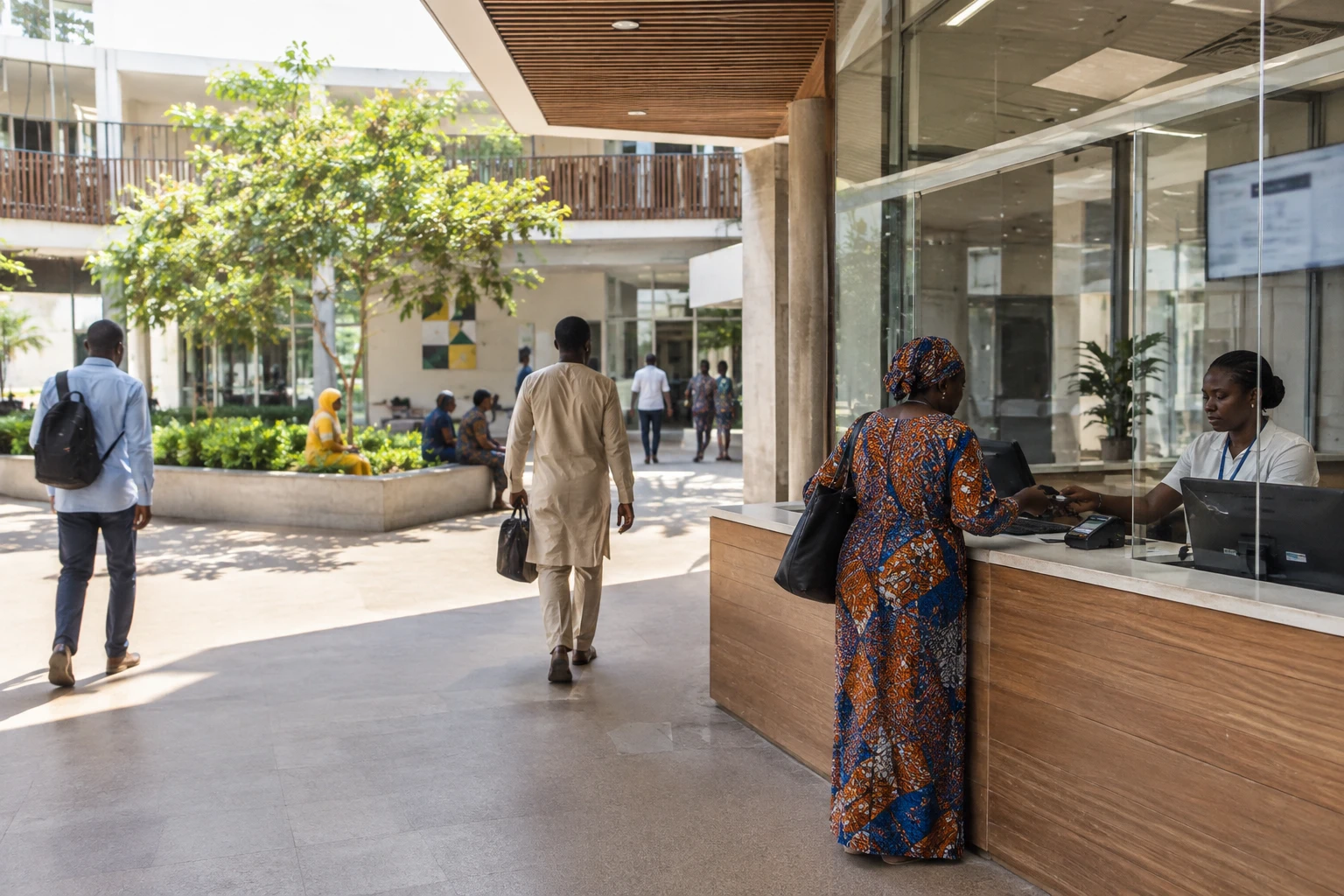
A digital payment is useful only if the merchant can accept it, the customer knows how to use it and the fees remain affordable. In Senegal, the announcement of a Visa office in Dakar highlights this practical challenge: turning growing use into services that are accessible in everyday life, beyond major events.
A Senegalese market connected to West Africa
Senegal shares a currency and central bank, the BCEAO, with seven other countries. It is also a member of ECOWAS, the regional organisation bringing together West African states. This integration matters for payments: transfers, purchases and business activities often cross national borders.
Electronic money is already widely used in the region, particularly via mobile phones. The BCEAO recorded 248 million electronic money accounts in the WAEMU in 2024, up nearly 19% year on year. That total does not mean every account is active, nor does it mean card payments and mobile wallets are interchangeable. Above all, it illustrates the scale of an ecosystem in which banks, telecoms operators and fintechs operate side by side.
Growth in account numbers does not solve everything. A user may receive money by phone but still depend on cash for purchases. Internet access, the cost of equipment, fees and the availability of terminals vary by location and type of business. The needs of a Dakar merchant are not necessarily those of a small business in the regions.
An office announced, with regional ambitions
Visa plans to open an office in Dakar by the end of 2026. Aminata Kane, the company’s head for West and Central Africa, described the move as a base for Senegal and neighbouring markets. The company aims to work more closely with banks, fintechs, mobile payment operators, merchants and public authorities.
The announcement follows discussions with Senegalese authorities. In March 2026, the ministry responsible for telecommunications and digital affairs said it had discussed the planned opening with Aminata Kane, as well as potential cooperation on fintechs and the country’s digital strategy. A two-year memorandum of understanding was subsequently signed on 28 October, according to information released about the partnership. Its results will depend on the projects actually launched, not the signature alone.
The areas mentioned include digital payments, cybersecurity, financial innovation and the modernisation of public services. Payments between citizens and government, as well as public disbursements to beneficiaries, could be among the options under consideration. Such projects nevertheless require reliable systems, data protection and solutions accessible to people who make little use of traditional banking services.
For Visa, the office is also intended to support payment acceptance. Virtual cards, contactless transactions and solutions that turn a phone into a payment terminal can serve different needs. But their rollout depends on local partnerships and viable commercial terms. New technology alone does not guarantee lower costs or lasting adoption.
The Games as a test, not proof of a legacy
The Youth Olympic Games will take place in Senegal from 31 October to 13 November 2026, in Dakar, Diamniadio and Saly. The International Olympic Committee describes them as the first Olympic sporting event to be held on African soil. For businesses, the period brings together visitors, merchants and a range of payment needs. It therefore offers a testing ground, but cannot yet show the long-term effects.
Visa has announced partnerships in hospitality and transport. An agreement with Mangalis Hotel Group provides for benefits for Visa cardholders at several properties, with the arrangement set to begin at Noom Hotel Dakar Sea Plaza. Other initiatives relate to journeys paid for with mobility operators, including Kai Nu Dem. Promotional terms and their duration should be distinguished from a permanent change in practices.
The payment tools discussed — payment links, QR codes or SoftPOS, which turns a compatible smartphone into a contactless terminal — could help small businesses accept electronic payments without specialised equipment. Recorded transactions can also make it easier to track revenue and keep accounts. However, a digital transaction history does not automatically bring access to credit: banks assess other factors, including income regularity and the ability to repay.
The impact will vary between businesses. Hotels and transport companies serving international visitors may quickly benefit from payment methods familiar to their customers. For neighbourhood shops and vendors operating on slim margins, fees, network coverage and settlement speed will matter more. In regions far from Dakar, the availability of services and support will also be decisive.
The next step will be everyday use
The planned office could bring Visa closer to its partners and make regional coordination easier. It does not replace the BCEAO’s role in supervising payments or that of Senegalese players who design and distribute their own services. In the WAEMU, interoperability — the ability of different systems to work together — will be essential to prevent users from being locked into separate networks.
Across ECOWAS, cross-border payments affect trade, travel and family transfers. Improving them depends on compatible rules, secure infrastructure and competition that leaves room for local solutions. The presence of an international group can bring networks and investment, but public priorities and users’ needs must guide decisions.
The milestone to watch, then, will be less the opening of an office than the reach of services rolled out after the Games: more acceptance points, controlled costs, secure transactions and solutions suited to Senegalese businesses. It is at this level, in the everyday lives of merchants and customers, that the real contribution of this presence will be measured.