Algeria
 Egypt
 Morocco
 Sudan
 Tunisia
 Benin
 Burkina Faso
 Cabo Verde
 Côte d'Ivoire
 Ghana
 Guinea
 Guinea-Bissau
 Liberia
 Mali
 Mauritania
 Niger
 Nigeria
 Senegal
 Sierra Leone
 The Gambia
 Togo
 Cameroon
 Central African Republic
 Chad
 DR Congo
 Equatorial Guinea
 Gabon
 Republic of the Congo
 São Tomé and Príncipe
 Burundi
 Comoros
 Djibouti
 Eritrea
 Ethiopia
 Kenya
 Madagascar
 Malawi
 Mauritius
 Mozambique
 Rwanda
 Seychelles
 Somalia
 South Sudan
 Tanzania
 Uganda
 Angola
 Botswana
 Eswatini
 Lesotho
 Namibia
 South Africa
 Zambia
 Zimbabwe
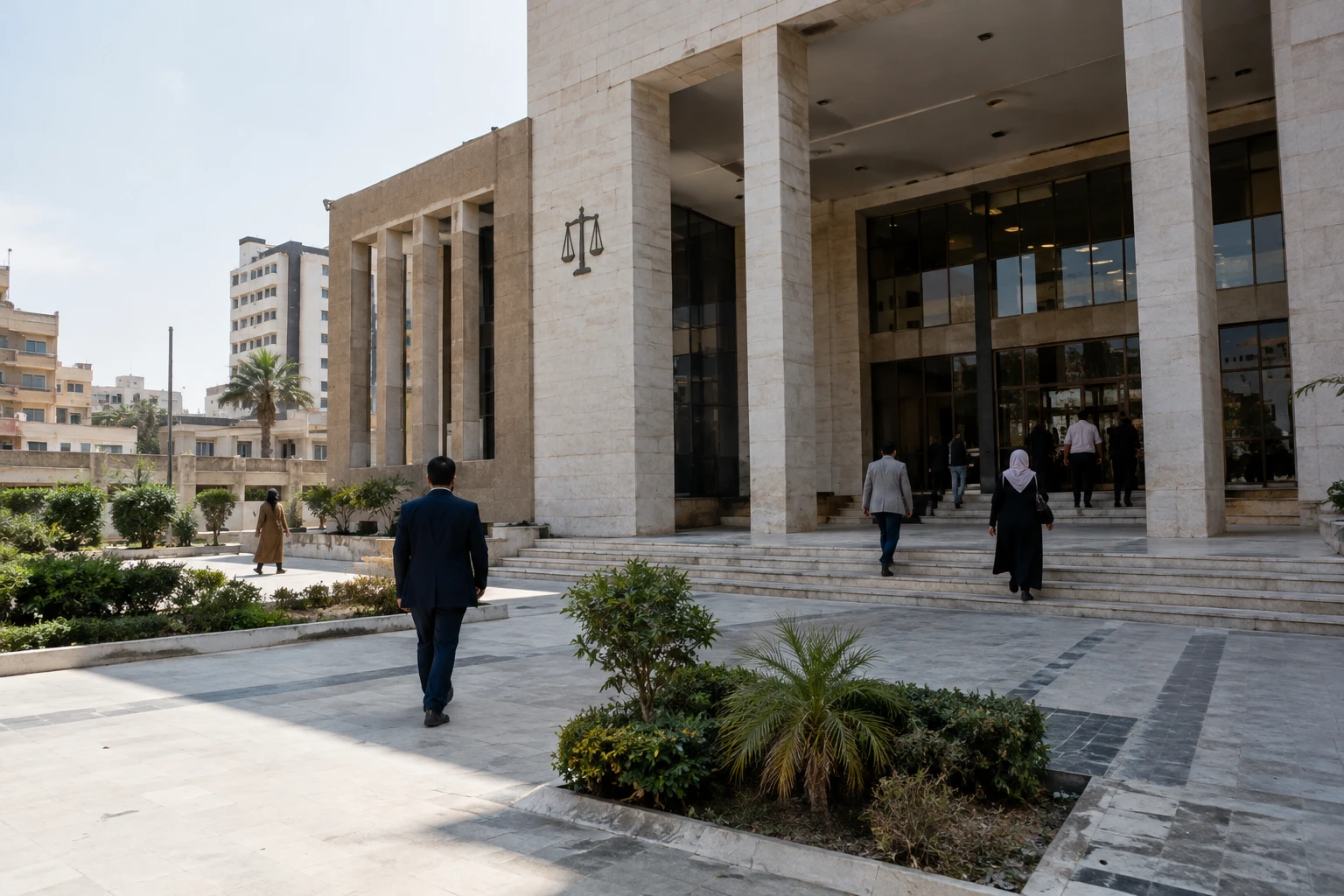
In Tripoli, the trial of seven men for crimes committed in 2016 raises a question that goes beyond the case: can a court ruling have an impact on armed groups when state authority remains fragmented? The answer will depend as much on the next stages of the proceedings as on the ability of Libyan institutions to enforce the law consistently.
A verdict delivered in a divided Libya
Libya remains marked by the coexistence of rival centres of power and competing security forces. Since the failure to hold elections scheduled for December 2021, national institutions have remained divided. In Tripoli, armed groups influence the security balance, while authorities in the east and south rely on separate forces. This fragmentation complicates arms control and the consistent enforcement of judicial decisions.
The country is a member of the Arab Maghreb Union, a North African organisation whose political and economic integration remains largely stalled. For Libyans, however, the immediate issue is national: restoring institutions capable of acting across the entire territory. The United Nations Support Mission in Libya is supporting a political process intended to pave the way for elections and institutional reunification.
On 30 August 2026, Libyan representatives agreed on steps relating to the electoral commission and the legal framework for future elections. But the security challenge remains central: a UN-facilitated dialogue highlighted the presence of parallel armed structures and the weakness of enforcement mechanisms. Without progress on this front, political and judicial decisions risk being applied inconsistently.
Seven convictions over events in 2016
Tripoli’s criminal court sentenced a former commander of the “Sixth Division” and six of his deputies to death after finding them guilty of murdering two women and holding their children captive for six months in 2016. The public prosecutor’s office announced the verdict on Wednesday 11 November 2026. Libyan media also reported the decision the following day.
According to available reports, the death penalty was imposed for the murders. The seven men were also sentenced to six years and two months in prison for abduction and possession of weapons without authorisation. The court did not release the names of the six deputies. The name Naim al-Dhouaybi, cited in the initial material, could not be confirmed by the reports consulted; it should therefore not be presented as established.
The decision concerns acts attributed to an armed formation that had its headquarters in central Tripoli and took part in clashes between rival groups. It does not, in itself, mean that all crimes attributed to members of armed groups will now face comparable prosecutions. It is a ruling in a specific case, for which appeals and practical follow-up remain crucial.
Justice confronts the influence of armed groups
For the victims’ families, the convictions may represent judicial recognition of crimes long associated with insecurity and impunity. But a sentence is not the same as full redress. Available information does not detail the status of any appeals or the safeguards provided for the children concerned. Nor does it make clear whether other people who may have been involved have been prosecuted.
The question of commanders’ responsibility is particularly sensitive. A credible justice system must establish each person’s actions and respect the rights of the defence, without granting de facto immunity to influential figures. In the absence of detailed information about the case, the verdict alone does not make it possible to conclude how the court established individual responsibility or the chain of command.
The context of the death penalty also makes it important to distinguish judicial practices in different parts of the country. In August and September 2026, human rights organisations documented at least 30 executions in the east, following trials before military courts. Human Rights Watch reported that at least 31 people had been executed and dozens more faced the same risk. These cases, reported by several organisations, are separate from the civil court ruling in Tripoli.
This distinction is essential. Human rights organisations have denounced military trials in the east that they consider unfair and which have sometimes been marred by allegations of torture and violations of defence rights. In Tripoli, reports describe a conviction handed down by a criminal court. The two situations nevertheless point to the same requirement: every sentence, and especially an irreversible one, must be based on fair and transparent proceedings that allow for appeal.
A test for institutions beyond Tripoli
The death penalty remains part of Libyan law. Sentences had already been handed down against officials of the former regime after 2011, but were not carried out. The resumption of executions in the east in 2026 has changed the national context. It has sharpened debate over the consistency of justice and the safeguards that apply, while the authorities remain divided.
The significance of this verdict will therefore be measured against several concrete steps: confirmation of the decision on appeal, respect for the rights of the convicted men, and the authorities’ ability to protect victims and witnesses. It will also be important to see whether investigations into members of other armed formations proceed according to comparable criteria, without selection being dictated by local power dynamics.
For the North African region and the African Union, stability in Libya depends on more than agreements between leaders. It requires recognised institutions, a trusted justice system and security that does not rely on parallel structures. The Tripoli ruling is an important judicial signal, but its credibility will depend on its implementation and on equal treatment of cases across the country.