Algeria
 Egypt
 Libya
 Morocco
 Sudan
 Tunisia
 Benin
 Burkina Faso
 Cabo Verde
 Côte d'Ivoire
 Ghana
 Guinea
 Guinea-Bissau
 Liberia
 Mali
 Mauritania
 Niger
 Nigeria
 Sierra Leone
 The Gambia
 Togo
 Cameroon
 Central African Republic
 Chad
 DR Congo
 Equatorial Guinea
 Gabon
 Republic of the Congo
 São Tomé and Príncipe
 Burundi
 Comoros
 Djibouti
 Eritrea
 Ethiopia
 Kenya
 Madagascar
 Malawi
 Mauritius
 Mozambique
 Rwanda
 Seychelles
 Somalia
 South Sudan
 Tanzania
 Uganda
 Angola
 Botswana
 Eswatini
 Lesotho
 Namibia
 South Africa
 Zambia
 Zimbabwe
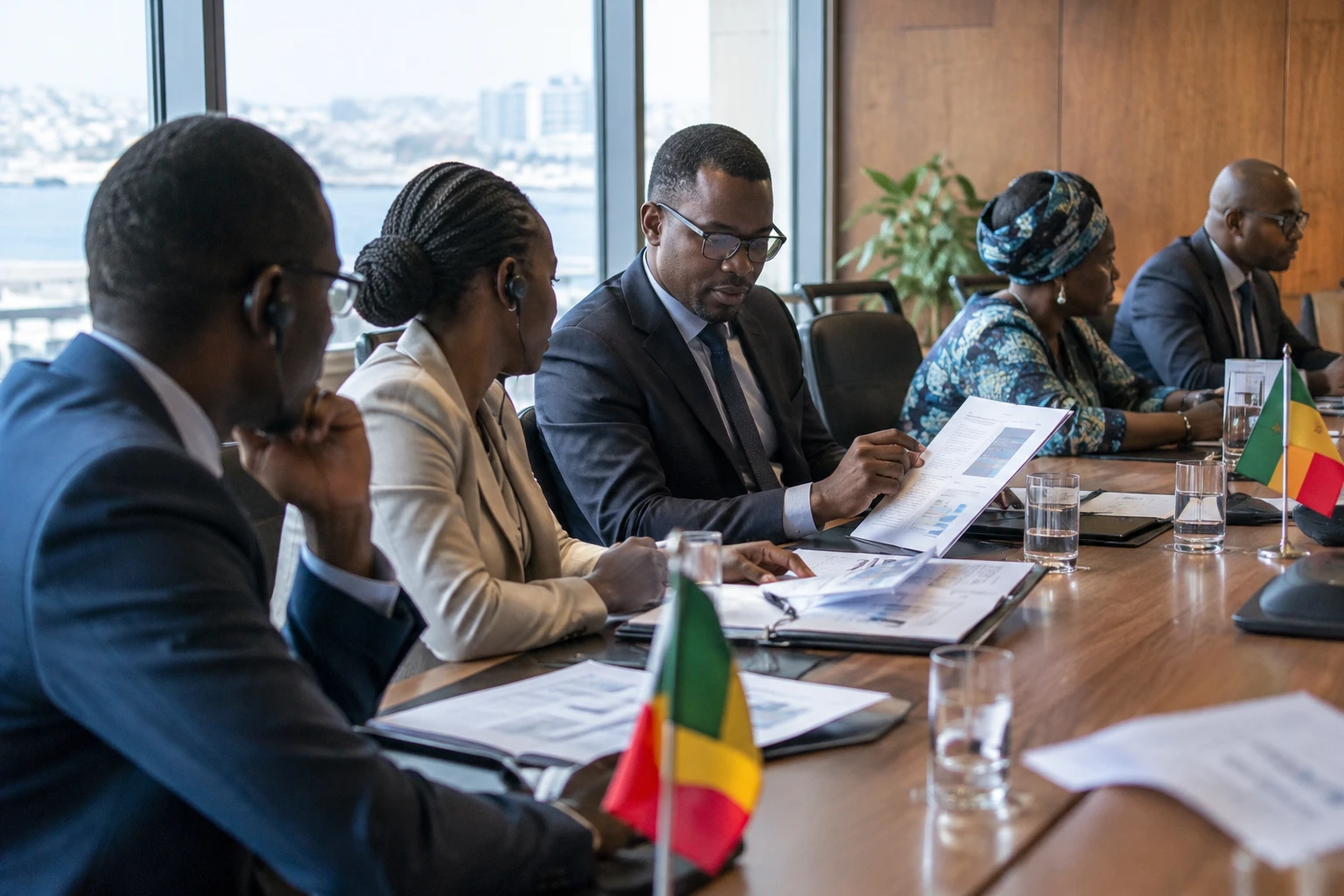
A corporate bond can finance shops, petrol stations and a factory. But for investors, the announced yield is not enough: they must also assess the issuer’s ability to repay and understand what a guarantee actually covers.
In Senegal, the EDK group plans to raise CFA francs 30 billion on the regional financial market of the West African Economic and Monetary Union (WAEMU), which brings eight countries together around a shared market and currency. The transaction puts a Senegalese private-sector player at the heart of a space where companies and governments seek funding from regional investors.
Five activities, one financing package
Announced on 10 November 2026, the “EDK 7.50% 2026-2033” issue comprises three million bonds with a face value of CFA francs 10,000 each. The announced fixed annual rate is 7.50%, with a term of seven years. Principal repayments would begin after a two-year grace period, followed by semi-annual instalments over five years.
The funds are intended to finance five subsidiaries. According to information published about the transaction, TEFESS Industrie would receive CFA francs 10.2 billion to build an animal and poultry feed factory. EDK Oil would spend CFA francs 9.5 billion on 15 new petrol stations.
The plan also provides CFA francs 5.5 billion for 15 Djolof Chicken restaurants, and CFA francs 4 billion for 15 Low Price shops under the Carrefour by EDK brand. Finally, CFA francs 800 million would go to QuickPay to strengthen its equipment and technical capacity. The rollout is planned between 2026 and 2028.
These figures and targets are those presented in the information available on the bond issue. They describe planned investments, not projects already completed. Their delivery will depend in particular on construction schedules, permits and the subsidiaries’ ability to grow their businesses.
Yield versus debt risk
The 7.50% rate provides a benchmark, but does not sum up the risk. According to financial data disclosed for the transaction, the group’s net debt rose from CFA francs 26.4 billion in 2023 to CFA francs 37.8 billion at the end of 2025. Consolidated revenue reached CFA francs 84.9 billion in 2025, with net profit of CFA francs 5.2 billion.
These indicators should be considered together. More diversified operations may broaden revenue sources, but investments take time to deliver returns. In the meantime, interest and principal repayments remain due. On the basis of an initial outstanding amount of CFA francs 30 billion, the coupon represents CFA francs 2.25 billion in annual interest before amortisation, excluding fees and commissions.
The group says the guarantee covers all principal and interest: the African Solidarity Fund (FSA) would provide 66.67% of the cover, and the African Fund for Guarantee and Economic Cooperation (FAGACE) 33.33%. A demand guarantee is intended to enable bondholders to obtain payment under the contractual terms if the issuer defaults. It does not, however, remove the need to check the clauses, the time limits for making a claim and the guarantors’ obligations.
FAGACE has previously supported bond financing in Senegal. In 2021, it said it had contributed to a CFA francs 10 billion issue for a student residence project in the Dakar region. This precedent illustrates the role African guarantee institutions can play in facilitating companies’ access to the regional market. It does not, however, by itself provide information about the specific terms of the guarantee granted to EDK.
A stake for businesses and regional savings
For EDK, a public offering provides an alternative to bank lending. The projects target several parts of the economy: retail, fuel, restaurants, agro-processing and payments. The planned factory could contribute to local animal-feed supplies, while the proposed openings would expand the group’s retail networks. These are stated aims, and their impact will depend on execution and demand.
For investors, the transaction is a reminder of an important distinction: subscribing to a bond means lending to a company, not becoming a shareholder. Subscribers expect interest and repayment of principal according to the agreed schedule. They must therefore assess credit risk, guarantees and contractual documents rather than confuse an advertised yield with a risk-free return.
Across WAEMU, the deal highlights the growing role of the regional market in financing West African businesses. What happens next will depend on the outcome of the fund-raising, the implementation of the investments and adherence to repayment schedules. The full terms of the guarantee and the performance of the new businesses will be crucial in determining whether this expansion sustainably strengthens the group’s financial capacity.