Algeria
 Egypt
 Libya
 Morocco
 Sudan
 Tunisia
 Benin
 Burkina Faso
 Cabo Verde
 Côte d'Ivoire
 Guinea
 Guinea-Bissau
 Liberia
 Mali
 Mauritania
 Niger
 Nigeria
 Senegal
 Sierra Leone
 The Gambia
 Togo
 Cameroon
 Central African Republic
 Chad
 DR Congo
 Equatorial Guinea
 Gabon
 Republic of the Congo
 São Tomé and Príncipe
 Burundi
 Comoros
 Djibouti
 Eritrea
 Ethiopia
 Kenya
 Madagascar
 Malawi
 Mauritius
 Mozambique
 Rwanda
 Seychelles
 Somalia
 South Sudan
 Tanzania
 Uganda
 Angola
 Botswana
 Eswatini
 Lesotho
 Namibia
 South Africa
 Zambia
 Zimbabwe
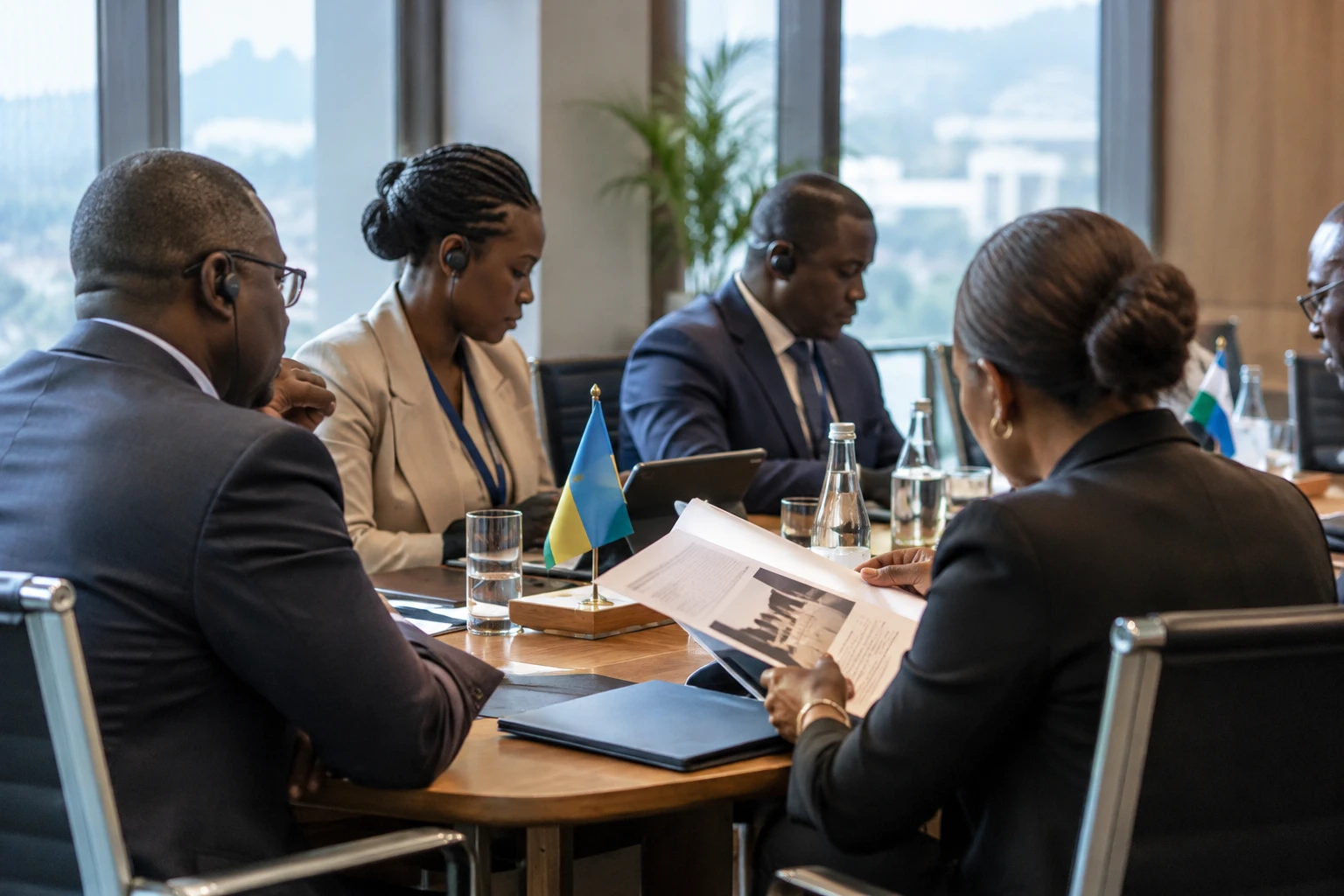
Extracting lithium is not enough to build a battery industry. For Zimbabwe, Mali and the Democratic Republic of the Congo (DRC), the challenge is to process more ore locally, without confusing an initial industrial step with cell manufacturing.
A supply chain that goes far beyond the mine
Lithium is sought mainly for rechargeable batteries, used in electric vehicles, electronic devices and electricity storage. The US Geological Survey estimates that batteries accounted for 87% of global lithium use in 2024. This demand gives strategic value to intermediate stages, but each requires equipment, energy, skills and industrial markets.
In hard-rock deposits, the ore is first crushed and ground. A plant then separates the lithium-bearing minerals to produce spodumene concentrate. This concentrate remains an intermediate product: it must be chemically processed and purified before compounds usable in the battery supply chain can be obtained.
Processing can produce lithium sulphate, followed by lithium carbonate or hydroxide. These products feed into the manufacture of cathode materials, components of a battery. Carbonate is used in several chemistries, including lithium iron phosphate (LFP). Hydroxide is suitable for certain nickel-rich cathodes, including NMC and NCA chemistries. The cell is a further stage: it combines several components to store and deliver electricity.
Zimbabwe aims to process lithium in stages
In Zimbabwe, a southern African country and member of the Southern African Development Community (SADC), state-owned Mutapa Energy Resources is seeking government support to develop a concentrator at the Sandawana site in Midlands province. The project is part of efforts to reduce exports of raw ore and retain more value in the country.
Available information nevertheless describes a project still under development, facing funding needs among other challenges. An announcement by Zimbabwean agency New Ziana, published in September 2026, referred to a targeted start-up in November 2027. The Financial Gazette reported on 6 November that Mutapa was also looking to prepare a lithium sulphate plant, without presenting the facility as already operational. These timelines are targets, not established capacity.
A more advanced step has been taken at Arcadia. Chinese group Zhejiang Huayou Cobalt announced its first shipment of lithium sulphate on 25 April 2026. Africanews also reported the shipment from the Goromonzi site. This production shows that chemical processing is possible in Zimbabwe; it does not mean the country is already manufacturing cathode materials or battery cells.
The distinction matters when assessing the benefits. A concentrator can create jobs and local contracts, but its impact depends on ownership, procurement from Zimbabwean businesses, tax revenues and working conditions. Processing facilities also need electricity, water and roads, as well as rigorous management of tailings. Costs and benefits may therefore vary between mining sites, nearby towns and the rural communities concerned.
From Mali to the DRC, projects face different realities
Mali, a landlocked Sahelian country and member of the Alliance of Sahel States, is also developing a sector around its deposits, while Namibia in southern Africa is attracting mining projects. But the presence of ore guarantees neither a profitable plant nor local processing capacity. Timelines, infrastructure and national regulations differ from one country to another.
In the DRC, in central Africa, the Manono project is associated with ambitions to process lithium. It should not be confused with activities in Zimbabwe: the two countries have distinct policy frameworks, infrastructure and relationships with investors. The International Energy Agency lists existing or planned mining capacity in Mali, Zimbabwe and the DRC, but these projections do not prove that all announced mines or plants will be built.
Chinese investment has a visible role in several projects, from extraction to processing. It brings capital and technology, but also raises a question of negotiation: what share of the value remains in the producing country, and how much of the most lucrative processing takes place elsewhere? Governments, local businesses, workers and neighbouring communities do not have the same interests or decision-making power.
The next step: turning announcements into lasting capacity
For governments, banning or restricting exports of raw ore can accelerate local processing, but a rule alone cannot create an industrial supply chain. Stable investment, reliable infrastructure, a trained workforce and buyers for processed products are needed. Companies, for their part, assess energy costs, timelines and the predictability of regulations.
At regional level, SADC and the countries of central Africa can provide frameworks for co-operation, particularly on infrastructure, skills and standards. The African Continental Free Trade Area (AfCFTA), which aims to facilitate trade between African countries, also offers the prospect of a wider market. But complementarity is not automatic: producing countries still need to agree on investment, the movement of products and the sharing of benefits.
The practical yardstick will therefore be less the number of announcements than the verified commissioning of facilities, their regular output and the skilled jobs they create. Zimbabwe has taken a step with the sulphate produced at Arcadia; Sandawana remains a project under development. In Mali, Namibia and the DRC, future decisions will need to show whether mining can support a local industrial base, rather than remaining concentrated on extraction and initial processing.