Algeria
 Egypt
 Libya
 Morocco
 Sudan
 Tunisia
 Benin
 Burkina Faso
 Cabo Verde
 Côte d'Ivoire
 Guinea
 Guinea-Bissau
 Liberia
 Mali
 Mauritania
 Niger
 Nigeria
 Senegal
 Sierra Leone
 The Gambia
 Togo
 Cameroon
 Central African Republic
 Chad
 DR Congo
 Equatorial Guinea
 Gabon
 Republic of the Congo
 São Tomé and Príncipe
 Burundi
 Comoros
 Djibouti
 Eritrea
 Ethiopia
 Kenya
 Madagascar
 Malawi
 Mauritius
 Mozambique
 Rwanda
 Seychelles
 Somalia
 South Sudan
 Tanzania
 Uganda
 Angola
 Botswana
 Eswatini
 Lesotho
 Namibia
 South Africa
 Zambia
 Zimbabwe
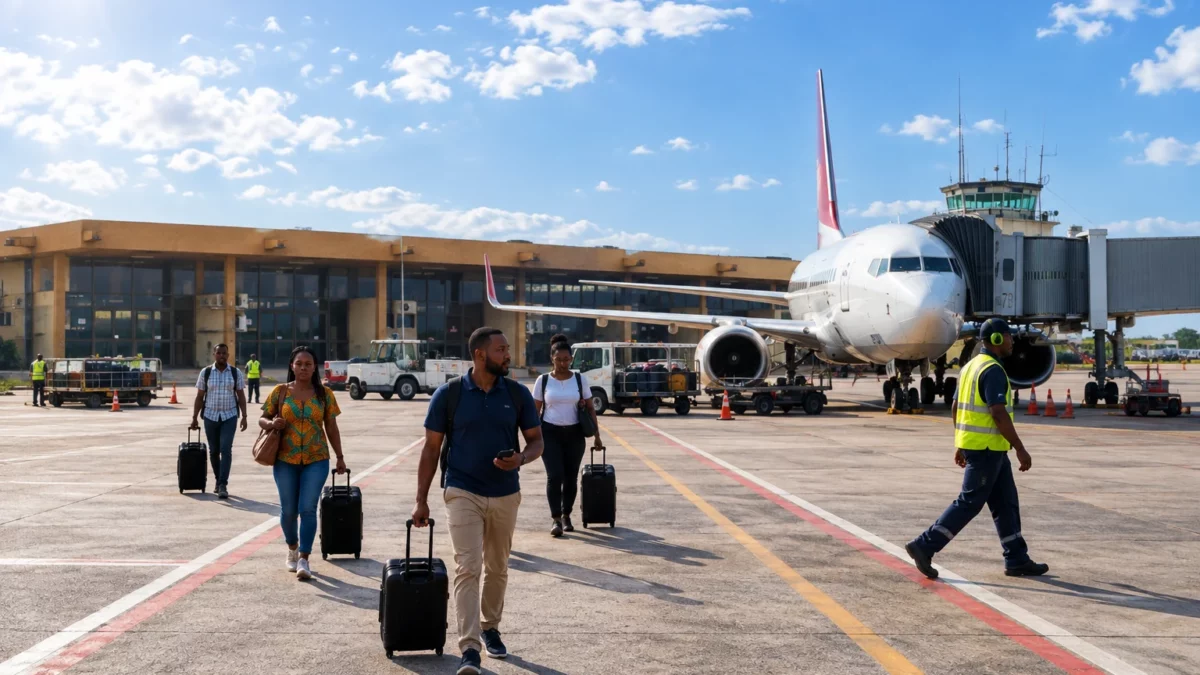
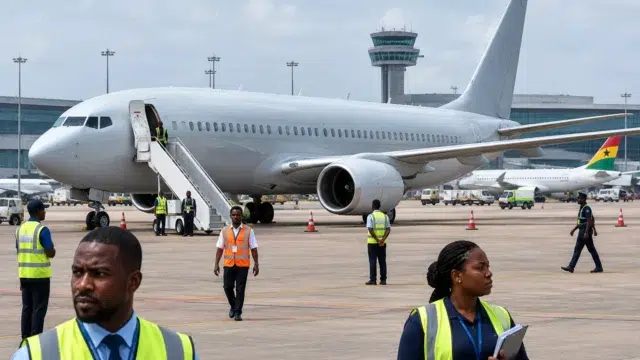
To travel from Wa to Tamale or Kumasi to Sunyani, a Ghanaian traveller may have to go via Accra, even when their destination is in another region. Ghana Airports Company Limited (GACL) wants to change this pattern. But runways and terminals alone will not be enough: flights must also be regular, affordable and sufficiently well used.
Rebalancing the national network
Ghana already has several airport hubs, including in Kumasi, Tamale, Wa and Sunyani. Yet Accra remains the main point of passage for air travel. This concentration makes direct journeys between regional centres more difficult and concentrates some investment and air links around the capital.
The issue goes beyond passenger convenience. Direct flights can shorten business trips, facilitate the transport of urgent goods and support trade between regions. They could also improve access to certain services for people living far from major roads. However, air travel will remain out of reach for part of the population if fares are high or flights too infrequent.
The issue is also regional. Ghana is a member of ECOWAS, the Economic Community of West African States, whose aims include strengthening trade and movement within the sub-region. Better-connected airports could complement this goal. They would not, however, replace road links or cross-border air connections.
Three projects announced before the end of 2026
In Accra on 9 November, at celebrations marking GACL’s 20th anniversary, its managing director, Yvonne Nana Afriyie Opare, announced that the company hopes to begin work in Wa, Bolgatanga and Sunyani before the end of 2026. The announcement was reported by the Ghana News Agency and Ghanaian media outlet 3News.
The planned work differs from one site to another. In Wa, GACL has referred to a new terminal and runway extension. In Sunyani, the plan is to upgrade the existing airport. In Bolgatanga, in the Upper East Region, the project involves building a new airport. For now, this is an announced timetable: the actual start of work and its financing have yet to be secured.
The company has also raised the possibility of domestic flights between Kumasi and Tamale, Tamale and Wa, and Sunyani and Kumasi. These routes would offer an alternative to journeys via Accra. But the announcements consulted specify neither flight frequency nor launch dates. Their viability will depend in particular on airlines, aircraft availability and passenger numbers.
Investment beyond the regions
Decentralisation is part of a wider programme of work at airports already in operation. In Accra, a connecting hall between Terminals 2 and 3 is planned, with completion scheduled for November 2027. In Kumasi, design studies are under way for a new domestic terminal. Ghana’s 2026 budget, meanwhile, states that the second phase of the Tamale airport expansion, including cargo facilities and facilities for Hajj pilgrims, has been completed.
Demand makes a case for additional capacity, but the figures need to be read carefully. According to statistics published by GACL, international passenger traffic at Kotoka International Airport rose from 1.8 million in 2022 to about 2.54 million in 2025. The total number of passengers handled by the company’s airports reached about 3.625 million in 2025, according to the presidential State of the Nation Address. These figures alone do not describe potential demand on each domestic route.
Differences between regions matter as much as overall growth. Business travellers and government bodies may benefit from time savings, while producers and small traders will benefit from the network only if fares and cargo transport remain affordable. For secondary cities, a regular route can boost local activity. But infrequent or costly flights risk leaving new infrastructure underused.
Profitability: the decisive test
The government is also working to revive a national airline, with a target launch in 2027. A roadmap has been discussed with Boeing, but several steps remain: finding strategic and technical partners, obtaining an air operator certificate, selecting aircraft and arranging financing. If it goes ahead, the project could help expand air services. It is not yet a guarantee of regional routes.
Another announced measure is the removal of import duties on aircraft spare parts, intended to reduce operators’ costs. Lower charges, however, do not automatically mean cheaper tickets. That will depend on competition, fuel costs, maintenance and aircraft load factors.
The challenge for GACL and Ghanaian authorities will therefore be to align construction work, operators and actual demand. Public spending must also be balanced between building infrastructure and meeting long-term operating needs. In a country committed to West African integration, success will not be measured by the number of planned runways, but by the ability to connect the regions sustainably without making Accra a compulsory stop on every journey.