Algeria
 Egypt
 Libya
 Morocco
 Sudan
 Tunisia
 Benin
 Burkina Faso
 Cabo Verde
 Côte d'Ivoire
 Ghana
 Guinea
 Guinea-Bissau
 Liberia
 Mali
 Mauritania
 Niger
 Nigeria
 Sierra Leone
 The Gambia
 Togo
 Cameroon
 Central African Republic
 Chad
 DR Congo
 Equatorial Guinea
 Gabon
 Republic of the Congo
 São Tomé and Príncipe
 Burundi
 Comoros
 Djibouti
 Eritrea
 Ethiopia
 Kenya
 Madagascar
 Malawi
 Mauritius
 Mozambique
 Rwanda
 Seychelles
 Somalia
 South Sudan
 Tanzania
 Uganda
 Angola
 Botswana
 Eswatini
 Lesotho
 Namibia
 South Africa
 Zambia
 Zimbabwe
For families in the Louga region, the wait is measured not only by the number of bodies recovered. It also depends on identifying the victims and finding out who is still missing. Search operations are continuing off Kébémer after a pirogue bound for Europe sank.
A toll that remains provisional
On the evening of Saturday 7 November 2026, Senegal’s Ministry of the Interior reported that 21 bodies had been recovered and one person had survived. The statement did not specify how many people were on board or the exact circumstances of the sinking. The search for survivors and support for families were continuing.
On Sunday 8 November, a dispatch by the Senegalese Press Agency (APS), carried by a local media outlet, reported that the toll had risen to 34 dead, citing an official source. This more recent figure was not detailed in the available information, so it should be distinguished from the toll reported by the ministry the previous day and also treated as provisional. Search and identification operations may yet change it.
The bodies were found along the coast at Lompoul and Tébène 2, in the Kébémer department of the Louga region. The first reports published locally place the sinking at around Friday 6 November. The cause, the pirogue’s point of departure and the total number of passengers have not been established. Senegalese media report that several victims may have come from the communes of Léona and Thiéppe, but identification must confirm this.
The interior minister announced a visit to the area on Monday 9 November to express the state’s support for the families and affected communities. Along the coast, the authorities must search for any possible survivors, recover bodies and establish their identities. For relatives, this final step is also essential to the grieving process.
Senegal’s coast on a regional route
The Atlantic crossing to the Canary Islands involves people from several West African countries. It is therefore not solely a Senegalese phenomenon, even though departures from the country’s coastline and the tragedies that occur there directly affect its communities. Pirogues are a familiar means of transport along the coast; on the open sea, an overcrowded, poorly equipped vessel puts its passengers at serious risk.
This movement takes place in a regional area marked by free movement within ECOWAS, the Economic Community of West African States. But the crossing to the Canaries follows a long maritime route, unlike the region’s ordinary overland journeys. Enforcement can also shift departure points to other coasts without removing the reasons people undertake the journey.
Those reasons vary from person to person and from place to place: looking for work, a family project, a lack of prospects or the wish to join relatives. Reducing them to a single cause would obscure the diversity of people’s journeys. Likewise, interceptions alone do not show how many people put to sea or how many disappear without being reliably reported.
Interceptions alone cannot prevent departures
The contrast is stark. On Friday 6 November, the National Gendarmerie intercepted another pirogue bound for Spain, with 142 people on board. According to its statement, the group comprised 40 Senegalese, 93 Gambians, one person from Guinea-Bissau, two Guineans and two Nigerians. It also included women, two infants and two other children.
The operation illustrates the regional scale of these routes and the Senegalese forces’ capacity to intervene. It is not, however, enough to establish a general trend. Above all, rescuing or intercepting a group does not resolve the underlying issues: the safety of crossings, smuggling networks, information for prospective migrants and accessible economic opportunities in the areas concerned.
The consequences are unevenly distributed. Victims’ families must contend with uncertainty and the costs of mourning. In coastal communes, residents and emergency services are among the first to be mobilised. In Dakar, security and cooperation decisions are made at national level; in Louga’s local communities, the immediate priority is also identifying the dead and providing practical support to their relatives.
A West African issue
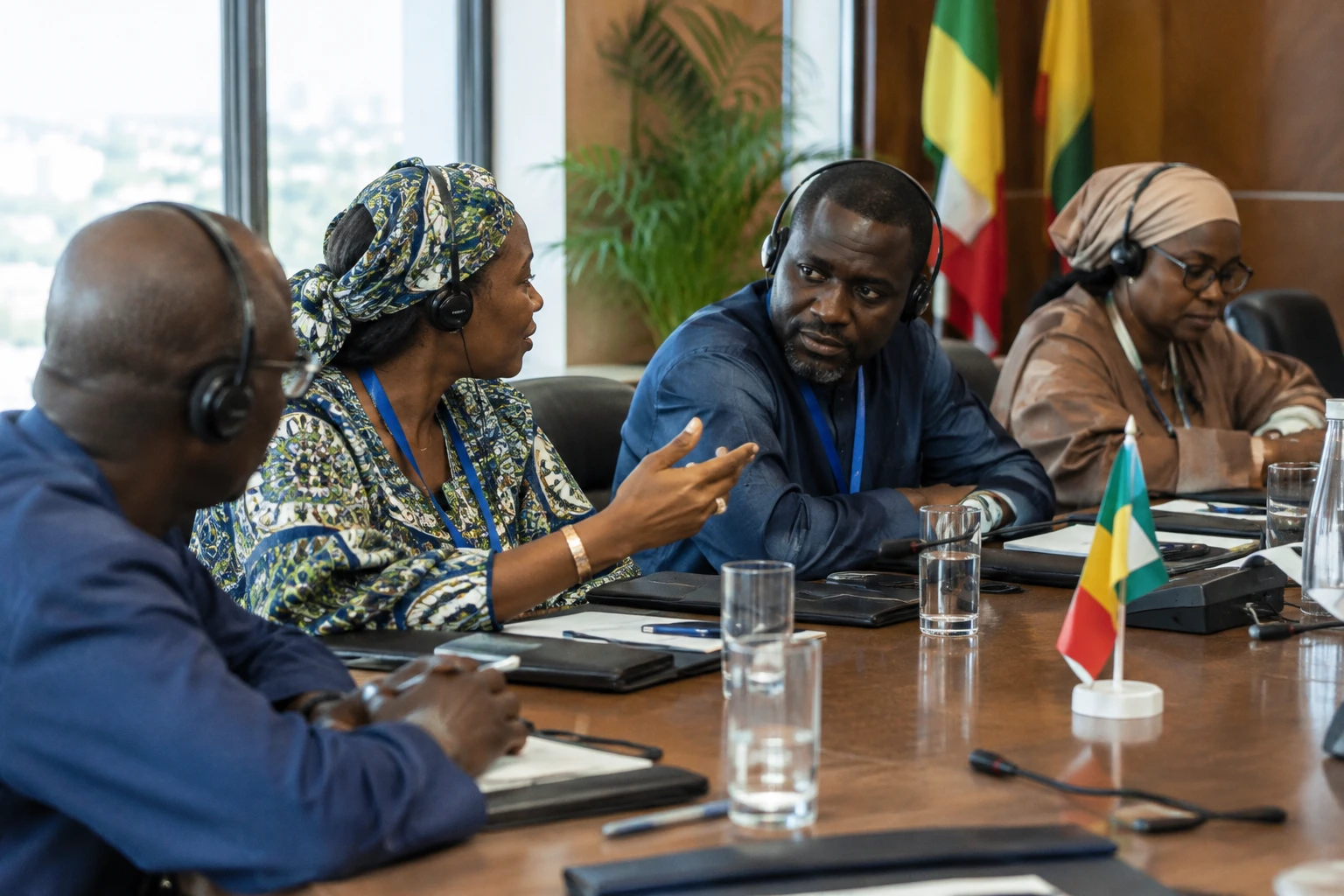
The sinking is a reminder that migration management cannot rely solely on maritime surveillance. Senegal has said it intends to combat smuggling networks and strengthen cooperation with neighbouring countries. For this response to have an impact, the authorities will also need to clarify the circumstances of the disaster, establish a consolidated toll and report on the outcome of the searches.
The regional implications are immediate: those intercepted came from several neighbouring countries, while maritime routes shift according to enforcement and opportunities to depart. Cooperation within ECOWAS and with the countries along the coast will therefore be crucial, particularly to coordinate rescue efforts and share reliable information. In the short term, the Kébémer toll and the identification of the victims remain the families’ first concerns.