Algeria
 Egypt
 Libya
 Morocco
 Sudan
 Tunisia
 Benin
 Burkina Faso
 Cabo Verde
 Côte d'Ivoire
 Ghana
 Guinea
 Guinea-Bissau
 Liberia
 Mali
 Mauritania
 Nigeria
 Senegal
 Sierra Leone
 The Gambia
 Togo
 Cameroon
 Central African Republic
 Chad
 DR Congo
 Equatorial Guinea
 Gabon
 Republic of the Congo
 São Tomé and Príncipe
 Burundi
 Comoros
 Djibouti
 Eritrea
 Ethiopia
 Kenya
 Madagascar
 Malawi
 Mauritius
 Mozambique
 Rwanda
 Seychelles
 Somalia
 South Sudan
 Tanzania
 Uganda
 Angola
 Botswana
 Eswatini
 Lesotho
 Namibia
 South Africa
 Zambia
 Zimbabwe
For a child who has left school or never attended, the challenge does not end with finding a classroom. They must also catch up on learning and then find their place in the mainstream school system. In Niger, the Harmonised Accelerated Education Scheme (DEAH) aims to organise this return to school on a large scale.
National training, and needs to be mobilised
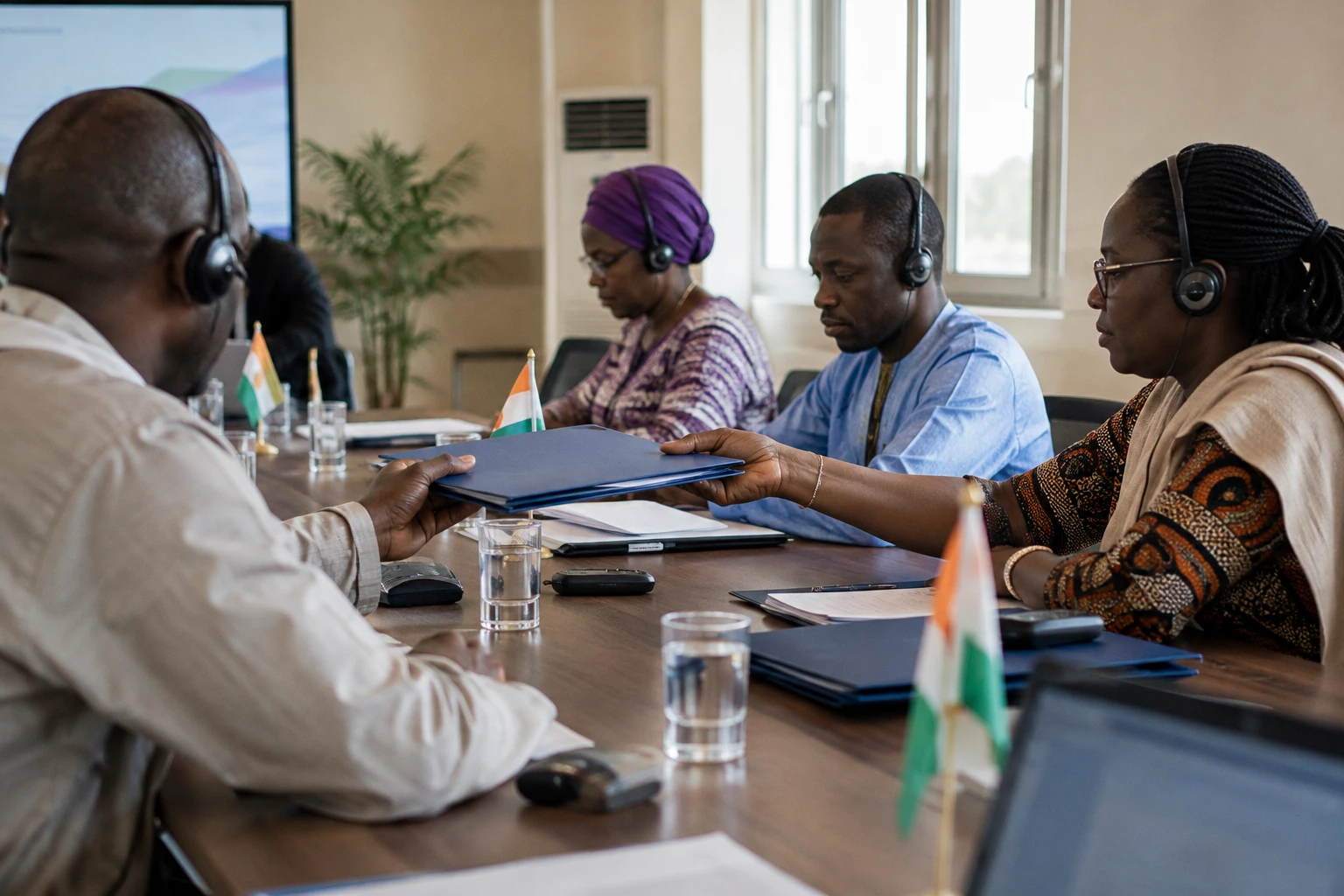
On 3 November 2026, Niger’s Minister of National Education launched training for 2,554 teachers assigned to the DEAH. The programme is funded by the World Bank through the Niger-LIRE project and implemented by Teach For Niger, a Nigerien organisation. Of the teachers involved, 121 are assigned to the Niamey region, the ministry says.
Regional training sessions are intended to prepare teachers to run second-chance centres. In the Diffa region, a 12-day session is scheduled to run from 30 October to 12 November 2026. The programme is aimed at children and adolescents aged 9 to 16 who are not in school or have left it. They will then be able to enter formal education or a vocational training institution, according to regional education authorities.
The immediate challenge is therefore twofold: to have trained teachers in place and to persuade the young people concerned, as well as their families, to join the centres. Figures released in Diffa illustrate the scale of the organisation required: 133 centres are to accommodate 7,650 learners in that region alone. A nationwide public outreach campaign is planned to identify the children and adolescents concerned.
The DEAH is part of Niger-LIRE, a project focused on improving learning and the management of the education system. It includes a component devoted to second-chance programmes. The ministry oversees the scheme, while the World Bank funds part of it. This cooperation does not replace the responsibility of Nigerien institutions: they must organise enrolment, educational monitoring and pathways into mainstream schools.
Pathways already tested
Niger has already tested accelerated learning pathways. Between 2017 and 2021, the PassEduc project offered bridging classes to out-of-school or dropout children aged 9 to 14. Over one or two years, these classes aimed to enable them to enter primary school, lower secondary school or vocational training. The project partners documented approaches to community outreach, facilitator training and pupil monitoring.
This experience is a reminder that an accelerated course alone does not guarantee lasting reintegration. Children must be identified, learning adapted to their level, attendance maintained and their entry into a mainstream class prepared. Constraints can vary from one area to another: distance to the centre, teacher availability, family schedules or the need to work. How these obstacles are addressed in practice will need to be observed as the DEAH is rolled out.
Niger-LIRE’s monitoring provides an initial indication of return-to-school pathways. In its report published on 17 February 2026, the World Bank says that 9,420 of the 13,684 young people enrolled entered primary school after assessment for the 2024-2025 school year. They joined the first or second year. This result documents a transition into formal schooling; on its own, it does not indicate whether pupils remain in school over time or what they have learnt several months later.
The gap between results and the target scale
The same report points to a coverage challenge. As of 10 December 2025, 30,838 out-of-school children and adolescents were receiving learning support, against a target of 200,000 by August 2026. This indicator covers all those receiving support; it is not the number of young people who have entered a mainstream class. The World Bank reports difficulties in meeting reintegration targets and mentions strategies developed with the ministry to increase the number of beneficiaries.
The two sets of figures therefore measure different stages. The 9,420 young people counted in the report entered primary school after an assessment; the 30,838 beneficiaries fall under a broader learning-support indicator. Confusing the two would give a misleading picture of progress. Reporting them separately instead raises the central question: how many children can the scheme reach, and how many actually continue their education after leaving the centre?
Training 2,554 teachers can increase capacity, but the number trained does not yet show how many centres will actually operate or how many young people will attend them. Scaling up will also depend on coordination between regional teams, schools and families. For children, the issue is tangible: securing a place suited to their level, and then avoiding another break in their schooling.
A Nigerien challenge in a region under pressure on education
In Niger, a West African country, gaps in access to school exist between regions, but also between urban and rural communities. A national announcement therefore does not guarantee uniform coverage. The figures from Diffa show an organised regional effort; implementation in other regions will also need to be monitored, particularly the numbers actually admitted and the opportunities to continue into primary school or vocational training.
The programme’s significance extends beyond the project itself. ECOWAS, a regional cooperation organisation in West Africa, provides a framework in which mobility, training and education policy are issues for several countries. The DEAH will not, by itself, resolve the structural difficulties facing Niger’s schools. It does, however, offer a model to assess: a catch-up pathway linked to identifiable opportunities within the education system.
The next step will be to compare targets with the results of the 2026-2027 school year: the actual opening of centres, the number of children enrolled, attendance through to assessments, and entry into a mainstream class or a training programme. These indicators, tracked region by region, will show whether Niger can turn an announced second chance into a lasting educational pathway.
Nigerien Ministry of National Education: training of DEAH teachers · Le Sahel: organisation of DEAH centres in Diffa · World Bank Niger-LIRE monitoring report, 17 February 2026 · Documentation of the PassEduc experience in Niger