Algeria
 Egypt
 Libya
 Sudan
 Tunisia
 Benin
 Burkina Faso
 Cabo Verde
 Côte d'Ivoire
 Ghana
 Guinea
 Guinea-Bissau
 Liberia
 Mali
 Mauritania
 Niger
 Nigeria
 Senegal
 Sierra Leone
 The Gambia
 Togo
 Cameroon
 Central African Republic
 Chad
 DR Congo
 Equatorial Guinea
 Gabon
 Republic of the Congo
 São Tomé and Príncipe
 Burundi
 Comoros
 Djibouti
 Eritrea
 Ethiopia
 Kenya
 Madagascar
 Malawi
 Mauritius
 Mozambique
 Rwanda
 Seychelles
 Somalia
 South Sudan
 Tanzania
 Uganda
 Angola
 Botswana
 Eswatini
 Lesotho
 Namibia
 South Africa
 Zambia
 Zimbabwe
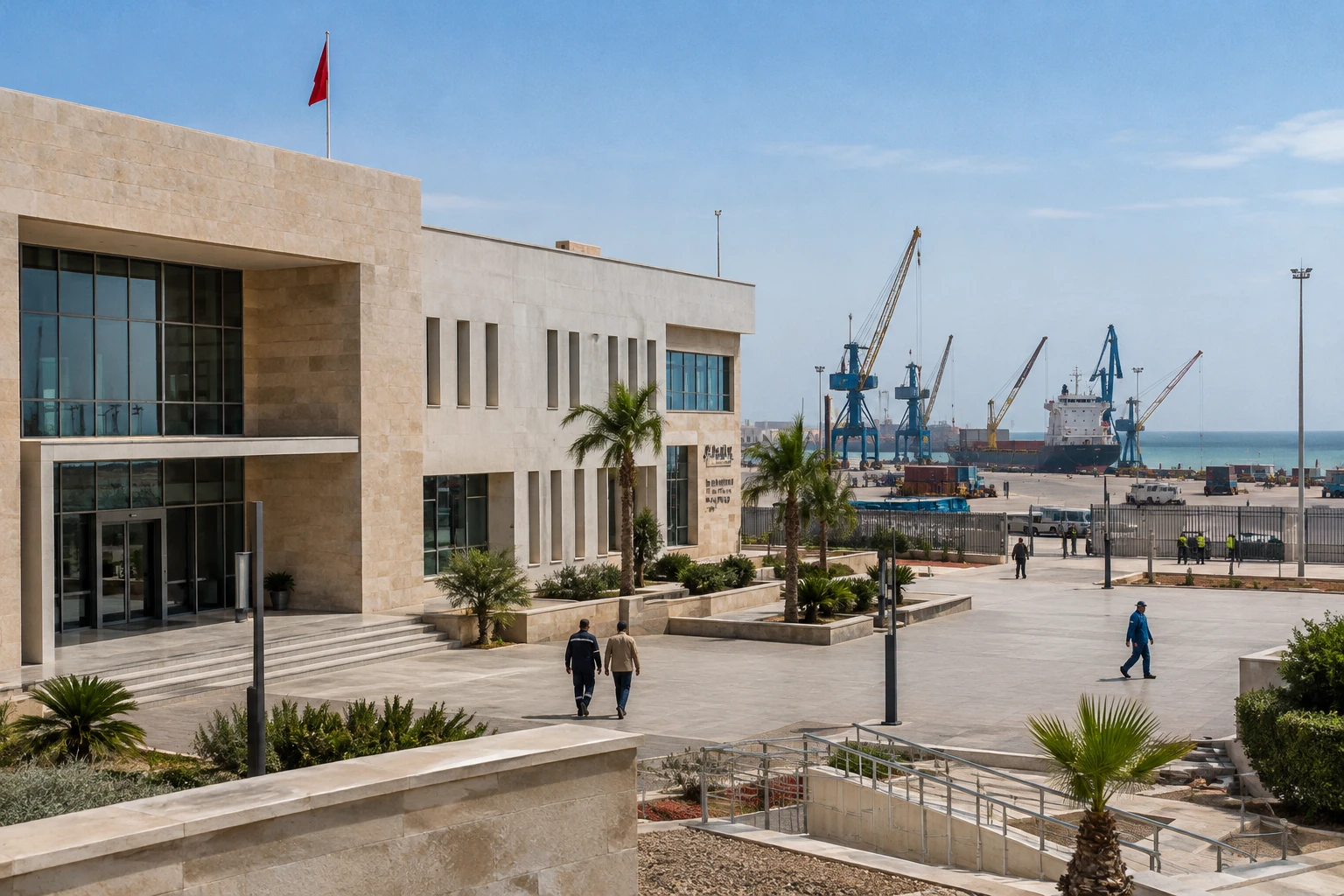
A port is measured not only by the cranes loading ships. It also matters for the roads, jobs and markets it connects to inland towns. Morocco is banking on this equation as it commits new funding to its port infrastructure.
Funding to modernise ports
On 3 November 2026, in Rabat, the National Ports Agency (ANP) and the French Development Agency (AFD) signed a joint declaration covering a €100m loan. Granted over 13 years without a guarantee from the Moroccan state, the loan is intended to contribute to the ANP’s 2023-2030 investment programme. The amount and signing date have been reported by several Moroccan and sectoral media outlets.
The programme covers four areas: renovation of port structures, the use of renewable energy and desalination, modernisation of fishing ports, and the electrification of quays and reduction of emissions. The loan is therefore not reserved for the construction of new facilities. It also aims to adapt existing infrastructure to energy and climate constraints.
Some of the projects concern the ports of Tan-Tan, Tarfaya, Laayoune, Boujdour, Dakhla and Lamhiriz, in the Southern Provinces. Moroccan authorities present this work as a driver of territorial development and links with African markets. Its implementation will nevertheless depend on the projects actually financed and the results observed on the ground.
A strategy that goes beyond the quayside
For several years, Morocco has sought to strengthen its position in maritime trade between Europe, the Mediterranean and West Africa. Tanger Med has established the country on major transshipment routes, where containers are transferred from one ship to another. The challenge now is to ensure that national and regional economies benefit more from this activity.
The ports on the Atlantic coast are part of this ambition. They can bring some regions closer to maritime routes and support fishing, exports and logistics activities. But the existence of a port alone does not guarantee the arrival of goods or the creation of lasting jobs. Road and rail links, customs services, costs and the presence of businesses all matter just as much.
The funding comes as Morocco’s port network evolves. The first container terminal at Nador West Med began operations on 31 October 2026, according to several sectoral sources. Further capacity developments have also been announced at Tanger Med. These investments expand port capacity, but they also set operators against one another in the competition to attract shipping lines and freight flows.
Figures need to be read in context
Available data show an increase in activity, but they do not always cover the same group of ports. The ANP says that facilities within its remit handled 102.4 million tonnes in 2025, up 2.5% from 2024. This figure does not represent total traffic across the entire Moroccan port system: not all ports and terminals fall under the same operator.
This distinction matters when assessing the scale of investment. An increase in traffic may reflect more imports or exports, but it may also represent transshipment activity linking external markets without the goods being destined for Morocco. Tonnage, container and revenue indicators should therefore be read together, with their scope clearly specified.
The effects will also vary between stakeholders. Exporting businesses may benefit from more reliable timings and increased capacity. Fishers and small local businesses will depend more on access to port services, nearby infrastructure and the jobs created. For public finances, the non-sovereign arrangement means that the loan is contracted by the ANP without a direct state guarantee; it does not remove the need to assess the cost of the debt and the projects’ profitability.
A longstanding partnership, with results to monitor
This funding is the AFD’s third contribution to the ANP under their partnership. The first loan, worth €50m, dates back to 2012. In 2020, a second agreement mobilised €100m, accompanied by a grant of €800,000. The 2024 declaration of intent subsequently announced further support focused on the green transition and climate resilience. The November 2026 agreement gives this new stage a financial form.
At the regional level, the issue dovetails with the objectives of the Arab Maghreb Union (AMU), a framework for cooperation between Maghreb countries, and those of the African Continental Free Trade Area (AfCFTA), which aims to facilitate trade between African countries. Complementary infrastructure could open up markets for the landlocked economies of the Sahel, notably Mali and Niger. But access to the sea is not enough: safe, predictable and affordable land corridors are also needed.
The coming years will show whether the ports concerned genuinely improve trade, services and local economic activity. The indicators to watch will not be limited to the announced handling capacity. They will include land connections, the share of flows captured by Moroccan operators, jobs created and energy savings from renovated facilities.