Algeria
 Egypt
 Libya
 Morocco
 Sudan
 Tunisia
 Benin
 Burkina Faso
 Cabo Verde
 Côte d'Ivoire
 Ghana
 Guinea
 Guinea-Bissau
 Liberia
 Mali
 Mauritania
 Niger
 Nigeria
 Senegal
 Sierra Leone
 The Gambia
 Togo
 Cameroon
 Central African Republic
 Chad
 DR Congo
 Equatorial Guinea
 Gabon
 Republic of the Congo
 São Tomé and Príncipe
 Burundi
 Comoros
 Djibouti
 Eritrea
 Ethiopia
 Kenya
 Madagascar
 Malawi
 Mauritius
 Mozambique
 Rwanda
 Seychelles
 Somalia
 South Sudan
 Tanzania
 Uganda
 Angola
 Botswana
 Eswatini
 Lesotho
 Namibia
 Zambia
 Zimbabwe
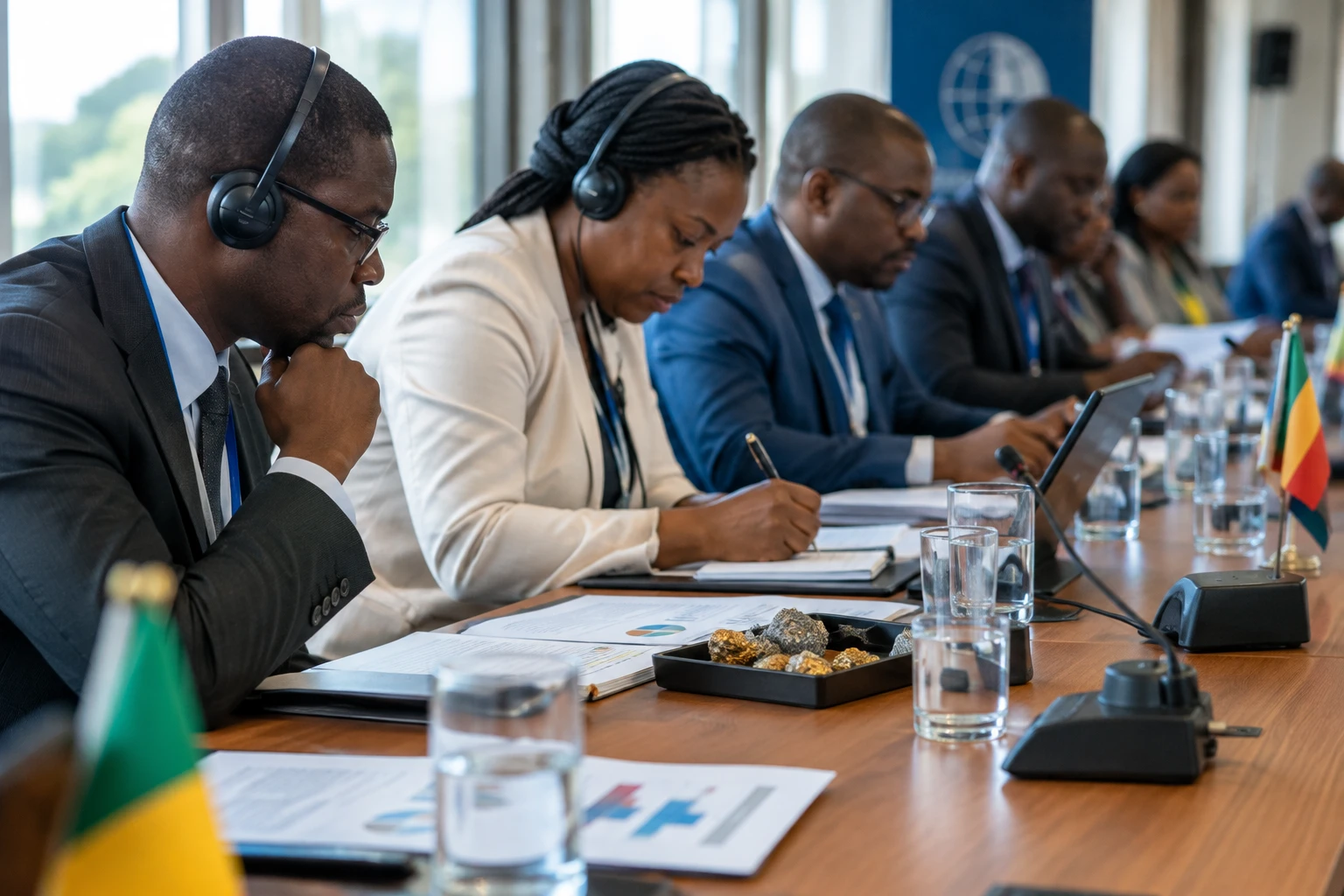
Ivory Coast is producing more gold, but some of the metal’s value is created elsewhere: in refineries, trading networks and markets that set the terms of access to buyers. Understanding where Ivorian gold goes helps gauge the stakes of local processing.
Visible destinations, but not always the final buyer
The latest detailed public data on destinations by mine remain dated. The Extractive Industries Transparency Initiative (EITI) report covering 2022 records shipments to Switzerland from several Ivorian industrial mines. It also lists South Africa, France and Australia. For gold from artisanal and small-scale mining, the United Arab Emirates dominate declared destinations; Turkey also features.
These data describe the countries declared as export destinations, not necessarily the final buyers. Gold may be refined there, traded and then resold. Switzerland and South Africa have substantial processing infrastructure. The United Arab Emirates, meanwhile, is a major gold-trading hub. The customs destination therefore provides a clue to the metal’s route, but is not enough to establish its entire journey.
The 2023 EITI report confirms that destinations for mined gold can vary from one producing country to another: in Mali, South Africa and Switzerland topped declared shipments that year. This regional finding does not, however, make it possible to infer the current distribution of Ivorian exports.
An expanding industry, statistics in need of updating
Ivorian gold production rose from 23.54 tonnes in 2015 to 59.124 tonnes in 2024, according to figures from the Ministry of Mines cited by the national economic portal. Exports reached 57.265 tonnes that year, with a declared value of CFA francs 1,999 billion. These official series confirm the sector’s growth, but do not provide recent details of destinations by mine.
The difference between production and exports is also a reminder that volumes extracted must be distinguished from volumes shipped in the same year. The available data alone cannot explain every discrepancy or track stocks and the time lags between extraction and export.
Growth is underpinned by the opening of new mines and the expansion of existing projects. Lafigué has joined the operating sites; the Koné project is expected in the coming years. Public forecasts put production at 61 tonnes in 2025, but this is an estimate, not an annual figure confirmed in the data consulted. The authorities’ stated aim is to raise production to 100 tonnes a year by 2035.
In this context, the lack of recent detailed statistics on destinations limits public debate. Without regular breakdowns of exports by operator, form of metal and destination country, it is difficult to know whether the routes observed in 2022 remain representative. Markets are evolving, as are producing sites and intermediaries.
Local refining, the next test of Ivory Coast’s strategy
The authorities now aim to capture more value within the country. The Ministry of Mines expects Ivory Coast’s first refining plant to begin operating in the first half of 2027. The Ivorian Precious Metals Company (SIMEP) is to link the facility with a national purchasing centre tasked with collecting and tracing gold from small-scale operations, then organising its marketing.
The project is about more than building a plant. To be sold on international markets, refined gold must meet recognised requirements for quality, traceability and compliance. Access to these markets will also depend on commercial contracts, logistics and oversight mechanisms. The authorities say international marketing of refined gold should be supported by a specialist partner; the practical arrangements and volumes involved remain to be seen.
The expected effects will not be the same for all stakeholders. The state is seeking greater visibility over flows and revenues. Industrial mining operators will have to adapt to refining and sales choices. For artisanal and semi-industrial miners, the purchasing centre could organise collection and ease access to the formal market, provided the rules and prices on offer are accessible. Transparent purchases will be crucial to assessing the actual benefits.
This policy is part of a West African trend in which gold plays a major role in exports, while countries seek greater control over trading networks and processing. For Ivory Coast, a member of ECOWAS, the challenge is to strengthen local capacity without conflating domestic refining with full control of global trade. The publication of recent, comparable statistics, along with the planned 2027 start-up of the plant, will make it possible to judge whether more value is staying in the country.
Background sources included: Ivory Coast’s 2022 EITI report, national statistics on gold production and exports, the ministry’s presentation of SIMEP and the refining plant, SWISSAID’s analysis of African gold flows.