Algeria
 Egypt
 Libya
 Sudan
 Tunisia
 Benin
 Burkina Faso
 Cabo Verde
 Côte d'Ivoire
 Ghana
 Guinea
 Guinea-Bissau
 Liberia
 Mali
 Mauritania
 Niger
 Nigeria
 Senegal
 Sierra Leone
 The Gambia
 Togo
 Cameroon
 Central African Republic
 Chad
 DR Congo
 Equatorial Guinea
 Gabon
 Republic of the Congo
 São Tomé and Príncipe
 Burundi
 Comoros
 Djibouti
 Eritrea
 Ethiopia
 Kenya
 Madagascar
 Malawi
 Mauritius
 Mozambique
 Rwanda
 Seychelles
 Somalia
 South Sudan
 Tanzania
 Uganda
 Angola
 Botswana
 Eswatini
 Lesotho
 Namibia
 South Africa
 Zambia
 Zimbabwe
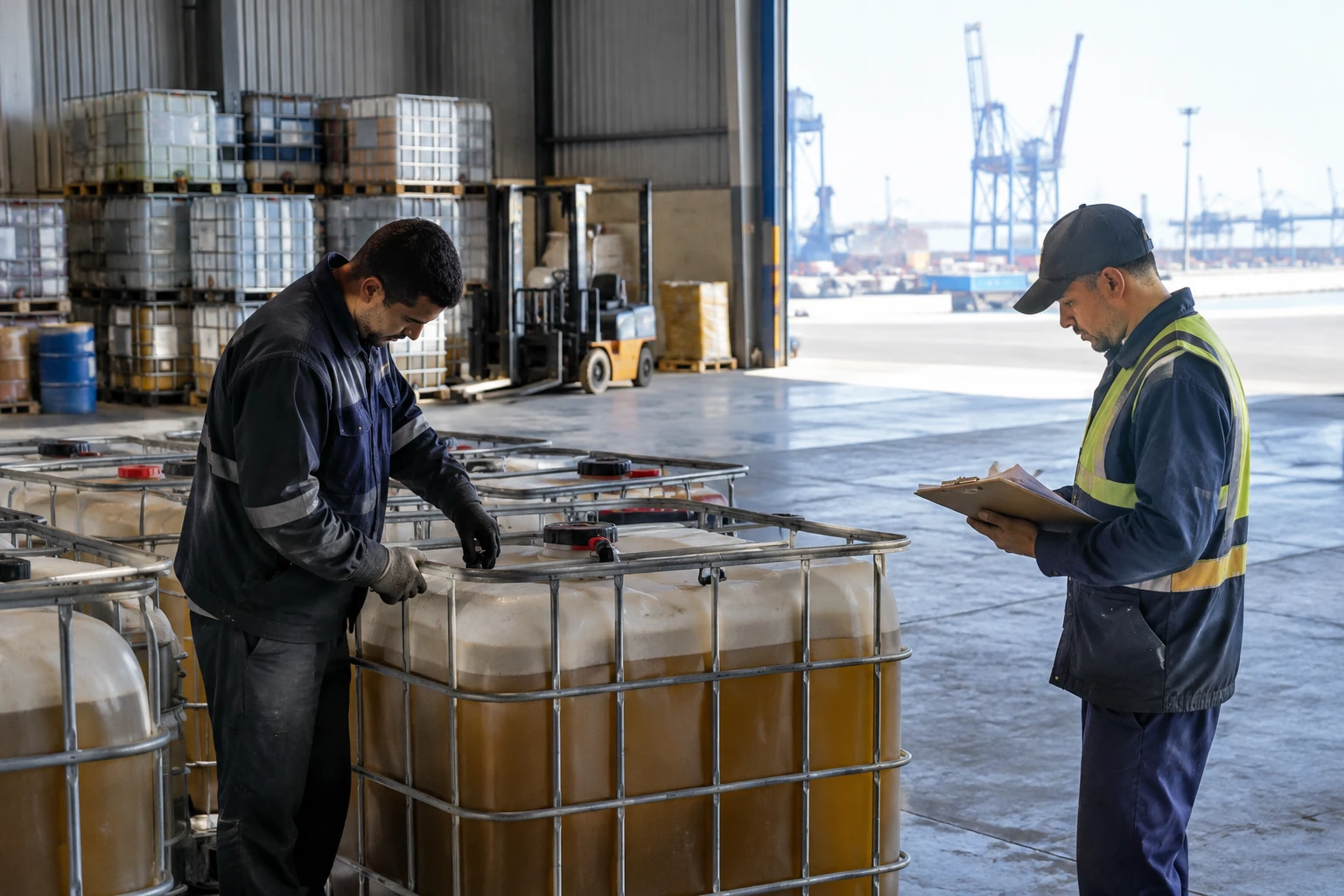
At Nador, the future sustainable aviation fuel already has a potential buyer, even before construction of the plant. For Morocco, the stakes go beyond a commercial deal: the aim is to turn waste into industrial output and establish a foothold in a sector set to grow, but whose costs and supply chains remain untested.
An industrial project at a port beginning operations
Nador West Med, in the Oriental region, reached its first operational milestone on 31 October 2026, when activities began at its East container terminal. The phased opening provides a logistical framework for the fuel project, but does not mean the biofuel plant is already under construction or producing. An account by Moroccan news agency MAP, carried by Hespress, places the start of operations within the broader rollout of the port complex.
On 2 November, Shell Trading Rotterdam signed a long-term offtake agreement with Green Sky Manara LLC, the company linked to the project developed by Green Sky Capital. Information published in Morocco confirms the announcement and its timeline. The agreement gives Shell exclusive offtake rights to about 150,000 tonnes a year of sustainable aviation fuel, or an equivalent volume of renewable diesel, known as hydrotreated vegetable oil. It also covers bionaphtha and biopropane, co-products for which volumes have not been specified. Le Desk also reports the signing and scope of the agreement.
The planned facility is to occupy about 88,000 square metres in the industrial and logistics zone of Nador West Med. The European Bank for Reconstruction and Development (EBRD) describes a project designed to produce up to 200,000 tonnes of sustainable aviation fuel a year. The production volume announced by Shell under the agreement — 150,000 tonnes, subject to the contractual terms — should therefore not be confused with the plant’s maximum capacity. Operations are due to begin in October 2028, according to information released about the project.
Local waste, but imports may also be needed
The planned process, known as HEFA, turns oils and fats into fuel through treatment with hydrogen. Feedstocks are expected to include used cooking oils and residual fats collected in Morocco. However, the EBRD says imports could supplement domestic collection if available volumes prove insufficient. This potential dependence matters: it will affect costs, production consistency and the share of value actually created in the country.
The bank estimates the project’s cost at about $239 million and is considering financing of up to $135 million. Its project record is still listed as exploratory and pending final review. The financing is therefore not presented as definitively approved. The plan also includes a hydrogen production unit and storage facilities. Details of the agreement with Shell — its duration, price, allocation of volumes between fuels and quantities of co-products — have not been made public in the information reviewed.
An offtake agreement signed before operations begin can help secure financing by giving the project a prospective market. But on its own, it does not guarantee that the plant will be built on schedule, reach its planned capacity or secure feedstocks at a competitive cost. For Moroccan stakeholders, the local supply chain will also be important: oil collection, transport, quality control, industrial skills and associated jobs.
European demand opens a market, not a guarantee
Europe is an important potential market because its ReFuelEU Aviation regulation requires a minimum share of sustainable aviation fuels in the fuel supplied to EU airports. The minimum has been 2% since 2025, and is due to rise to 6% in 2030 and 70% in 2050. The European Commission sets out these requirements and deadlines. The regulation is stimulating demand, but it does not mean that all Moroccan production will automatically be purchased or qualify: compliance with European criteria and certification of feedstocks and processes will be decisive.
“Sustainable” does not mean “zero-emission”. The emissions balance depends on the materials used, how they are collected and how the fuel is made. The planned production of hydrogen at Nador using natural gas and steam raises questions in particular about the process’s overall footprint. The fuel can reduce emissions over its lifecycle compared with fossil kerosene, but it does not eliminate emissions from flights.
A test of Morocco’s industrial ambitions
In Rabat, authorities present Nador West Med as a driver of port and industrial development in the east of the country. The planned plant adds an energy dimension to that strategy. It could link waste collection, industrial processing and exports to a regulated market. But the benefits for Moroccans will depend on the project’s local content, its long-term jobs and the ability to develop a collection network without excessive competition with existing uses for oils.
At regional level, the project is of interest to North Africa, where production of alternative fuels remains to be developed, and more broadly to African countries seeking to capture a share of the global energy transition. Nador’s proximity to Mediterranean shipping routes could offer a logistical advantage. It cannot, however, replace the availability of resources, access to confirmed financing or evidence of a credible environmental balance.
The next steps to watch are concrete: finalising financing, securing environmental permits, building the plant, securing feedstocks and clarifying the offtake agreement. The recent opening of the port terminal shows that the complex is beginning to operate. For the fuel project, the shift from commercial agreement to actual production remains to be demonstrated.