Algeria
 Egypt
 Libya
 Morocco
 Sudan
 Tunisia
 Benin
 Burkina Faso
 Cabo Verde
 Côte d'Ivoire
 Ghana
 Guinea
 Guinea-Bissau
 Liberia
 Mali
 Mauritania
 Niger
 Nigeria
 Sierra Leone
 The Gambia
 Togo
 Cameroon
 Central African Republic
 Chad
 DR Congo
 Equatorial Guinea
 Gabon
 Republic of the Congo
 São Tomé and Príncipe
 Burundi
 Comoros
 Djibouti
 Eritrea
 Ethiopia
 Kenya
 Madagascar
 Malawi
 Mauritius
 Mozambique
 Rwanda
 Seychelles
 Somalia
 South Sudan
 Tanzania
 Uganda
 Angola
 Botswana
 Eswatini
 Lesotho
 Namibia
 South Africa
 Zambia
 Zimbabwe
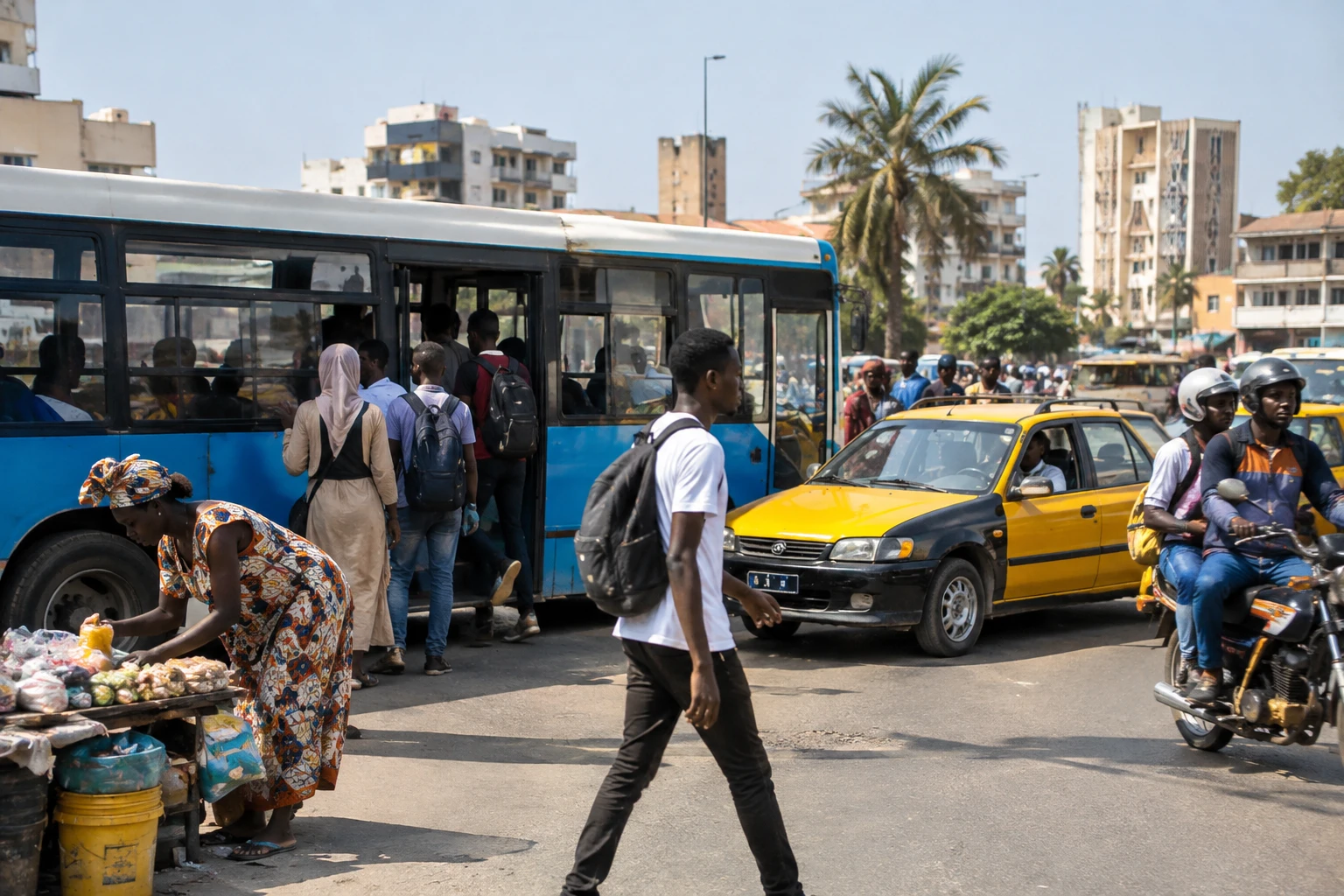
In Dakar, the spotlight is on young athletes from around the world. But in the streets near the competition venues, one question remains concrete: who will benefit from the investment and activity generated by the Youth Olympic Games? The event is a historic one for Senegal. Its legacy, however, will also be measured in neighbourhoods and everyday jobs.
A continental event, three Senegalese venues
From 31 October to 13 November 2026, Senegal is hosting the Youth Olympic Games (YOG), an international competition for young athletes. It is the first Olympic event to be held on the African continent. Around 2,700 athletes are expected in Dakar, Diamniadio and Saly. The event was initially scheduled for 2022, before being postponed to 2026 during the Covid-19 pandemic.
This edition is giving the country unusual sporting visibility and putting Dakar at the centre of a global event. It also reflects an ambition shared by African stakeholders: to host more major competitions on the continent, rather than remaining only their audience or a pool of talent. For young Senegalese, the Games can bring sports, athletes and career paths that often receive little media coverage closer to home.
But the event’s significance extends beyond sport. Senegal is a member of the Economic Community of West African States (ECOWAS), which brings neighbouring countries together around shared economic and political issues. Dakar’s logistical success could strengthen regional experience in hosting major events. It does not, however, in itself guarantee that investment will benefit residents over the long term.
Benefits debated in neighbourhoods
In Dakar’s La Médina neighbourhood, shoemaker Mamadou Wadji says he had to leave his family workshop in September to make way for the expansion of a stadium linked to the Games. He says he and other artisans were relocated to an unfinished school behind a market. His account highlights an issue that is often less visible than the ceremonies: the effects of construction work on activities already taking place around the infrastructure.
“We, the population in general, and particularly those in the informal sector, should have been the first to benefit. Unfortunately, that has not been the case,” he says. This individual account alone cannot measure the scale of displacement or the compensation provided. It nevertheless raises a central question: do affected traders and artisans have access to suitable solutions and a share of the new opportunities?
The Senegalese government has announced a contribution of 36 billion CFA francs to the organisation. Official documents detail several budget allocations and spending items; a final assessment will make it possible to distinguish costs directly related to the Games from works that will remain useful after they end. The available summary of the amounts is not sufficient to confirm separately the 11.3 billion CFA francs attributed to the renovation of sports infrastructure. That figure should therefore be presented with caution.
The authorities and organisers are making the case for a lasting legacy, including through training and volunteering initiatives. These programmes can give young people experience. Their impact, however, will depend on the number of participants, the quality of the training and the opportunities available after the Games. A short event does not automatically create stable jobs.
Young people expect measurable results
The debate is taking place as households face the cost of living and access to jobs remains difficult. The African Development Bank estimates youth unemployment in Senegal at 23.6% in 2025, according to the indicator it uses. This rate alone does not describe the range of circumstances: a significant share of economic activity takes place in the informal economy, where incomes and social protection are often less predictable.
These constraints do not affect everyone in the same way. Small neighbourhood businesses can be directly affected by construction sites or changes to traffic patterns. Companies able to bid for event contracts, by contrast, may secure new business. And if visitors concentrate around the venues, the benefits risk being distributed unevenly between Dakar, Diamniadio, Saly and other regions.
For Momar Assane Diouf, an entrepreneur campaigning to reduce the cost of living, the money spent on the Games could have addressed more immediate needs, such as purchasing power. This argument reflects a real public policy trade-off: fund an event and its facilities, or allocate more resources to other priorities. There can be no full comparison without knowing the final cost, revenue, partner funding and expenditure that would have taken place even without the Games.
Student Paulina Netinan Nodjibougada sums up the gap felt by some young people: “There are too many problems, too many difficulties in families. Even if this is an important event, we have our own problems that have not been resolved.” The symbolic success of the Games therefore does not make everyday concerns disappear. It exists alongside them.
After the competition, the legacy test
Senegal is staking its claim here in representation as much as in sport. Hosting the first African YOG could help strengthen local expertise in organising, hospitality and facilities management. It could also foster exchanges between young athletes from the continent and the rest of the world. But these benefits will be difficult to assess without public data on spending, local contracts, jobs created and the future use of the venues.
The social assessment will also have to take account of people affected by the construction work, particularly self-employed workers and those in the informal economy. In Dakar and the other host cities, the question will not simply be whether the facilities were delivered on time. It will be necessary to check whether they remain accessible, maintained and useful to residents after 13 November.
At the level of ECOWAS and the African Union, this edition sets a precedent for the continent’s ability to organise international competitions. The challenge now is to link that visibility to verifiable benefits. For Senegalese people, the Games’ lasting mark will depend less on their image alone than on what they leave to young people, neighbourhoods and local businesses.