Algeria
 Egypt
 Libya
 Morocco
 Sudan
 Tunisia
 Benin
 Burkina Faso
 Cabo Verde
 Côte d'Ivoire
 Ghana
 Guinea
 Guinea-Bissau
 Liberia
 Mali
 Mauritania
 Niger
 Nigeria
 Sierra Leone
 The Gambia
 Togo
 Cameroon
 Central African Republic
 Chad
 DR Congo
 Equatorial Guinea
 Gabon
 Republic of the Congo
 São Tomé and Príncipe
 Burundi
 Comoros
 Djibouti
 Eritrea
 Ethiopia
 Kenya
 Madagascar
 Malawi
 Mauritius
 Mozambique
 Rwanda
 Seychelles
 Somalia
 South Sudan
 Tanzania
 Uganda
 Angola
 Botswana
 Eswatini
 Lesotho
 Namibia
 South Africa
 Zambia
 Zimbabwe
For young athletes across the continent, the Dakar Youth Olympic Games (YOG) are no longer a distant prospect: they are beginning in Senegal. The ceremony on Saturday 31 October 2026 opens an international competition, but also a moment the country presents as a celebration of its youth and African cultures.
A first Olympic event on the continent
Senegal is hosting the YOG from 31 October to 13 November. Around 2,700 athletes aged 14 to 17 are expected across three venues: Dakar, Diamniadio and Saly. The programme includes 25 sports, according to information from the International Olympic Committee (IOC) and Senegalese news agency APS. The YOG bring together young athletes in a format distinct from the adult Summer Olympic Games.
The symbolism therefore goes beyond the ceremony. This is the first Olympic sporting event to be held in Africa. The IOC awarded the Games to Senegal in 2018, for an edition scheduled for 2022. The timetable was moved to 2026 following disruption caused by the Covid-19 pandemic and the postponement of the Tokyo Games. The chosen date also takes school and sports calendars into account.
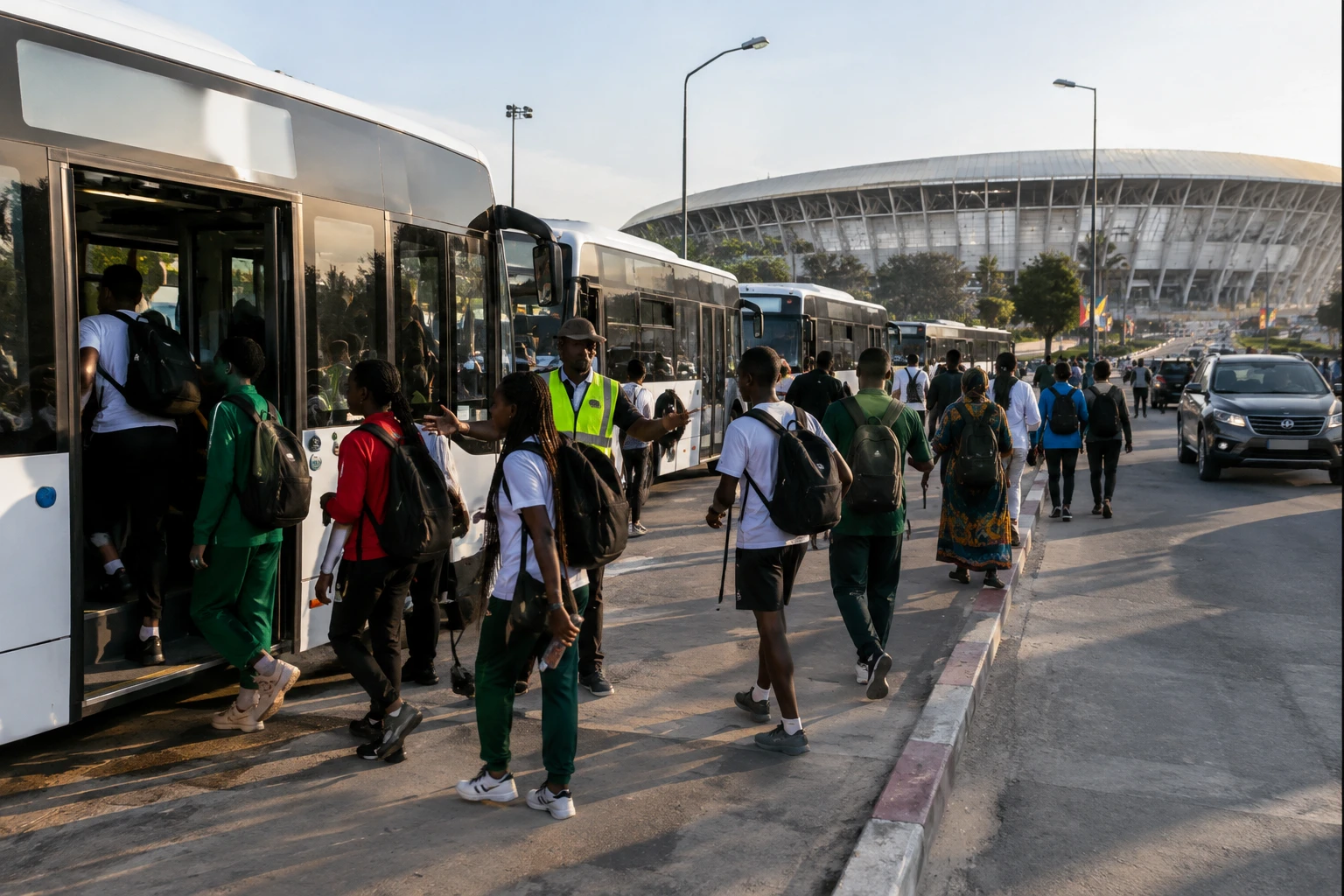
The Abdoulaye-Wade Stadium in Diamniadio is hosting the opening ceremony. Dakar, Senegal’s capital, and the seaside resort of Saly complete the competition venues. This choice distributes events across several areas, although the tangible benefits will also depend on transport, public access and the activity generated around the facilities.
A ceremony balancing representation and competition
The ceremony began on Saturday evening at the Abdoulaye-Wade Stadium, in the presence of President Bassirou Diomaye Faye and visiting leaders, the Senegalese Press Agency (APS) reports. The programme announced a mix of musical performances, dance and a parade of delegations. The agency had said that around 11,000 participants, including 700 dancers, were expected to take part in the show. This figure refers to expected participants, not the number of spectators in the stands.
The arrival of the flame is another highlight of the opening. Before reaching the stadium, it travelled through Senegal’s 14 regions. More than 400 torchbearers were involved, according to the Associated Press (AP), while the material provided refers to more than 450 people. In the absence of independent confirmation of the higher figure, it is safer to say that several hundred torchbearers took part in the relay.
The Senegalese president is due to declare the Games open. The oath taken by representatives of the athletes, coaches and officials recalls the demands of fairness and sporting integrity. The lighting of the cauldron then marks the official start of the competitions. APS had announced that this moment would take place at 20:01 local time.
The show highlights a Senegalese identity set within a continental narrative. This ambition aligns with the Games’ motto, “Africa welcomes, Dakar celebrates”. It carries particular significance at a global event where African countries are often represented more as participants than as hosts. Here, Senegal is welcoming the delegations and shaping the event.
Benefits to be measured beyond the stadium
The Games bring together the state, the organising committee, local authorities and sports stakeholders. For young Senegalese people, the stakes go beyond medals: competitions and activities can bring new sports closer to schools and neighbourhoods. For traders, transport operators and small businesses, the arrival of delegations and the public may create temporary opportunities. These benefits, however, will be neither automatic nor evenly distributed.
Venues far from central Dakar raise a practical question: how will spectators, teams and workers travel between them? Revenue from major facilities and job opportunities will matter to formal businesses as well as those working in the informal economy. Tracking costs, the use of facilities after the Games and benefits for local communities will therefore be just as important as the sporting results.
This Olympic first comes at a time when Senegal is seeking to use major events as a means of raising its profile and fostering cooperation. The government has also put a summit on sport and development on the agenda for 31 October, according to its statement carried by APS. The ability to turn international attention into lasting partnerships will be a test for the authorities and organisers.
A signal for West Africa and the sporting movement
At regional level, Dakar 2026 puts West Africa and the Economic Community of West African States (ECOWAS) in the spotlight. The organisation brings several countries in the region together for political and economic cooperation. The Games are not an ECOWAS competition, but delegations’ travel and exchanges between federations may strengthen sporting ties that extend beyond national borders.
The event is also part of a broader trend: African countries are hosting international events across a range of sports and formats. AP notes, in particular, the recent organisation of world competitions on the continent. Dakar adds an Olympic milestone to this momentum, without resolving the questions of funding, access to facilities and training that affect African sport.
The coming days will show whether the organisation lives up to its promises and whether the public can follow events in good conditions. The first results, attendance at venues and the future use of infrastructure will be tangible indicators. For Senegal, the story is not simply about opening the Games: it will also be about the legacy left to young athletes after 13 November.
For information on dates and the programme, see the IOC’s Dakar 2026 file, reports from the Senegalese Press Agency on the ceremony, and information from the Associated Press on the opening of the Games.