
 Algeria
 Egypt
 Libya
 Morocco
 Sudan
 Tunisia
 Benin
 Burkina Faso
 Cabo Verde
 Côte d'Ivoire
 Ghana
 Guinea
 Guinea-Bissau
 Liberia
 Mali
 Mauritania
 Niger
 Nigeria
 Senegal
 Sierra Leone
 The Gambia
 Togo
 Cameroon
 Central African Republic
 Chad
 Equatorial Guinea
 Gabon
 Republic of the Congo
 São Tomé and Príncipe
 Burundi
 Comoros
 Djibouti
 Eritrea
 Ethiopia
 Kenya
 Madagascar
 Malawi
 Mauritius
 Mozambique
 Rwanda
 Seychelles
 Somalia
 South Sudan
 Tanzania
 Uganda
 Angola
 Botswana
 Eswatini
 Lesotho
 Namibia
 South Africa
 Zambia
 Zimbabwe
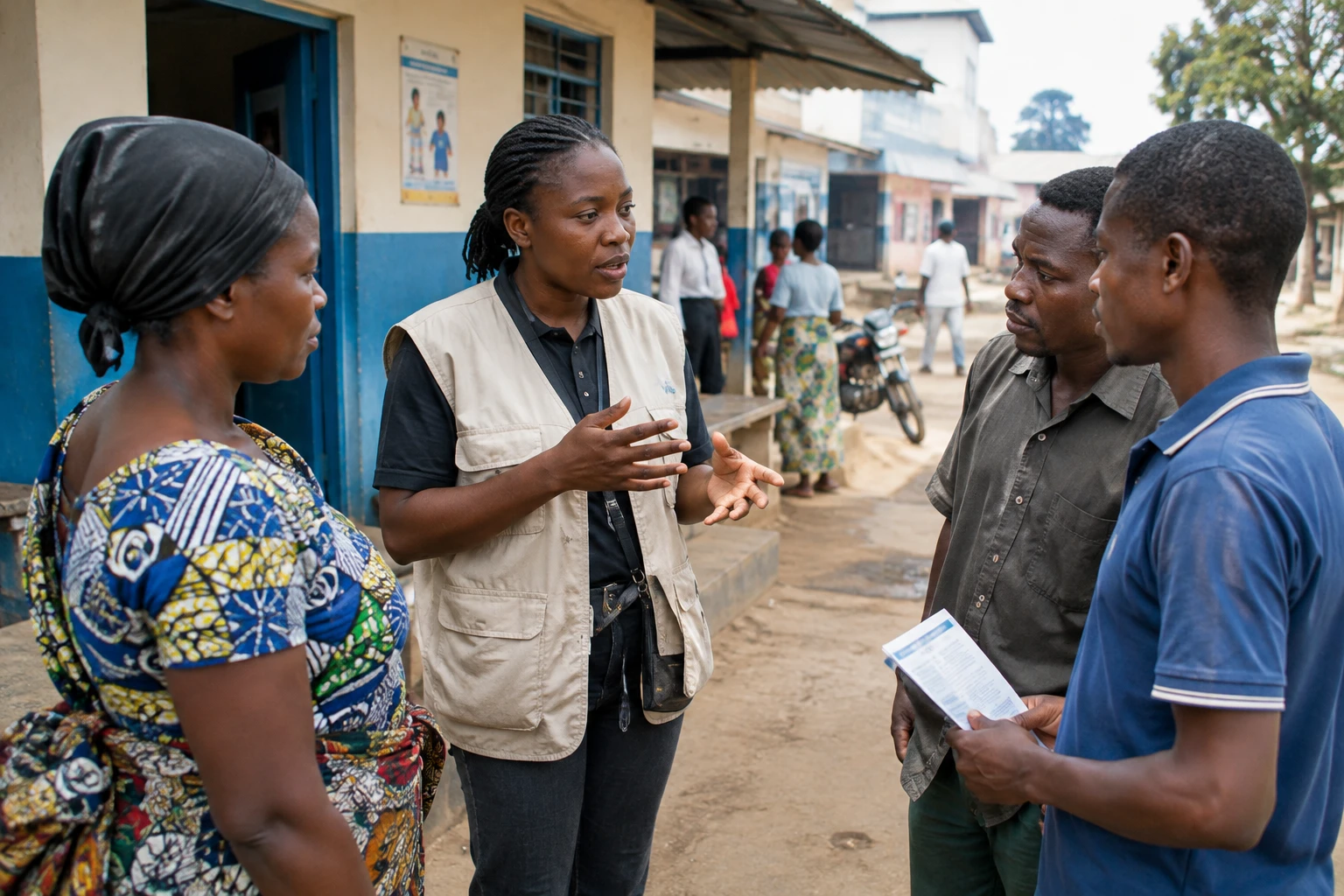
In the Democratic Republic of the Congo, the Ebola epidemic is no longer measured solely by the spread of the outbreak on a map. It is also visible in villages where health teams struggle to reach people, in overstretched centres and among families who hesitate to report symptoms.
As of Saturday 31 October 2026, data from the Congolese health ministry showed 10,351 people infected and 5,026 deaths. The figures were reported by the Associated Press. Three days earlier, Radio Okapi cited a tally recorded as of 25 October: 10,060 cases and 4,887 deaths. The rapid spread explains the difference between these two snapshots.
Outbreak centred in the east, but spread across eight provinces
Declared in mid-May, the country’s 17th Ebola epidemic is caused by the Bundibugyo virus, a species of Ebola virus. It has affected eight of the country’s 26 provinces. Ituri remains the epicentre: as of 25 October, the ministry had recorded more than 7,200 cases and 3,370 deaths there. North Kivu had more than 2,300 cases at that point.
The 31 October toll exceeds 5,000 deaths, making this the second deadliest outbreak ever documented, after the one that hit West Africa from 2014 to 2016. The World Health Organization (WHO) had already described the epidemic as rapidly expanding in August. However, its tally, compiled at an earlier date, cannot be directly compared with the Congolese figures for October.
The situation is unfolding against a difficult backdrop for public services in the east. Insecurity and population displacement are hampering the movement of teams, contact tracing and access to care. In Ituri, women with suspected symptoms could not be transferred because no ambulance was available, according to information reported by Radio Okapi.
The response also depends on trust and resources
The virus is transmitted mainly through direct contact with the blood or other bodily fluids of an infected person. Rapidly identifying patients and tracing their contacts helps break chains of transmission. Yet, according to officials cited by the Associated Press, a significant proportion of new cases are still not linked to chains of contacts already identified.
The obstacles are not solely medical. Health workers have faced violence and healthcare facilities have been disrupted. Workers at a treatment centre in Ituri stopped work to demand several months of unpaid wages, the agency reports. These tensions undermine continuity of care and the relationship between health teams and communities.
Mistrust cannot be dispelled through instructions alone. Rumours that water sources have been contaminated, mentioned in accounts of attacks on responders, show the importance of clear information delivered by locally recognised intermediaries. Community leaders, healthcare workers, associations and health authorities all have a role in building trust, without shifting responsibility for violence onto the population.
The Bundibugyo strain also presents a particular medical challenge. According to the WHO, it is not yet known whether the Ervebo vaccine, which is effective against another species of Ebola virus, protects humans against this one. A clinical trial is therefore important to establish its usefulness. In the meantime, teams are relying on screening, isolation, supportive care and infection prevention.
A cross-border challenge for Central and East Africa
Movement between the DRC and its neighbours makes regional surveillance essential. Cases linked to the epidemic have been reported in Uganda, Kenya and Nigeria. The WHO also confirmed cases in France, with no active transmission reported in that country at the end of August. Tallies and statuses change, so authorities must distinguish between imported cases, local transmission chains and countries where the outbreak has ended.
The DRC belongs to several regional groupings, including the East African Community (EAC) and the Southern African Development Community (SADC). Border surveillance, rapid data sharing and laboratory coordination therefore involve organisations and countries beyond Central Africa. The WHO maintains the epidemic at the level of a public health emergency of international concern and highlights the risk of cross-border spread.
Historical comparisons underscore the scale of the challenge, but also the need to handle figures precisely. The 2018-2020 epidemic in the DRC caused 2,299 deaths, according to the WHO. The current outbreak has surpassed that toll. The next stage will depend less on a national announcement than on tangible results: accessible care, health teams that are paid and protected, alerts acted on quickly, and regional cooperation capable of tracking the movement of the virus.
Cross-checked sources: recent outbreak data reported by the Associated Press, ministry tally reported by Radio Okapi on 28 October 2026, WHO situation report and assessment of the Bundibugyo virus, historical background on Ebola from Africa CDC and WHO report on the 2018-2020 Congolese epidemic.



