Algeria
 Egypt
 Libya
 Morocco
 Sudan
 Tunisia
 Benin
 Burkina Faso
 Cabo Verde
 Côte d'Ivoire
 Ghana
 Guinea
 Guinea-Bissau
 Liberia
 Mali
 Mauritania
 Niger
 Nigeria
 Senegal
 Sierra Leone
 The Gambia
 Togo
 Cameroon
 Central African Republic
 Chad
 Equatorial Guinea
 Gabon
 Republic of the Congo
 São Tomé and Príncipe
 Burundi
 Comoros
 Djibouti
 Eritrea
 Ethiopia
 Kenya
 Madagascar
 Malawi
 Mauritius
 Mozambique
 Rwanda
 Seychelles
 Somalia
 South Sudan
 Tanzania
 Uganda
 Angola
 Botswana
 Eswatini
 Lesotho
 Namibia
 South Africa
 Zambia
 Zimbabwe
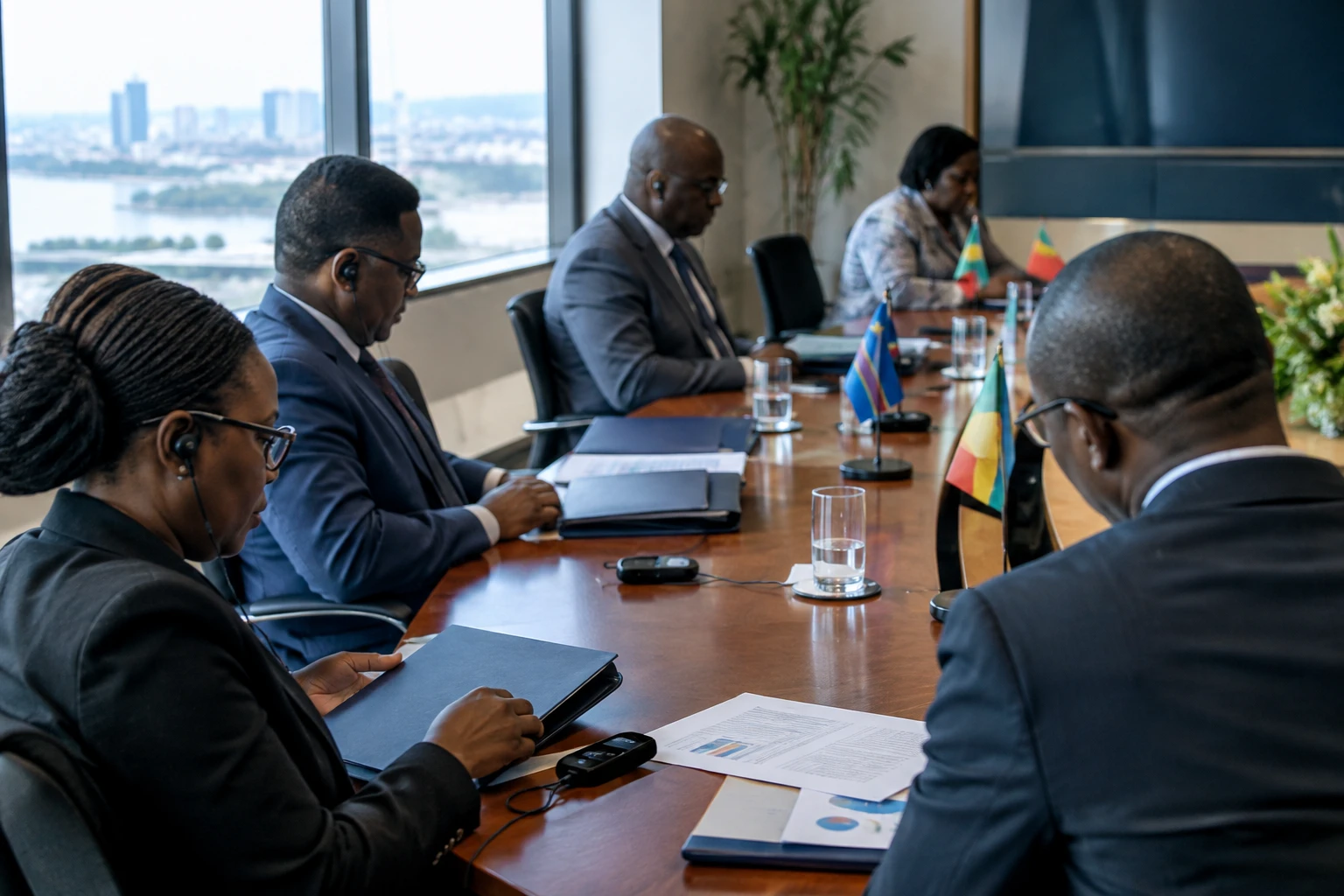
A budget can list billions without public services seeing any of it. In the Democratic Republic of the Congo, the 2027 finance bill therefore puts two practical questions before Parliament: will the announced revenues be raised, and will the approved funds reach the people they are meant to serve?
A larger budget, subject to parliamentary oversight
Presented to the National Assembly on 29 October 2026 by Prime Minister Judith Suminwa, the finance bill amounts to 56,930 billion Congolese francs, or around $24.8 billion. That is an increase of nearly 12% compared with the 2026 revised budget, according to the Congolese Press Agency and several media outlets in the country. The bill is now under examination by MPs: the National Assembly declared it admissible on 31 October, paving the way for the next stage of parliamentary scrutiny.
The bill forms part of a trend towards higher public spending, as the government sets out multiple priorities: security, social services, jobs and purchasing power. Budget documents are published by the Ministry of the Budget, while reports from the Court of Accounts allow past implementation to be assessed. The distinction matters: an approved forecast is not expenditure that has already been made.
The presentation at the end of October should also be distinguished from the initial submission of the bill, which took place in September. Figures published in different reports do not all match for some items. The figures confirmed by the official bill and independent sources should therefore be used, while other figures should be treated as reported announcements awaiting verification.
Stated priorities: security, basic services and purchasing power
Of the allocations announced, $6.2 billion is earmarked for basic social services. This covers education, health, water, electricity and social protection, among other areas. Security and territorial protection would account for $6.1 billion. Jobs and purchasing power would receive $4.8 billion. These figures indicate the government’s policy priorities; their impact will depend on the funds actually disbursed and how they are distributed among institutions and provinces.
The security priority comes as violence continues in the east of the country. Spending on defence and territorial protection addresses a national concern, but the figures alone do not show how resources will be distributed or what results will be measured. For households, the issue also lies in day-to-day services: continuity of healthcare, access to school, and the cost of electricity and water.
The government is also planning 142 billion Congolese francs, or around $62.8 million, for national dialogue. An allocation has also been announced for electoral operations. These funds include political processes in the budget, but their inclusion alone does not set a timetable or guarantee agreement among the political and social forces involved.
Domestic revenue to be raised, implementation to be monitored
The government plans to fund most of the budget through domestic revenue, projected to account for 82% of resources. This reliance on revenue collected in the country could give Kinshasa greater room for manoeuvre. However, it also puts pressure on the administration’s ability to collect taxes and duties, and to make those revenues traceable. The Ministry of the Budget is highlighting the digitisation of collection services and closer monitoring of VAT.
The macroeconomic framework forecasts growth of 5.8% in 2027 and average inflation of 6.4%. These are projections, not established outcomes. If prices rise faster than incomes, households, particularly those reliant on the informal economy, may see little improvement despite higher public spending. Conversely, investment actually delivered in infrastructure and services could support economic activity beyond the major urban centres.
MPs have stressed the need to respect allocated funds and prevent overspending. Accountability and monitoring of implementation are therefore as important as passing the bill. They will make it possible to compare announcements with disbursements, and then with the services actually delivered in the provinces. For citizens, this chain of oversight is what turns a budget line into a tangible result.
A national issue with implications beyond the borders
The DRC is a member of the Southern African Development Community (SADC) and the Economic Community of Central African States (ECCAS), two regional organisations where security, trade and infrastructure are shared concerns. The situation in the east of the country also has a regional dimension, because of cross-border ties and ongoing diplomatic efforts. But the budget remains, first and foremost, a national set of choices: Kinshasa’s priorities must take account of very different realities in the capital, major cities and remote areas.
The next step will be a detailed parliamentary examination, followed by the possible adoption of the bill. Amendments, revenue actually collected and spending implemented in 2027 will all need to be monitored. The announced increase sets an ambition. Its significance will be judged both in the public accounts and by whether Congolese women and men see more accessible services and stronger security.