Algeria
 Egypt
 Libya
 Morocco
 Sudan
 Tunisia
 Benin
 Burkina Faso
 Cabo Verde
 Côte d'Ivoire
 Ghana
 Guinea
 Guinea-Bissau
 Liberia
 Mali
 Mauritania
 Niger
 Nigeria
 Senegal
 Sierra Leone
 The Gambia
 Togo
 Cameroon
 Central African Republic
 Chad
 Equatorial Guinea
 Gabon
 Republic of the Congo
 São Tomé and Príncipe
 Burundi
 Comoros
 Djibouti
 Eritrea
 Ethiopia
 Kenya
 Madagascar
 Malawi
 Mauritius
 Mozambique
 Rwanda
 Seychelles
 Somalia
 South Sudan
 Tanzania
 Uganda
 Angola
 Botswana
 Eswatini
 Lesotho
 Namibia
 South Africa
 Zambia
 Zimbabwe
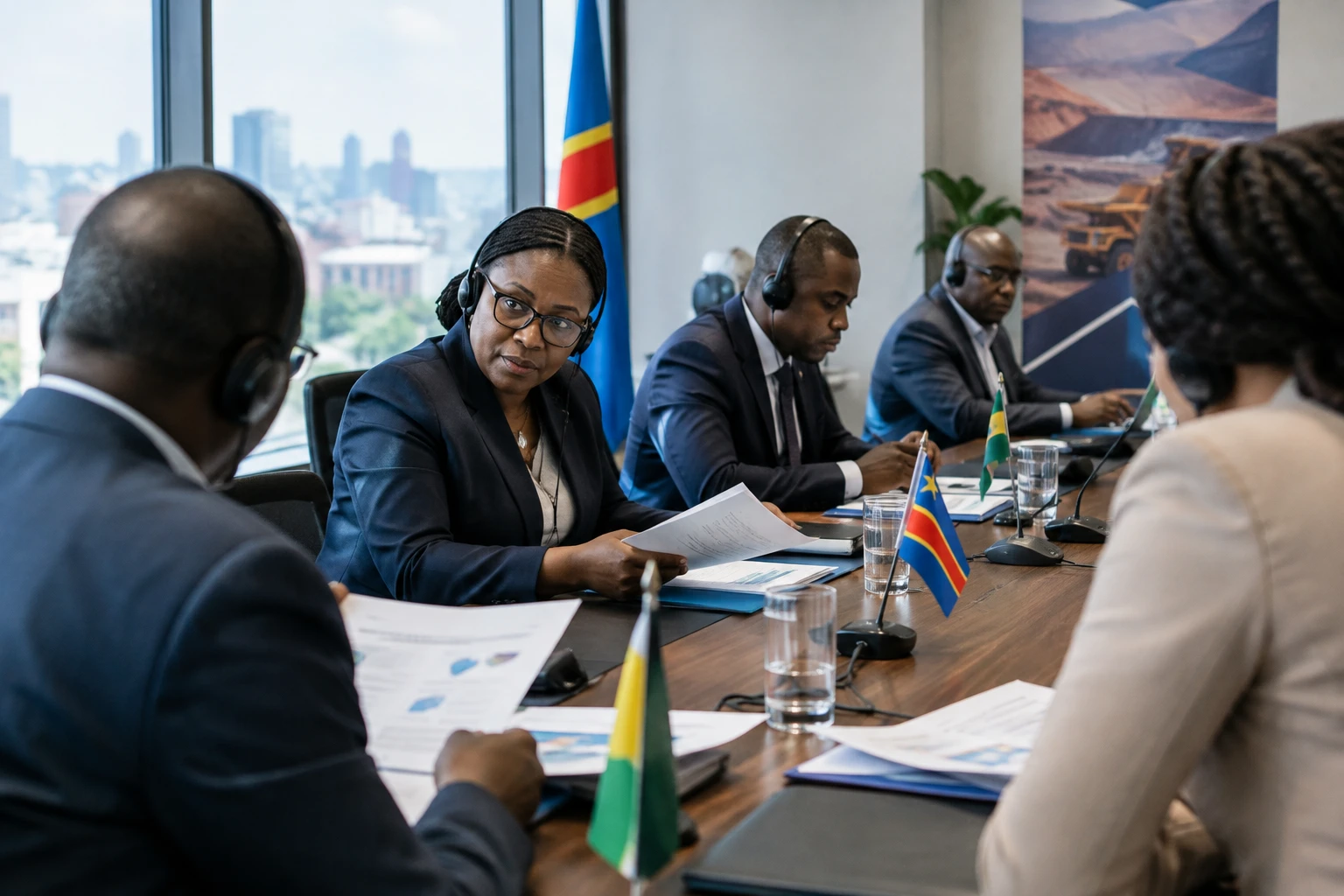
In Lualaba, rising copper output at Kamoto and Mutanda has taken on new significance: it comes as the Democratic Republic of the Congo regulates cobalt exports and US investors seek a foothold in these mining assets.
Copper output rises amid cobalt quotas
The DRC introduced cobalt export quotas after a period in which overseas sales were suspended. The mechanism sets the volumes authorised for export; it does not limit copper, which is mined alongside cobalt at several sites. The decision is intended in particular to better regulate Congolese supply on the global market. It also changes mining companies’ production choices.
The Democratic Republic of the Congo is a member of both the Southern African Development Community (SADC) and the East African Community (EAC). These regional frameworks matter for trade, transport corridors and economic cooperation around mineral resources.
Glencore said it produced 210 600 tonnes of copper in the DRC between January and September 2026, 37 % more than in the same period in 2025. The figure appears in its quarterly report published on 29 October. The company attributed the increase to higher mining rates and improved ore grades. Specialist outlet Shanghai Metals Market also reported the total and the increase.
Kamoto Copper Company (KCC) supplied 158 900 tonnes, up 35 % year on year. Mutanda produced 51 700 tonnes, 44 % more. Both mines are in Lualaba province, in the south-east of the country.
An industrial decision, but also a question of control
The increase is part of a shift announced by Glencore: prioritising copper to a greater extent as quotas make cobalt exports less predictable. This does not mean the company has stopped producing cobalt. Its report shows a 52 % decline in cobalt output from its own mines in the first nine months of 2026, to 13 700 tonnes, citing the Congolese quota regime among other factors.
Copper is therefore becoming an important lever for maintaining activity and revenue at the sites. However, higher output alone does not guarantee that the benefits are shared equitably among workers, local suppliers or public finances. The distribution of revenue also depends on taxation, subcontracting rules, operating costs and the transparency of payments.
For communities near the mines, the issue goes beyond export volumes. It concerns employment, procurement from Congolese companies, public revenue and the management of environmental impacts. A company’s published production figures are not enough on their own to measure these effects. Provincial and national authorities therefore remain central to questions of oversight and benefit-sharing.
This comes as a US-backed consortium, Orion Critical Mineral Consortium (Orion CMC), is considering acquiring a 40 % stake in Glencore’s interests in KCC and Mutanda. Glencore announced a non-binding memorandum of understanding in February 2026 for a transaction valuing the two assets at around 9 billion dollars. At this stage, it is a proposed transaction: the announcement does not mean the sale has been completed.
The proposed agreement is part of a closer relationship between Washington and Kinshasa over strategic minerals. For the United States and its partners, the stated aim is to secure supplies. For the DRC, the challenge also lies in negotiating investment terms, local benefits and the role of Congolese public actors in major assets.
The next test: output, agreement and local benefits
The latest quarter’s results will show whether copper’s growth is sustained. At the same time, any finalisation of the agreement with Orion CMC will need to be watched closely: the announced memorandum remains non-binding, and the final terms of participation had not been established in that initial announcement.
At regional level, the case illustrates competition for minerals needed for electricity infrastructure, batteries and other industries. SADC and the EAC provide frameworks for cooperation, but decisions on assets, quotas and revenue distribution rest primarily with Congolese authorities and the companies concerned.
For Kinshasa and the people of Lualaba alike, the central question is therefore not simply the rise in volumes. It is whether this activity can be turned into predictable public revenue, jobs and domestic value added, while retaining effective control over the resources.