Algeria
 Egypt
 Libya
 Morocco
 Sudan
 Tunisia
 Benin
 Burkina Faso
 Cabo Verde
 Côte d'Ivoire
 Ghana
 Guinea-Bissau
 Liberia
 Mali
 Mauritania
 Niger
 Nigeria
 Senegal
 Sierra Leone
 The Gambia
 Togo
 Cameroon
 Central African Republic
 Chad
 DR Congo
 Equatorial Guinea
 Gabon
 Republic of the Congo
 São Tomé and Príncipe
 Burundi
 Comoros
 Djibouti
 Eritrea
 Ethiopia
 Kenya
 Madagascar
 Malawi
 Mauritius
 Mozambique
 Rwanda
 Seychelles
 Somalia
 South Sudan
 Tanzania
 Uganda
 Angola
 Botswana
 Eswatini
 Lesotho
 Namibia
 South Africa
 Zambia
 Zimbabwe
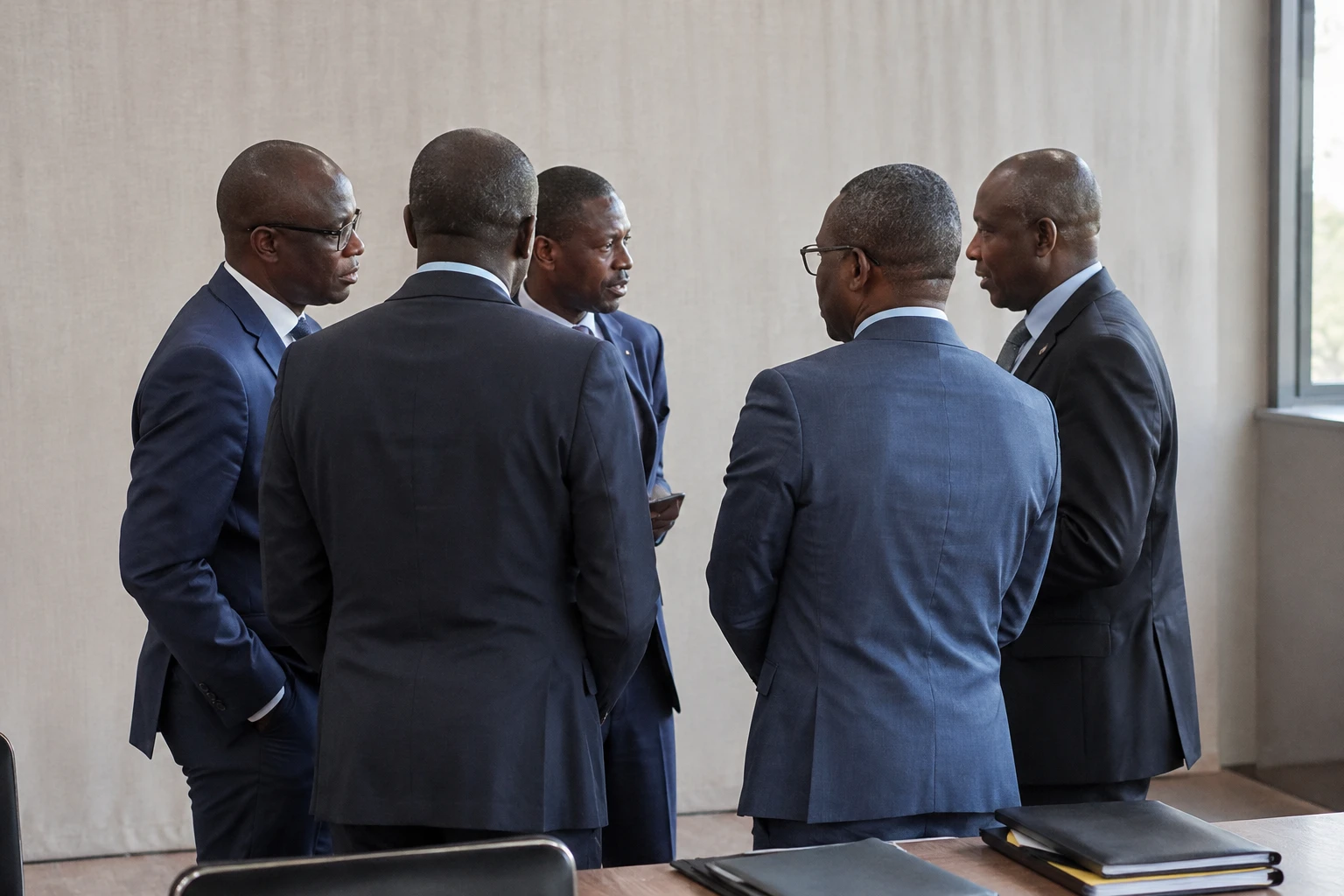
A close vote opens a new period for Guinean football. The question goes beyond the winner’s name: can the federation turn investment promises into better-organised competitions, support for clubs and clearer management rules?
A vote decided by football representatives
On 27 October 2026, in Conakry, Mamady Doumbouya was elected head of the Guinean Football Federation, Feguifoot. His term is four years. The vote took place at the federation’s elective general assembly, which brings together members eligible to vote.
Of 53 registered statutory members, 52 took part in the vote. Doumbouya’s list received 21 votes. Mamadou Antonio Souaré secured 18 and Ibrahima Kalil Kaba 13. A fourth candidate, Mohamed Chérif Haïdara, received no votes, according to matching reports by Guinee360 and AfricaSport.
The majority was therefore narrow: just over two-fifths of the votes cast. The result gives the new team electoral legitimacy, but also underlines that it will have to accommodate differing views within national football. Doumbouya’s campaign was presented under the slogan “Let’s Renovate Football 224”.
The new president also heads the Regulatory Authority for Posts and Telecommunications, according to the Guinean press. This dual responsibility will make clarity about the official’s availability and the separation between his public and federation roles particularly important.
Promises must be translated into verifiable decisions
During the campaign, Doumbouya promised investment to revive Guinean football. Wealthy businesspeople were described as backing his candidacy, but available information specifies neither the amounts committed nor the terms or any potential conditions. It is therefore too early to present this support as secured funding.
The first test will be the publication of a costed programme and timetable. Clubs, male and female players need to know how resources will be allocated: regular competitions, training, infrastructure, women’s football and support for teams in the regions. Without measurable targets, the investment promise will be difficult to assess.
The issue also concerns the federation’s day-to-day management. In April 2025, executive committee members had provisionally removed president Aboubacar Sampil after internal disagreements. The Guinean National Olympic and Sports Committee then referred to governance tensions and called for work with FIFA, CAF and the Ministry of Sports. The episode showed how disagreements at the top can undermine continuity in decision-making and distract from competitions.
To prevent such tensions from recurring, the new leadership will need to make its decisions clear: accounts, contracts, criteria for awarding assistance and the workings of the executive committee. This is not merely an administrative requirement. A stable federation helps clubs plan their seasons and young talent find sustainable development pathways.
Between federation independence and national expectations
Feguifoot operates within a framework involving several levels of responsibility. CAF organises football across Africa, while FIFA sets international rules and supports development programmes. The Guinean state, meanwhile, is involved in sports policy and infrastructure. The federation must work with these actors while preserving its decision-making autonomy.
This boundary has already been tested in Guinea. In 2024, decisions concerning the management of the Syli national, the nickname of the national team, drew criticism and raised questions about relations between sports officials and political power. Debates at the time highlighted the risk of the national team’s results becoming a political issue. The new team will therefore have to show that its sporting decisions are based on transparent and consistent criteria.
The significance of this election is regional. Guinea is a member of ECOWAS, a co-operation organisation for West African countries, and its football competes in CAF tournaments. Credible governance facilitates engagement with continental bodies and the preparation of clubs and national teams for competitions. Conversely, prolonged crises can slow projects and undermine partners’ confidence.
Results will be measured beyond Conakry
For supporters in Conakry, expectations concern the quality of the leagues and the Syli’s performances. But the effects of federation policy should not stop at the capital. In secondary cities and rural areas, access to pitches, trained referees and regular competitions determines the identification and development of players.
Clubs, often facing unequal resources, will need predictable rules and a respected calendar. Female players, for their part, must be able to rely on sustained competitions and clearly identified resources, rather than general announcements. The federation can report on its progress by publishing simple indicators: the number of competitions organised, support distributed, training courses delivered and infrastructure actually renovated.
The vote ends a campaign, not the debate over the governance of Guinean football. The first year of the term will show whether the majority secured becomes a working consensus. The next budget decisions, the regularity of league competitions and the place given to women’s football and the regions will provide concrete benchmarks for judging the new leadership.