Algeria
 Egypt
 Libya
 Morocco
 Sudan
 Tunisia
 Benin
 Burkina Faso
 Cabo Verde
 Côte d'Ivoire
 Ghana
 Guinea
 Guinea-Bissau
 Liberia
 Mali
 Mauritania
 Niger
 Nigeria
 Senegal
 Sierra Leone
 The Gambia
 Togo
 Cameroon
 Central African Republic
 DR Congo
 Equatorial Guinea
 Gabon
 Republic of the Congo
 São Tomé and Príncipe
 Burundi
 Comoros
 Djibouti
 Eritrea
 Ethiopia
 Kenya
 Madagascar
 Malawi
 Mauritius
 Mozambique
 Rwanda
 Seychelles
 Somalia
 South Sudan
 Tanzania
 Uganda
 Angola
 Botswana
 Eswatini
 Lesotho
 Namibia
 South Africa
 Zambia
 Zimbabwe
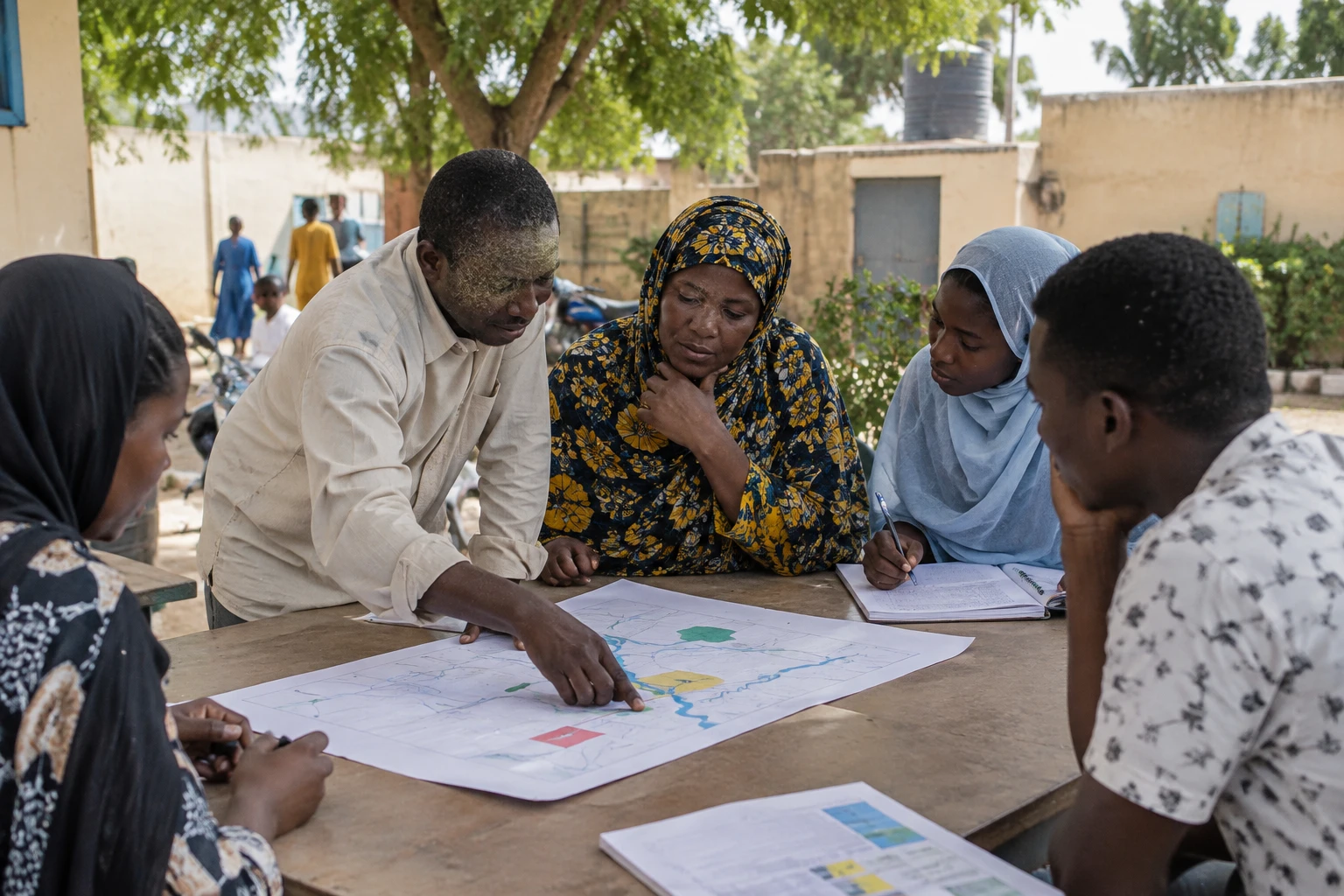
In Chad, biodiversity conservation also plays out in grazing lands, water points and decisions made far from villages. Communities who depend on these territories are not just asking to be consulted: they want a say in the rules and access to the means to protect their resources.
This demand accompanies Hindou Oumarou Ibrahim, a Chadian activist and head of the Association of Fulani Women and Indigenous Peoples of Chad (AFPAT), at COP17 on biodiversity, taking place in Yerevan from 19 to 30 October 2026. The conference marks the first global review of progress towards the Kunming-Montreal targets, adopted in 2022 and set for 2030.
In Chad, local knowledge informs climate choices
In regions where families depend on pastoral livestock farming, climate change is no abstraction. It affects herd movements, access to water and the availability of natural resources. Responses must therefore take local realities into account, particularly in areas far from services and decision-making centres.
Work conducted with Mbororo communities in Chad shows how this expertise can complement scientific research. Launched by AFPAT in 2011, then developed with UNESCO’s Local and Indigenous Knowledge Systems programme, the project documented knowledge related to weather and climate. It also organised dialogue with meteorologists and national services.
The aim is not to replace scientific forecasts with community knowledge. It is to bring them together to improve adaptation and the flow of information, including to rural populations. The approach combines participatory research, residents’ experience and meteorological data.
Hindou Oumarou Ibrahim has been advancing this approach in international forums for several years. From a Mbororo pastoral community, she founded AFPAT and champions the role of Indigenous peoples in environmental policies. The United Nations Office for Partnerships highlights, in particular, her work to include these voices and promote participatory mapping projects.
In Yerevan, the issue is also control over access to funding
At COP17, states are collectively assessing implementation of the Kunming-Montreal Global Biodiversity Framework. The exercise is intended to measure progress, but also to reveal gaps between commitments and action. Discussions focus on how to accelerate measures intended to help halt biodiversity loss by 2030.
Community participation is particularly important when decisions concern their land and resources. In an interview published during the conference, Ibrahim said that funding mechanisms and the representation of Indigenous peoples were among the issues being debated in Yerevan. She called for funds intended for communities to reach them directly, rather than be lost in intermediary channels.
The question goes beyond the amount announced. It also concerns allocation criteria, local organisations’ ability to access funds and their role in choosing projects. National administrations must translate international commitments into concrete policies. Communities, meanwhile, must be able to monitor decisions that affect their daily lives.
For women and young people, access to decision-making bodies remains a distinct issue. Women often play an important role in managing resources, while young people are directly affected by the duration of environmental policies. Involving them is therefore not just a matter of symbolic representation: it can influence the relevance of the measures adopted.
Regional significance for Central Africa and the Sahel
Chad belongs to the Central African Economic and Monetary Community (CEMAC), which brings six countries together around economic cooperation. It also shares the challenges of the Lake Chad Basin with several neighbouring states. Ecosystems and pastoral activities do not stop at borders, so regional coordination can matter for water management, climate adaptation and the protection of natural resources.
In this context, methods developed in Chad have wider resonance. The study of Mbororo communities was part of an initiative conducted with pastoral groups in several African countries and regional centres, including AGRHYMET. It underlines that adaptation policy benefits from linking local knowledge, meteorological services and public planning.
COP17 thus offers a practical test of commitments made four years earlier: will governments manage to measure progress, close the gaps and make funding accessible to those on the ground? For Chad, the outcome will also be judged far from conference halls, by the ability of institutions and communities to protect the ecosystems on which their activities depend.
Hindou Oumarou Ibrahim’s path highlights a central question in the negotiations: who takes part in defining solutions, and who can put them into practice? The answer will shape biodiversity efforts in Chad and environmental cooperation in Central Africa.