Algeria
 Egypt
 Libya
 Morocco
 Sudan
 Tunisia
 Benin
 Burkina Faso
 Cabo Verde
 Côte d'Ivoire
 Ghana
 Guinea
 Guinea-Bissau
 Liberia
 Mali
 Mauritania
 Niger
 Nigeria
 Sierra Leone
 The Gambia
 Togo
 Cameroon
 Central African Republic
 Chad
 DR Congo
 Equatorial Guinea
 Gabon
 Republic of the Congo
 São Tomé and Príncipe
 Burundi
 Comoros
 Djibouti
 Eritrea
 Ethiopia
 Kenya
 Madagascar
 Malawi
 Mauritius
 Mozambique
 Rwanda
 Seychelles
 Somalia
 South Sudan
 Tanzania
 Uganda
 Angola
 Botswana
 Eswatini
 Lesotho
 Namibia
 South Africa
 Zambia
 Zimbabwe
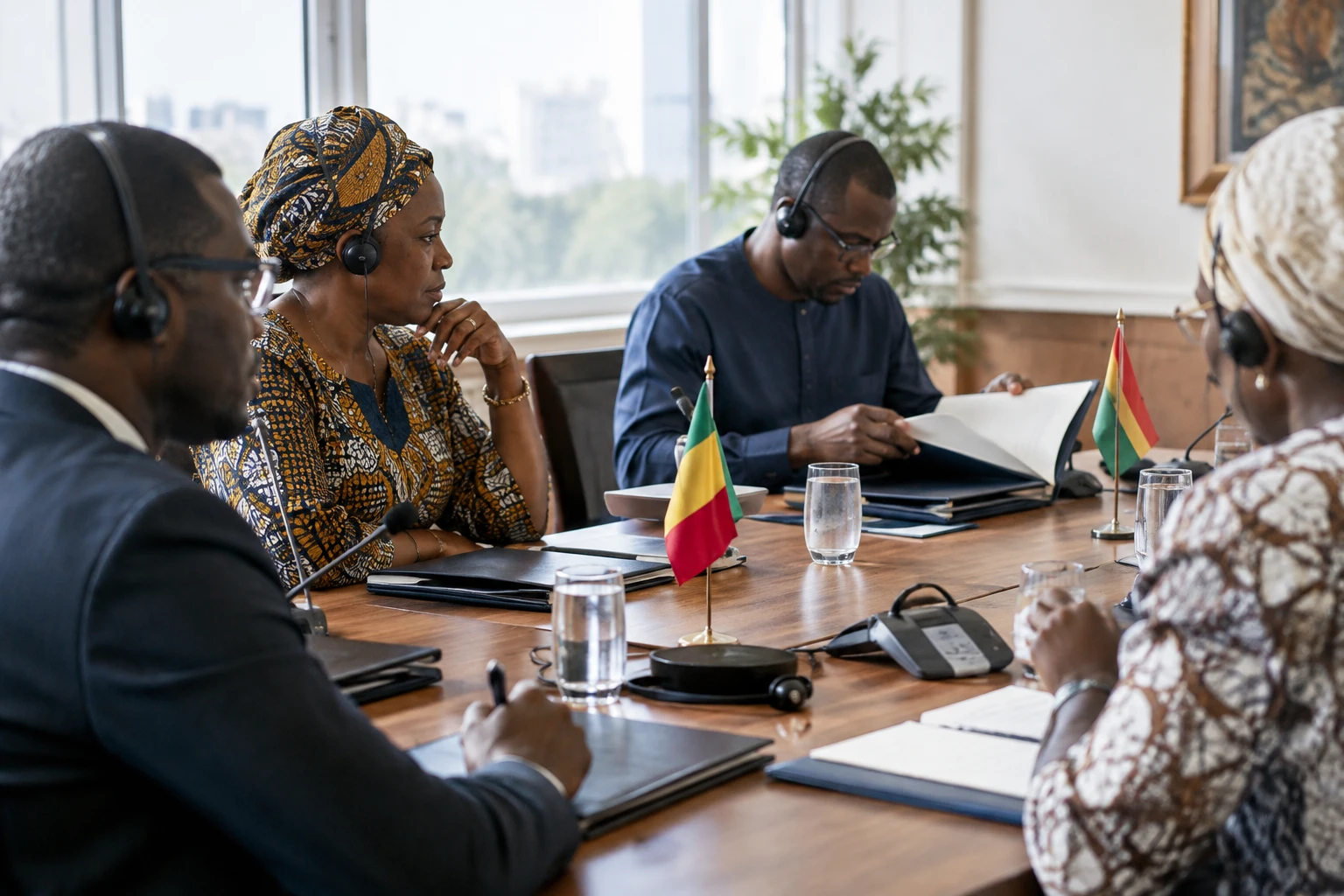
When the state buys advertising space in the media, it does not directly fund a newsroom: it pays to broadcast its campaigns and information. In Senegal, the announced resumption of these agreements could therefore reopen a source of revenue for press companies, without in itself resolving the sector’s vulnerabilities.
Approval in principle, not yet a return of contracts
Prime Minister Ahmadou Al Aminou Lô has given a favourable opinion on lifting the suspension of advertising agreements between the state and the media. The information was reported on 21 October 2026 by several Senegalese media outlets, which said the head of government’s response followed a request from the minister responsible for communication.
The decision does not, however, mean that contracts will resume immediately. According to these reports, an interministerial committee must first define the rules for allocation and oversight. It would bring together representatives of the Prime Minister’s Office, the Presidency, the relevant ministries, public media and the private press.
The criteria mentioned include compliance with the Press Code, audience, editorial performance and territorial coverage. The effective resumption date and financial arrangements were not specified in the information consulted. The favourable opinion is therefore an opening, not yet an implementation timetable.
This caution matters. Advertising agreements are purchases of services by public institutions, not aid allocated without any return. Their distribution involves public funds and can influence the economic balance of the media. Verifiable, published criteria will be essential to distinguish advertising contracts from indirect support.
A measure taken in the name of spending control
The suspension dates back to 2024, after Bassirou Diomaye Faye came to power and Ousmane Sonko was appointed to the Prime Minister’s Office. It formed part of an effort to reduce and control state spending. The contracts concerned allowed ministries, agencies and state-owned companies to communicate through private media.
For publishers and broadcasters, the decision reduced commercial revenue at a time when several companies were already facing difficulties. Mamadou Ibra Kane, president of the Council of Broadcasters and Press Publishers of Senegal (CDEPS), has publicly defended the importance of these contracts to the sector’s revenue. The authorities, by contrast, have stressed the need to meet legal, tax and social obligations.
The dispute forms part of a broader reform of Senegal’s media landscape. The government report covering April 2024 to April 2025 counted 50 print publications, 150 news websites, 300 radio stations and 35 digital terrestrial television channels. It also noted widespread insecurity in journalistic employment: according to the document, 86% of journalists had no social security coverage and 61.7% had no employment contract.
These official figures shed light on the debate without resolving all its causes. For the government, bringing companies into compliance and ensuring transparency in the use of public funds are management objectives. For professional organisations, imposing these requirements on companies deprived of revenue and facing arrears can make compliance more difficult. The two issues intersect, but are not the same.
Useful revenue, but only a partial solution
Public advertising can bring commissions to radio stations, television channels, newspapers and online media. If contracts are awarded under clear rules, they can also enable the administration to reach different audiences beyond Dakar. But the impact will depend on the budgets actually committed, the regularity of payments and regional media’s access to tenders.
The largest companies generally have more resources to meet administrative criteria and measure their audiences. Smaller newsrooms and media based outside the capital risk being disadvantaged if the requirements do not take account of their size and local roots. The inclusion of territorial coverage among the announced criteria could limit this bias, provided its application is transparent.
The resumption will not resolve difficulties related to wages, employment contracts, social contributions or revenue diversification either. The Press Support and Development Fund follows a different rationale: it is a public aid mechanism subject to conditions. In May 2025, the Senegalese Press Agency reported that the authorities required, among other things, legal documents, annual accounts and compliance with the rules applicable to each type of media.
In other words, advertising agreements could provide a commercial lifeline, while reform of public funding raises questions of compliance and fairness among beneficiaries. For journalists and employees, the practical issue will be whether new commissions translate into sustained activity and regular payments, rather than announcements that have no effect on cash flow.
A test of confidence for Senegal and the region
The debate has democratic significance. The Senegalese press covers institutions, public policy and the debates shaping the country. Its independence also depends on its resources: excessive reliance on public advertisers can create risks of favouritism, while lasting exclusion from these markets weakens businesses and employment. Transparent criteria and the possibility of appeal will therefore matter as much as the decision in principle.
For West Africa, as a member of ECOWAS, the Senegalese case illustrates a question shared by many countries: how can media viability be supported without turning public advertising into an instrument of reward or pressure? This is not about equating national situations, but about monitoring the mechanisms that protect both the sound management of public resources and media pluralism.
The next step will be publication of the committee’s rules, followed by an announcement of a timetable and the amounts available. It will also be important to observe the place given to regional media and how audience criteria are assessed. The real significance of the opening announced in Dakar will be measured by these concrete decisions.