Algeria
 Egypt
 Libya
 Morocco
 Sudan
 Tunisia
 Benin
 Burkina Faso
 Cabo Verde
 Côte d'Ivoire
 Ghana
 Guinea
 Guinea-Bissau
 Liberia
 Mali
 Mauritania
 Niger
 Nigeria
 Senegal
 Sierra Leone
 The Gambia
 Togo
 Cameroon
 Chad
 DR Congo
 Equatorial Guinea
 Gabon
 Republic of the Congo
 São Tomé and Príncipe
 Burundi
 Comoros
 Djibouti
 Eritrea
 Ethiopia
 Kenya
 Madagascar
 Malawi
 Mauritius
 Mozambique
 Rwanda
 Seychelles
 Somalia
 South Sudan
 Tanzania
 Uganda
 Angola
 Botswana
 Eswatini
 Lesotho
 Namibia
 South Africa
 Zambia
 Zimbabwe
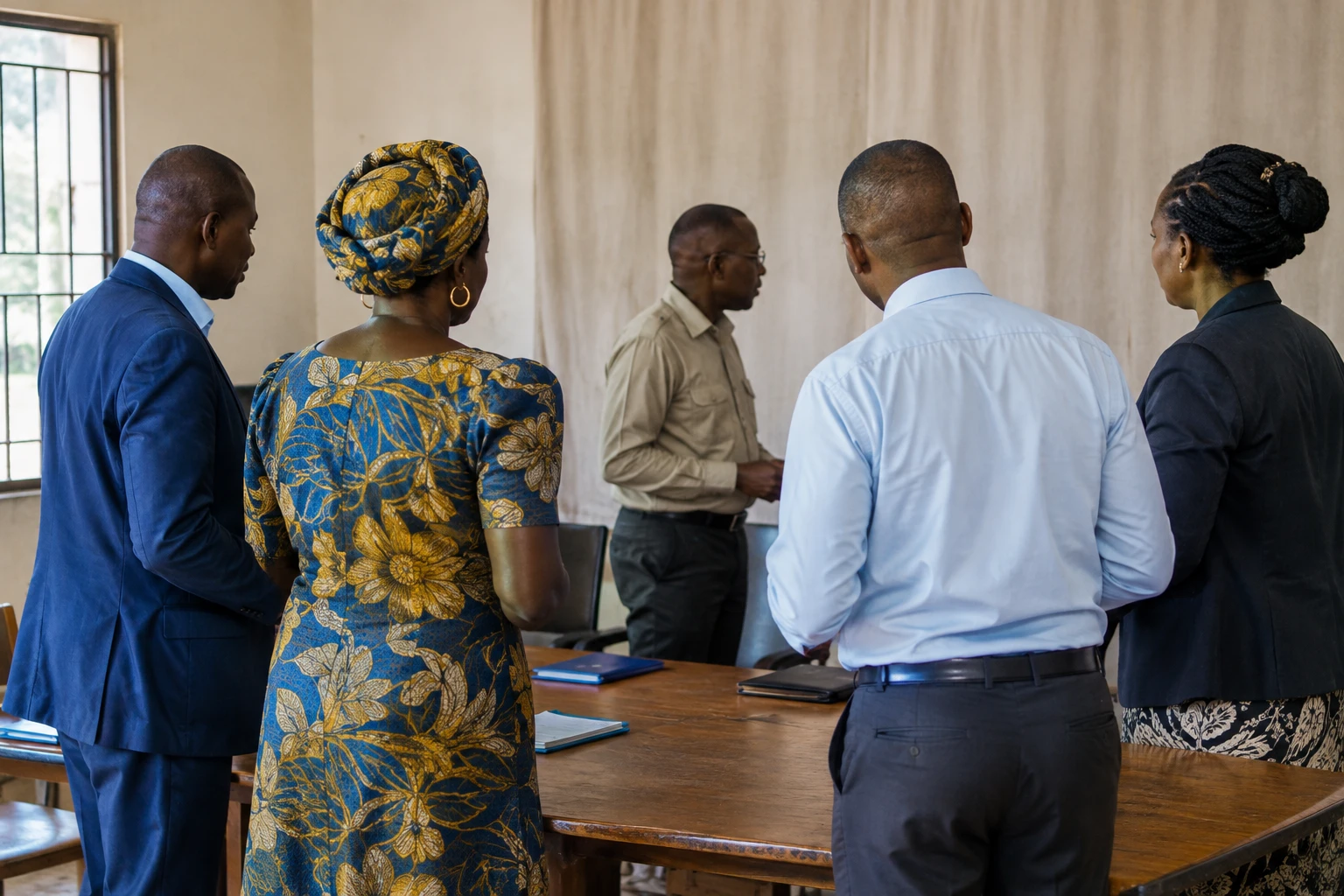
The release of three people abducted in Bambouti brings nearly ten months of captivity to an end. But it does not resolve the question hanging over Haut-Mbomou: how to protect residents and maintain public services in a border area where state authority remains fragile.
Released after months of mediation
Bambouti’s sub-prefect and two officials from the National Elections Authority (ANE), the institution responsible for organising elections, were released on Monday 19 October 2026. MINUSCA, the United Nations peacekeeping mission in the Central African Republic, confirmed their release. Its head, Valentine Rugwabiza, said the mission had secured the area where the hostages were handed over, following several months of mediation involving local leaders.
The three people were abducted during the attack on 28 December 2025 in Bambouti, in Haut-Mbomou prefecture. Presidential, parliamentary, regional and municipal elections were being held in the Central African Republic that same day. MINUSCA attributes their detention to the armed group Azandé Ani Kpi Gbé (AAKG). Central African media have also reported the involvement of Haut-Mbomou MPs in the efforts that led to their release.
Initial reports say the released individuals were taken to Obo, the capital of Haut-Mbomou. Their transfer to Bangui was subsequently announced. However, the public information consulted does not make it possible to independently confirm the date and circumstances of their arrival in the capital. The distinction matters: release, evacuation to Obo and return to Bangui are separate stages.
Bambouti, a remote area at the heart of the election
Bambouti lies in the south-east of the Central African Republic, near the border with South Sudan. In these areas far from Bangui, travel, communications and access to public services are difficult. The presence of a civilian administration or election officials therefore does not, by itself, guarantee their safety.
The abduction targeted both a representative of the administration and ANE officials. It thus disrupted the work of staff tasked with ensuring institutions function in remote communities. The detention of election officials can also discourage teams and complicate the organisation of elections, while residual operations remain in the 2025-2026 electoral cycle, according to MINUSCA.
The African Union’s Peace and Security Council had already highlighted persistent insecurity in Haut-Mbomou and other peripheral areas in September. It called for a stronger state presence, particularly through public services and security, without creating a vacuum during the gradual transfer of responsibilities from MINUSCA to Central African institutions. The hostages’ release is therefore an important resolution, but it is not sufficient evidence of a lasting return to security.
Local mediation, with support from the UN mission
In its report, MINUSCA highlighted a combination of mediation led by local actors and security measures in the area at the time of the release. Central African media have cited the involvement of Haut-Mbomou MPs in particular. These efforts show the role elected representatives and local intermediaries can play in a situation where an exclusively military response carries risks for civilians.
The UN mission nevertheless remains a major actor in protection and logistics in areas that are difficult to access. The debate over transferring its responsibilities to national institutions is therefore a practical one: Central African authorities must be able to provide security and services after an international presence withdraws or is reduced. For residents, the issue is less institutional than immediate: being able to travel, work and access the administration without fearing another attack or abduction.
The consequences are not the same for everyone. Public officials and election teams can be directly targeted. Families endure a long wait, while traders and residents of neighbouring villages face movement restrictions and disruption to their activities. Access to services is also more difficult far from administrative centres. It will therefore be necessary to monitor whether services actually resume in Bambouti, not just announcements made in Bangui.
Beyond Haut-Mbomou
The situation primarily concerns the Central African Republic, but it is part of a border region where events can affect communities on both sides of the boundary with South Sudan. It also serves as a reminder, across the African Union, that a national election is not confined to voting in the capital: the safety of election officials and access to polling stations in peripheral areas matter for participation and trust in institutions.
The next step will be to verify that the three people have reunited with their families and are receiving support, then to see whether the administration and election activities can resume in Bambouti. The release, confirmed by MINUSCA and reported by the African news agency APA and Central African outlet Ndjoni Sango, brings an extended period of captivity to a close. The safety of residents and continuity of public services, however, remain to be established over the longer term.