Algeria
 Egypt
 Libya
 Morocco
 Sudan
 Tunisia
 Benin
 Burkina Faso
 Cabo Verde
 Côte d'Ivoire
 Guinea
 Guinea-Bissau
 Liberia
 Mali
 Mauritania
 Niger
 Nigeria
 Senegal
 Sierra Leone
 The Gambia
 Togo
 Cameroon
 Central African Republic
 Chad
 DR Congo
 Equatorial Guinea
 Gabon
 Republic of the Congo
 São Tomé and Príncipe
 Burundi
 Comoros
 Djibouti
 Eritrea
 Ethiopia
 Kenya
 Madagascar
 Malawi
 Mauritius
 Mozambique
 Rwanda
 Seychelles
 Somalia
 South Sudan
 Tanzania
 Uganda
 Angola
 Botswana
 Eswatini
 Lesotho
 Namibia
 South Africa
 Zambia
 Zimbabwe
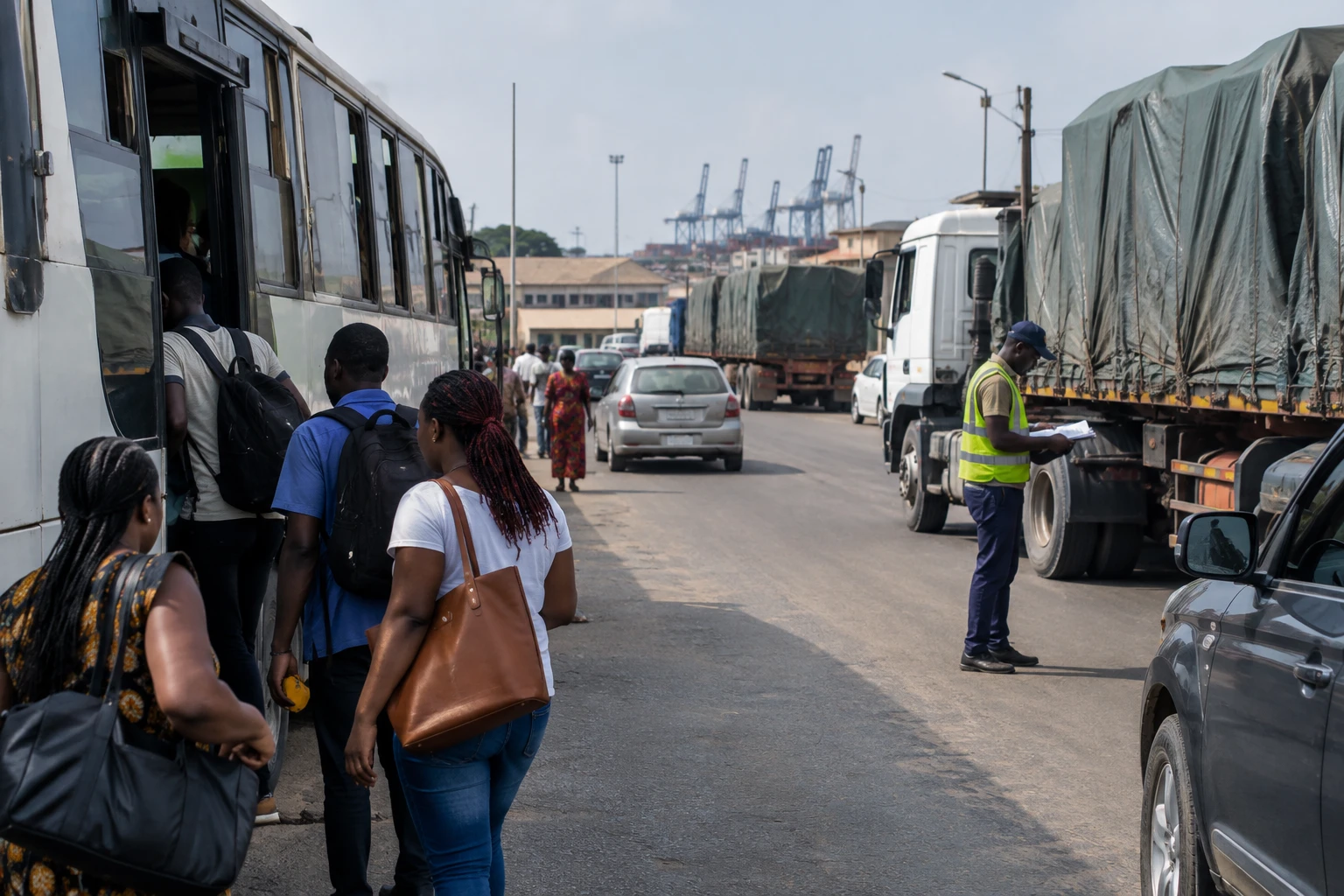
Minerals extracted in Ghana can supply factories elsewhere, while processed products return to African markets. Accra wants to reverse this pattern: President John Dramani Mahama has set 2030 as the deadline for ending exports of minerals in their raw state.
Accra wants to turn extraction into an industrial driver
The timeline was announced on 19 October 2026 in Accra, at the Mining in Motion conference. On 21 October, Mahama also championed this approach at the Financial Times Africa Summit in London. Reports by the Ghana News Agency (GNA) and Reuters converge on the goal, although it was set out at two separate events.
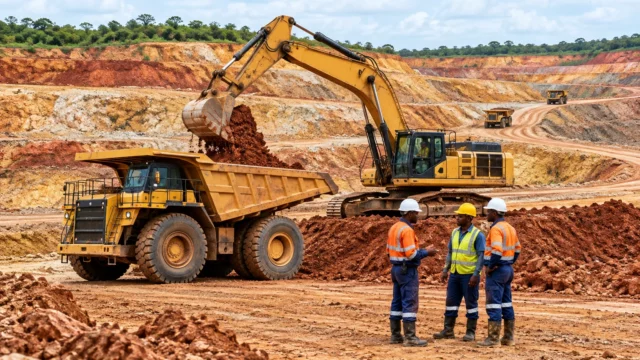
The plan covers bauxite, manganese, iron, lithium and diamonds in particular. The government envisages a gradual ban, with rules and deadlines tailored to each mineral. Access to resources could therefore come with requirements to process them on Ghanaian territory.
The promise goes beyond processing ore before it is sold. The president has outlined a more complete industrial chain: refining, production of semi-finished materials and manufacturing goods for the construction, transport and mining sectors. The government notably wants to modernise the state-owned Volta Aluminium Company, which processes aluminium, and develop the steel industry.
Ghana has already restricted exports of some scrap and non-ferrous metals. In gold, the country also wants to expand local refining. In London, Mahama said that around 70% of gold was already refined in Ghana and said he wanted all production to be processed locally. This figure is a presidential estimate reported by Reuters.
Local processing cannot be decreed
The challenge is to build the capacity needed to make this policy viable. A refinery or metallurgical plant requires reliable electricity, infrastructure, financing and trained workers. The president has acknowledged these needs. Without concrete investment, a ban could curb sales without creating the expected industrial jobs.
Costs matter too. Local facilities must be able to process minerals at competitive prices; otherwise, projects could remain dependent on public subsidies or foreign partners. The question is therefore not only who extracts the resources, but who finances the factories, owns the technology and retains the benefits.
The effects will vary among stakeholders. For the state and Ghanaian businesses, processing could increase revenues and open up new markets. For workers, it could create skilled jobs, if training keeps pace. Mining communities will not automatically benefit from this added value: the returns will also depend on local employment, public revenues and the management of environmental impacts.
In cocoa, another pillar of the economy, the goal is to process at least half of the beans locally. Mahama had already cited an increase from around 25% to 40% in May 2025. A policy targeting the 50% threshold is due to take effect from the 2026-27 season, according to reports by GNA and Citi Newsroom. Small Ghanaian businesses in the sector have, however, flagged practical obstacles: access to finance, the cost of imported equipment and a lack of clarity over how the rules will be applied.
A Ghanaian challenge, a West African question
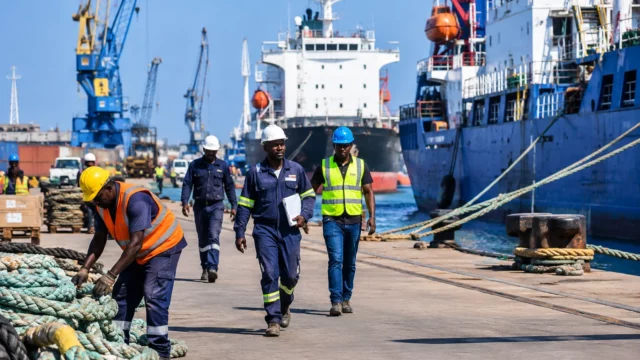
The strategy is part of a wider debate about the place of producer countries in global value chains. Ghana, whose capital is Accra, is a member of ECOWAS, the Economic Community of West African States. Access to neighbouring markets, transport infrastructure and regional electricity will be crucial if local factories are to find customers beyond the domestic market.
At continental level, the issue is linked to the African Continental Free Trade Area, which aims to facilitate trade between African countries. But greater processing in Ghana will not be enough if finished products then face logistical costs or trade barriers. Coordination with neighbouring countries could also prevent each state from independently building costly facilities for markets that are too small.
The government is therefore presenting a roadmap, not yet proof of a completed industrial transformation. The next steps will be decisive: legislation, a timeline for each mineral, investment in factories and safeguards for affected communities. By 2030, success will be measured not only by a fall in raw exports, but by Ghana’s ability to produce locally, sell across the region and distribute the benefits of this activity.
Sources consulted: Ghana News Agency on the 2030 mining target, Reuters on Mahama’s remarks in London, GNA on local cocoa processing and Citi Newsroom on the capacity and constraints of Ghanaian processors.