Algeria
 Egypt
 Libya
 Morocco
 Sudan
 Tunisia
 Benin
 Burkina Faso
 Cabo Verde
 Côte d'Ivoire
 Ghana
 Guinea
 Guinea-Bissau
 Liberia
 Mali
 Mauritania
 Niger
 Nigeria
 Sierra Leone
 The Gambia
 Togo
 Cameroon
 Central African Republic
 Chad
 DR Congo
 Equatorial Guinea
 Gabon
 Republic of the Congo
 São Tomé and Príncipe
 Burundi
 Comoros
 Djibouti
 Eritrea
 Ethiopia
 Kenya
 Madagascar
 Malawi
 Mauritius
 Mozambique
 Rwanda
 Seychelles
 Somalia
 South Sudan
 Tanzania
 Uganda
 Angola
 Botswana
 Eswatini
 Lesotho
 Namibia
 South Africa
 Zambia
 Zimbabwe
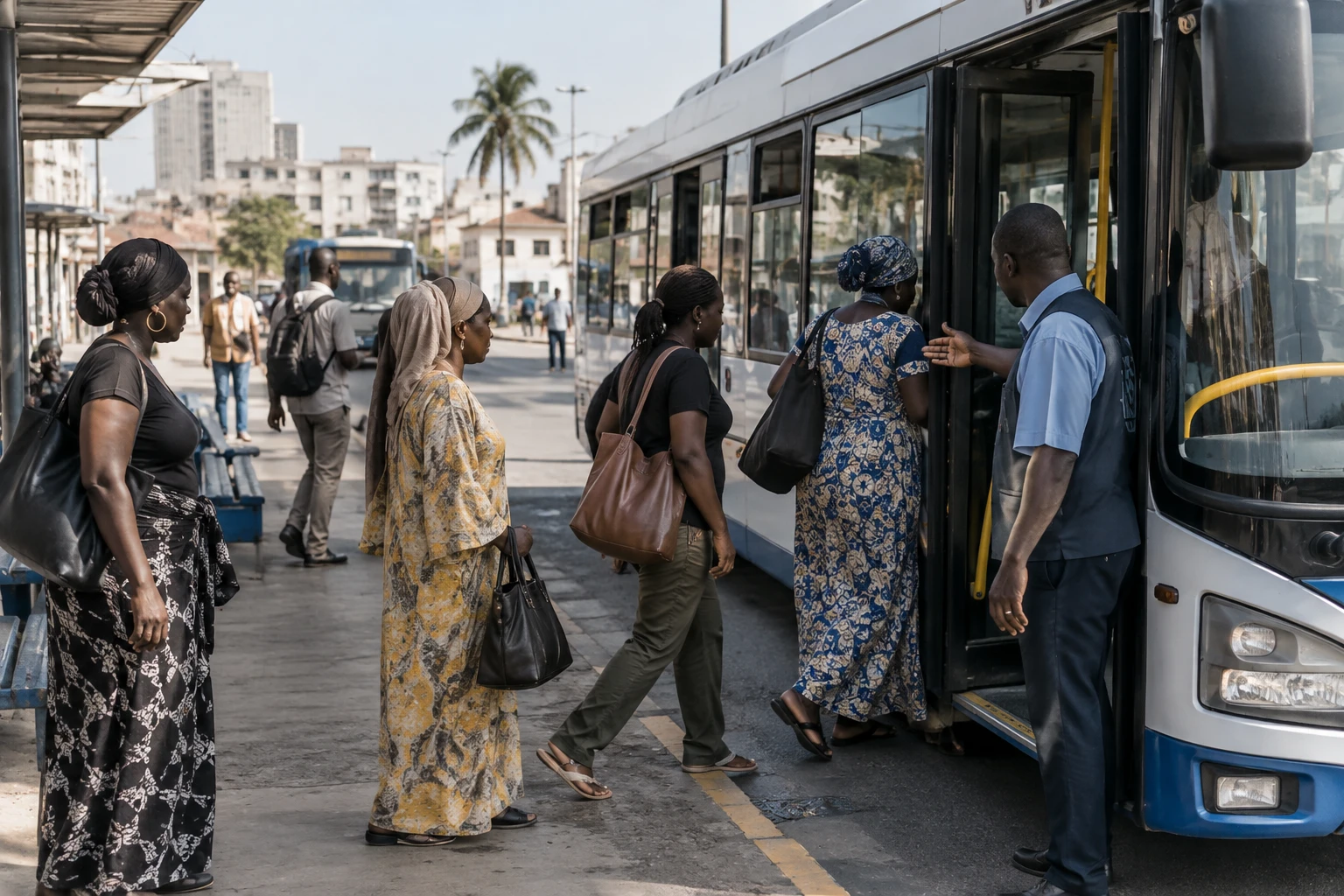
Domestic work keeps daily life running in households. But when it is carried out without a clear contract or social protection, those who do it are often difficult to defend and monitor. In Dakar, a regional meeting brought the issue back to the centre of dialogue between states, employers and workers.
An essential sector that is often out of sight
The forum organised by the International Labour Organization (ILO) was held in Dakar from 19 to 21 October 2026. It brought together representatives from 12 French-speaking countries in West Africa, Central Africa and the Maghreb. Senegal, the host country, took part alongside Benin, Burkina Faso, Côte d’Ivoire, Mali, Mauritania, Niger, Togo and Guinea, among others. Cameroon, Morocco and Tunisia participated remotely.
The meeting marked the 15th anniversary of ILO Convention No. 189, adopted in 2011. The text sets international standards for domestic workers: fair working conditions, information about rights and access to social protection. However, the convention creates treaty obligations for a country only if it ratifies it.
Paid domestic work includes, among other tasks, cleaning, cooking, childcare and supporting people. It sustains household life and allows other family members to study or take up employment. Yet when work takes place in a private home, working hours, pay and employment conditions can more easily escape the scrutiny of institutions.
In Senegal, the challenge goes beyond recognition
Holding the forum in Dakar brings Senegal’s situation into particular focus. The country has rules governing domestic employment, but United Nations bodies indicate that Senegal has not yet ratified Convention No. 189. They also report that efforts to improve regulations have begun. Ratification and the practical implementation of the law therefore remain two distinct steps to watch.
A qualitative study of domestic workers in Dakar documented cases of economic exploitation and abuse. It cannot, on its own, measure how common these are across the country. It nevertheless highlights the difficulties workers face when employment relationships remain informal and avenues for redress are not readily accessible.
Women are particularly affected in this sector, while the risks associated with employing minors require specific vigilance. The ILO notes that some domestic workers experience informality, inadequate social protection and obstacles to exercising their rights. In the absence of published data broken down for the forum, it would be unwise to give a numerical assessment or attribute a precise scale to the phenomenon in Senegal.
In practice, a written contract, defined working hours, agreed pay and effective access to avenues for redress can change the employment relationship. But formalising work also requires rules that households can understand, that are enforced without putting workers in difficulty, and that reflect the realities of domestic employment. Workers must be able to make their voices heard, notably through social dialogue.
From regional discussion to measurable action
The ILO describes the forum as a tripartite platform where governments, employers’ organisations and workers’ representatives compare experiences. This approach matters in a sector spread across private homes and made up largely of individual jobs. It can bring public priorities closer to the needs expressed by those concerned, provided their representation does not remain symbolic.
At the close of the forum, the African Press Agency reported that the delegations had reaffirmed their commitment to strengthening rights, social protection and the formalisation of the sector, with 2031 set as a target. This commitment sets a political direction, but is not in itself evidence that reforms have already been implemented. The next steps will need to specify legislative changes, inspection resources and social protection arrangements.
For Senegalese people, the impact will be measured in employment conditions, in Dakar and in other regions: access to redress in the event of a dispute, agreed pay, rest and protection from abuse. The authorities and social partners will also need to take account of households’ circumstances and public services’ capacity to enforce the rules without leaving workers alone to face their employers.
A test for cooperation in French-speaking Africa
The gathering of countries from West Africa, Central Africa and the Maghreb highlights shared challenges, without implying that their laws or circumstances are identical. In the ECOWAS area — the economic community of West African countries — domestic work is part of labour markets characterised by informal employment and regional mobility. Dialogue in Dakar can facilitate the sharing of experience, but each state remains responsible for its own reforms.
The continent-wide impact will therefore depend less on declarations than on their translation into decisions that are followed through. For Senegal, possible ratification of Convention No. 189, changes to national legislation and genuine access to social protection will be concrete indicators. The 2031 target announced in Dakar provides a benchmark: it will make it possible to assess whether recognition of domestic work has been accompanied by rights that are genuinely accessible.
Sources consulted: ILO presentation of the regional forum in Dakar, African Press Agency report on the closing session, Senegal’s report to the United Nations on Convention No. 189 and IRD account of the dialogue on domestic work in Senegal.