Algeria
 Egypt
 Libya
 Morocco
 Sudan
 Tunisia
 Benin
 Burkina Faso
 Cabo Verde
 Côte d'Ivoire
 Ghana
 Guinea
 Guinea-Bissau
 Liberia
 Mali
 Mauritania
 Niger
 Nigeria
 Sierra Leone
 The Gambia
 Togo
 Cameroon
 Central African Republic
 Chad
 DR Congo
 Equatorial Guinea
 Gabon
 Republic of the Congo
 São Tomé and Príncipe
 Burundi
 Comoros
 Djibouti
 Eritrea
 Ethiopia
 Kenya
 Madagascar
 Malawi
 Mauritius
 Mozambique
 Rwanda
 Seychelles
 Somalia
 South Sudan
 Tanzania
 Uganda
 Angola
 Botswana
 Eswatini
 Lesotho
 Namibia
 South Africa
 Zambia
 Zimbabwe
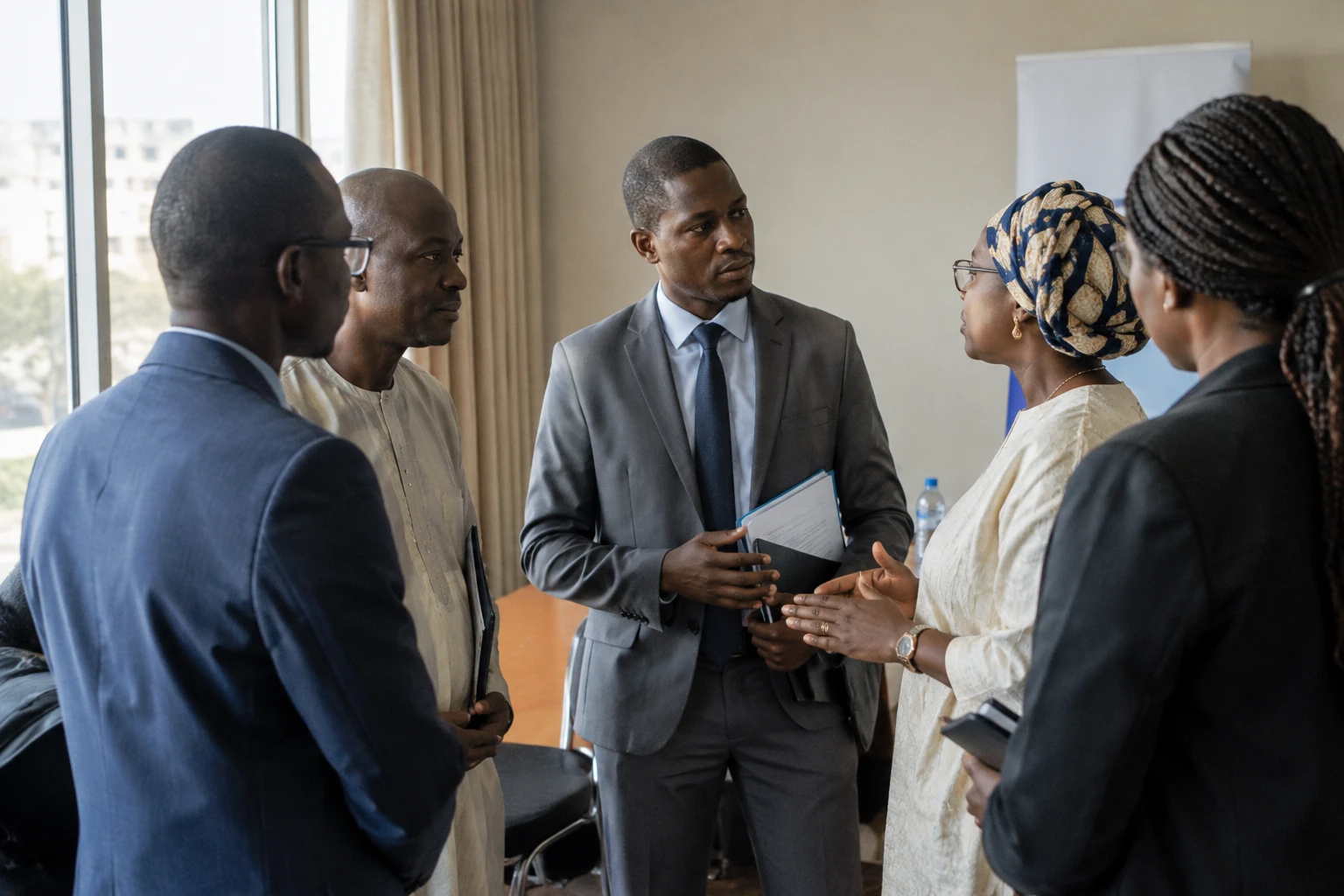
Eleven days before the opening of the Youth Olympic Games (YOG), Senegal faces a test that goes beyond preparations for the sporting event: how to maintain public services and protect social dialogue without silencing workers’ demands. The Trade Union Front for the Defence of Workers (FSDT) has called for a rally in Dakar on Tuesday 20 October, followed by a three-day strike from 21 to 23 October.
A standoff ahead of the YOG
The YOG are due to take place from 31 October to 13 November 2026 in Dakar, Diamniadio and Saly. This first edition to be held in Africa puts Senegal in the international spotlight. But the sporting deadline comes amid social tensions, as unions in several sectors challenge decisions and demand responses to their grievances.
The FSDT brings together 13 trade union organisations, according to reports on its call for mobilisation. Teachers grouped within the G7 and health sector unions have also announced industrial action from 21 to 23 October. The calls are therefore not limited to a single profession, although their reasons and procedures may differ from one sector to another.
Among the grievances cited by union leaders are the adoption of legislation on the Labour Code and social security, which they say was not sufficiently discussed with the social partners. They are particularly challenging provisions concerning the duration of fixed-term contracts and social protection bodies. These points are presented here as union positions: their scope and application depend on the relevant legislation and procedures in force.
The action comes amid a relationship already structured by the National Social Stability Pact, signed on 1 May 2025 by the state, trade unions and employers. The framework provides for consultations and monitoring of commitments. Its test now raises a central question: are the dialogue mechanisms producing results quickly enough to prevent an escalation?
Dialogue offered, disagreement remains
Prime Minister Ahmadou Al Aminou Lô has asked the unions to suspend their strike notices and proposed a three-month moratorium. He has also announced stronger sectoral talks. The government believes that a significant proportion of the demands is already being addressed and is urging the unions to prioritise negotiations.
The unions, for their part, point to the gap between announced commitments and their implementation, as well as what they describe as a lack of consultation on certain legislation. The disagreement is therefore about substance as much as method and timing. A moratorium may open a window for negotiations, but it does not, on its own, resolve disputes over wages, employment conditions or social protection.
The government has also stressed that the right to strike is subject to legal procedures. On 20 October, the Ministry of Labour argued that a single notice addressed only to its ministry could not cover all employees in the public, para-public and private sectors. It warned that workers taking part in a strike deemed unlawful could face deductions from their pay or disciplinary sanctions. This official interpretation is contested in the context of the standoff itself and should not be confused with an independent judicial ruling.
The tensions already involve several essential services. In education, a strike could mean missed lessons and directly affect pupils and their families, particularly where learning backlogs are mounting. In health, transport and electricity, disruptions could affect users and day-to-day economic activity. Their scale will, however, depend on actual participation and the arrangements made to maintain essential services.
Beyond appearances, the real-world consequences
The proximity of the YOG gives the dispute particular visibility. The government is urging people to protect the country’s image and ensure the continuity of services during preparations. The unions, for their part, argue that hosting an international event should not indefinitely delay action on workers’ demands. Both concerns coexist: successfully hosting the Games and ensuring workers can make their demands heard.
The consequences will not be evenly distributed. In Dakar, where government offices, schools and several Games-related venues are concentrated, a strike could complicate travel and the operation of services. In Diamniadio and Saly, which will also host competitions, the issues include local organisation and event-related activities. In the regions, workers and families may face disruption without directly benefiting from the most visible returns from the Games.
The economic stakes extend beyond major construction projects and formal contractors. Shops, vendors, transport operators and small businesses also depend on regular travel and footfall. A strike could reduce their activity; conversely, failure to address labour tensions could prolong uncertainty in essential sectors. The YOG are therefore neither the only issue in the dispute nor a pause that suspends its underlying causes.
A test for regional social dialogue
Senegal is a member of ECOWAS, the Economic Community of West African States. The current dispute primarily concerns Senegalese institutions and law. But the ability to reconcile the right to strike, collective bargaining and continuity of services is also of interest to neighbouring countries, which face comparable trade-offs between social stability and economic activity.
At the time of writing, the strike is scheduled for 21, 22 and 23 October; the information available does not make it possible to establish its actual scale or the outcome of the mobilisation planned for 20 October. The next developments to watch are the unions’ response to the moratorium, whether talks continue and which services are actually affected. As 31 October approaches, Senegal will have to manage preparations for the first African YOG alongside social dialogue whose credibility will be measured by whether commitments are followed by action.