Algeria
 Egypt
 Libya
 Morocco
 Sudan
 Tunisia
 Benin
 Burkina Faso
 Cabo Verde
 Côte d'Ivoire
 Ghana
 Guinea
 Guinea-Bissau
 Liberia
 Mali
 Mauritania
 Niger
 Nigeria
 Senegal
 Sierra Leone
 The Gambia
 Togo
 Cameroon
 Central African Republic
 DR Congo
 Equatorial Guinea
 Gabon
 Republic of the Congo
 São Tomé and Príncipe
 Burundi
 Comoros
 Djibouti
 Eritrea
 Ethiopia
 Kenya
 Madagascar
 Malawi
 Mauritius
 Mozambique
 Rwanda
 Seychelles
 Somalia
 South Sudan
 Tanzania
 Uganda
 Angola
 Botswana
 Eswatini
 Lesotho
 Namibia
 South Africa
 Zambia
 Zimbabwe
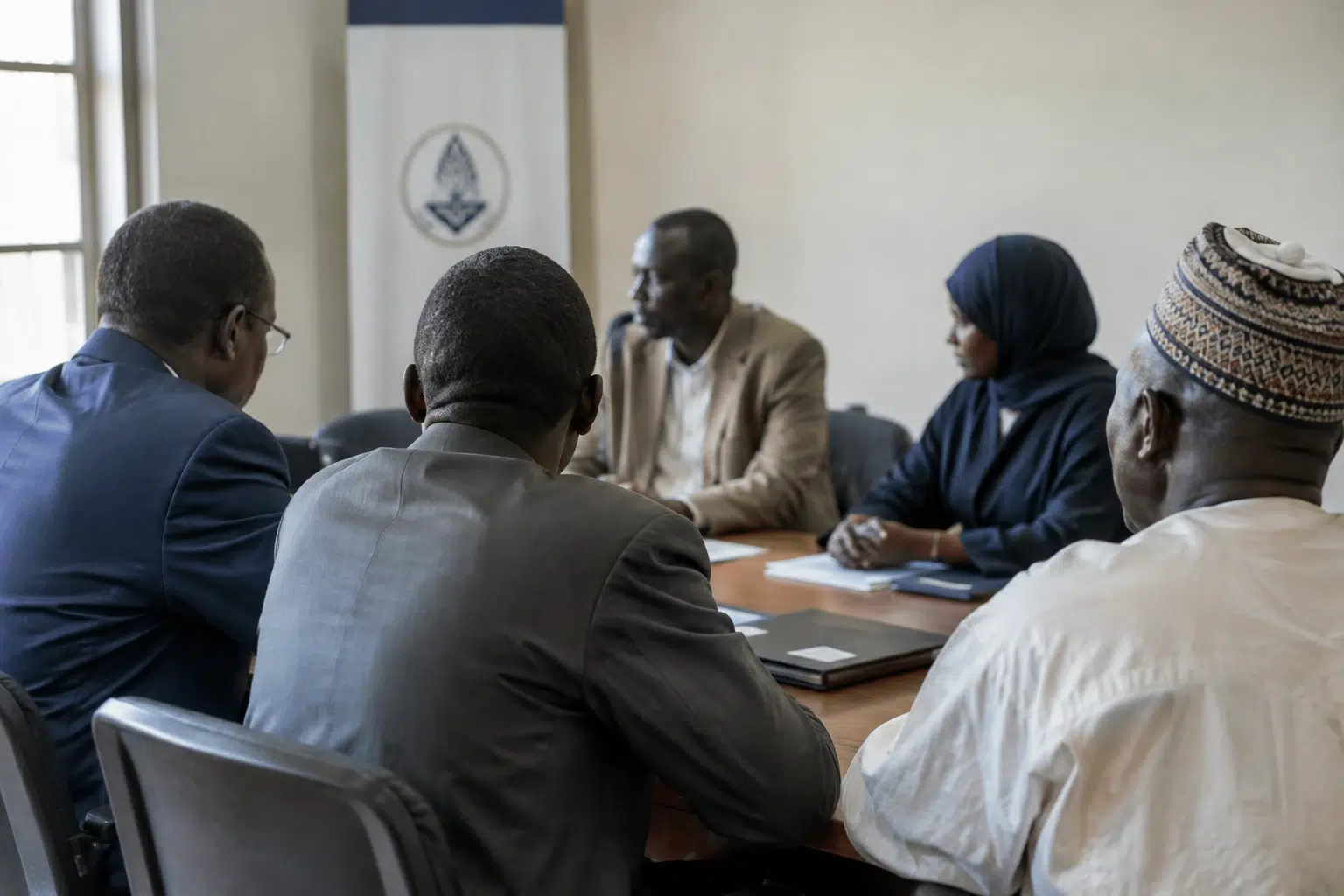
In Miski, peace depends as much on silencing the guns as on agreed rules for gold, patrols and mining revenues. The gunfire on 14 October 2026 has once again brought the issue to the fore in Tibesti, in northern Chad.
A recent agreement, grievances still unresolved
The dispute pits the Miski Self-Defence Committee against the National Brigade for the Control of Mining Activities, deployed in the gold-mining area. It is part of a long-running conflict over the exploitation of resources, control of territory and the local population’s share of the economic benefits.
An agreement signed in Bardaï on 20 April 2025 was intended to end hostilities and usher in a new phase. It provides, in particular, for the cancellation of existing mining permits and the suspension of activities, as well as the integration of combatants into the security forces after training. It also provides for monitoring mechanisms and the resumption of public services in the department of Emi-Koussi. The provisions of the Miski peace agreement are therefore directly linked to the current tensions.
This is not the first attempt to resolve the dispute. Previous agreements, notably in 2019, did not bring a lasting end to the conflict. A situation report published in June 2026 notes that several commitments made since 2019 have not been fully implemented. It also points out that disputes have long centred on the terms of mining operations and the sharing of their benefits. The report on the security situation in Chad thus makes clear that signing an agreement is not enough to resolve the causes of the conflict.
Conflicting accounts of the clashes
The fighting took place on Wednesday 14 October 2026. On 15 October, Chad’s military high command announced that two officers had been killed and nine members of the Mining Brigade wounded. It blamed the attack on the Self-Defence Committee and called on it to lay down its arms. The army says the authorities are implementing the 2025 agreement. The military high command’s announcement, reported by APA, confirms the date and the toll given by the military.
The Committee, for its part, accuses the army of killing seven civilians in a drone strike and denounces looting. It also disputes the presence of the Mining Brigade and the existence of levies it describes as illegal. These allegations could not be independently confirmed. They should therefore remain attributed to the Committee, just as the military toll remains that reported by the military high command.
Before the clashes, the Committee had already denounced heavy-weapons fire and called for the withdrawal of Mining Brigade officials. It cited commitments made on 3 October 2026 with a government delegation. The Committee’s statement, reported by Journal du Tchad, sheds light on the tensions that preceded the skirmish, but does not on its own establish either side’s responsibility.
Ombudsman Saleh Kebzabo has called on the parties to show restraint and honour their commitments. His intervention matters because he played a role in concluding the agreement and is expected to help monitor it. For now, the mutual accusations chiefly show that the verification and dialogue mechanisms have failed to prevent escalation.
Beyond control of the gold-mining sites
For residents, the issue goes beyond the presence of an armed unit. The announced suspension of mining activities is also intended to regulate operations and determine who decides on permits, inspections and benefits. When these rules remain contested, everyday security and trust in the local authorities are undermined.
The effects may differ between the parties. The authorities are seeking to re-establish their presence and secure the sites. The Committee is demanding compliance with the agreement’s mining provisions. Residents, meanwhile, have an interest in seeing the clashes end and commitments on compensation and public services move forward. The available information does not yet make it possible to assess the scale of the civilian impact of the renewed violence.
Chad is a member of CEMAC, the Central African Economic and Monetary Community. But the Miski case is primarily a matter of national mediation and implementation of a local agreement. Its regional significance lies in a broader question: how can security, public authority and the governance of mining resources be reconciled in areas far from the capitals?
Implementation, the mediation’s next test
The decisive issue now will be verifying the commitments made: the status of the Mining Brigade, the effective suspension of permits, the work of monitoring commissions and the handling of grievances over levies. Without a shared timetable and a credible procedure for examining the allegations, each side risks presenting its own actions as a response to the other’s violations.
In N’Djamena, the government has yet to comment on the allegations. The mediation will have to establish the facts without adopting either side’s account, then bring the parties back to the terms of the agreement. For Tibesti, the strength of the ceasefire will be measured less by declarations than by the verifiable implementation of the rules agreed for Miski.