Algeria
 Egypt
 Libya
 Morocco
 Sudan
 Tunisia
 Benin
 Burkina Faso
 Cabo Verde
 Côte d'Ivoire
 Ghana
 Guinea
 Guinea-Bissau
 Liberia
 Mali
 Mauritania
 Niger
 Nigeria
 Sierra Leone
 The Gambia
 Togo
 Cameroon
 Central African Republic
 Chad
 DR Congo
 Equatorial Guinea
 Gabon
 Republic of the Congo
 São Tomé and Príncipe
 Burundi
 Comoros
 Djibouti
 Eritrea
 Ethiopia
 Kenya
 Madagascar
 Malawi
 Mauritius
 Mozambique
 Rwanda
 Seychelles
 Somalia
 South Sudan
 Tanzania
 Uganda
 Angola
 Botswana
 Eswatini
 Lesotho
 Namibia
 South Africa
 Zambia
 Zimbabwe
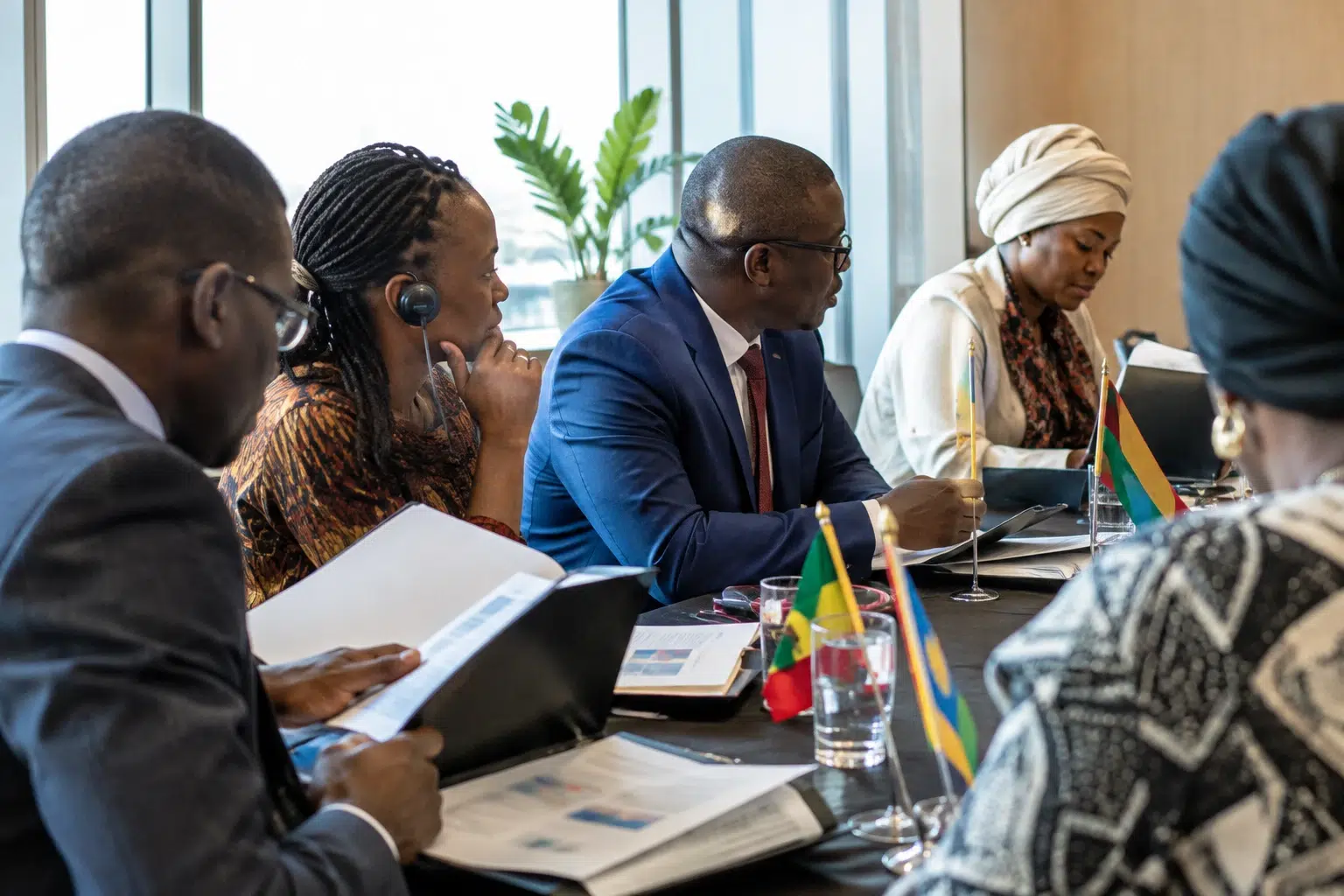
In Kédougou, in south-eastern Senegal, gold is moving to a new scale. But the increase in extracted volumes alone does not show what share of this wealth goes to the state, Senegalese companies and residents of mining areas.
Available public data first call for a distinction between verified figures and forecasts. The Extractive Industries Transparency Initiative (EITI) report covering the first half of 2025 records 6.168 tonnes of gold produced by mining companies. An article by EITI Senegal also details this production and its value. By contrast, figures of 8.2 tonnes in the first half of 2026 and 16 tonnes expected for the full year, cited in recent publications, have not been found in a second independent public source. They should therefore be treated as attributed estimates, not as an officially cross-checked tally. EITI Senegal’s reports on gold production provide a verifiable point of comparison.
Three mines, expanding production
The expected increase is due in particular to Boto, in the Kédougou region. Operated by Moroccan group Managem, the mine began production in 2025. The company says the site reached its nameplate capacity in the first half of 2026. It forecasts annual production of around 4.6 tonnes of gold, according to information presented in the available material. This figure describes expected capacity, not a result already established for a full year.
Boto joins Sabodala-Massawa, operated by Canadian group Endeavour Mining, and Mako, run by Australia’s Resolute Mining. Forecasts attributed to the operators put national production at around 16 tonnes in 2026. They remain sensitive to the pace at which sites ramp up, ore grades and operating conditions. Gold is concentrated in the east of the country, while tax decisions, company purchases and the distribution of revenues affect the entire Senegalese economy.
The sector is not limited to large industrial mines. EITI Senegal has also shared a study of artisanal gold mining in the Kédougou region, which estimates artisanal production at 4 tonnes. This activity supports workers and local economic networks, but its volumes and benefits should be monitored separately from those of industrial companies. Adding these figures without specifying their scope would give a misleading picture of national production. EITI data on gold and other mining output show why this distinction matters.
Announced projects, but still subject to milestones
The increase could continue if several projects pass the necessary technical, environmental and financial milestones. Endeavour Mining has pointed to an increase in production at Sabodala-Massawa by 2028. At Diamba Sud, in the south-east, Fortuna Mining is advancing studies and administrative procedures. In February 2026, the company announced that it had submitted an application for a mining permit to Senegalese authorities. An application, however, is neither final approval nor the start of production.
Production estimates for Diamba Sud vary according to announcements and the assumptions used. They should therefore not be presented as an established result. The project still has to pass authorisation procedures and investment decisions. EITI Senegal has documented the site’s estimated resources, while Fortuna publishes its own updates and studies. This information makes it possible to track the project, but announced underground resources are not equivalent to recoverable reserves or gold already extracted.
Another project, at Douta, is also cited among possible developments. But, in the absence of independent confirmation of the schedules and volumes cited, its production targets should remain attributed to company announcements. Thus, projections that national production could approach 24 tonnes in 2028 depend on several start-ups and expansions. They are a scenario, not a certainty.
The question of benefits goes beyond volumes
For the state, the challenge is to convert mining activity into predictable public revenues: taxes, royalties, dividends and jobs. For communities in Kédougou, the effects are also measured in access to employment, contracts awarded to local companies, infrastructure, and the management of land and water. Benefits are not automatic. They depend on the terms of contracts, their implementation and payment transparency.
Production figures are therefore not enough to measure gold’s real contribution. They need to be compared with revenues paid into the budget, jobs created and spending in the areas concerned. EITI reports, which reconcile company and government disclosures, are one monitoring tool among others. They do not replace the monitoring of social and environmental impacts on the ground.
This development is part of a West Africa where states are seeking greater control over the value generated by their resources. Senegal is a member of the Economic Community of West African States (ECOWAS), which brings together countries with different mining trajectories. Regional comparisons are a reminder that increased production alone does not guarantee better redistribution. For Dakar, the challenge will be to reconcile investment appeal, public oversight and lasting benefits for the population.
The next step to watch is therefore less a forecast figure than a series of verifiable decisions: publication of the full 2026 results, any permits granted, final investment decisions and transparency over revenues. These will be the measures of gold’s growing place in the Senegalese economy.