Algeria
 Egypt
 Libya
 Morocco
 Sudan
 Tunisia
 Benin
 Burkina Faso
 Cabo Verde
 Côte d'Ivoire
 Ghana
 Guinea
 Guinea-Bissau
 Liberia
 Mali
 Mauritania
 Niger
 Nigeria
 Senegal
 Sierra Leone
 The Gambia
 Togo
 Cameroon
 Central African Republic
 Chad
 DR Congo
 Equatorial Guinea
 Gabon
 Republic of the Congo
 São Tomé and Príncipe
 Burundi
 Comoros
 Djibouti
 Eritrea
 Ethiopia
 Kenya
 Madagascar
 Malawi
 Mauritius
 Mozambique
 Rwanda
 Seychelles
 Somalia
 South Sudan
 Tanzania
 Angola
 Botswana
 Eswatini
 Lesotho
 Namibia
 South Africa
 Zambia
 Zimbabwe
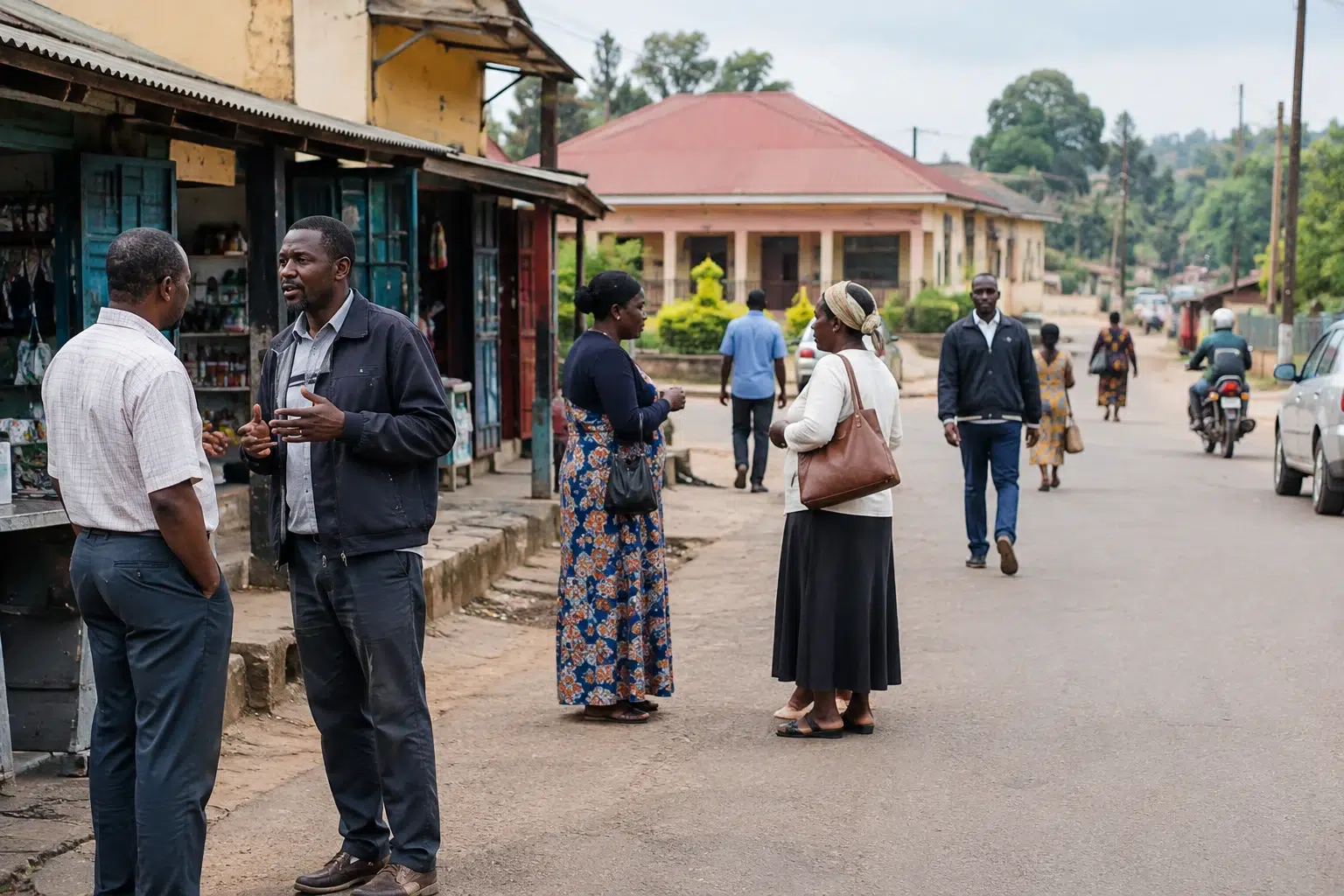
For Rwandans who have sought refuge in Uganda, crossing the border does not always erase the risks of exile. The death of Robert Kabera, a former soldier who became a critic of the Kigali government, now poses a concrete question for the authorities in Kampala: how can they protect refugees and establish the facts without presuming who is responsible?
Investigation opened in Mpigi district
Kabera’s body was discovered on Saturday 17 October 2026 in the Kamengo area of Mpigi district, south-west of Kampala. Ugandan police confirmed his identity on Monday 19 October. His brother and local residents identified him, according to the regional police spokesperson quoted by Ugandan outlet Daily Monitor and the Associated Press.
Investigators said his head had not been found. Police have opened a murder investigation but have announced neither an established motive nor a suspect. They are seeking, among other things, to reconstruct Kabera’s last movements. Details about his arrival in the area and the people accompanying him remain, for now, reported claims that investigators must verify.
A former sergeant major in the Rwandan armed forces, Kabera left Rwanda in 2020 and settled in Uganda. Also known as “Sergeant Robert”, he posted videos and songs on YouTube in which he criticised the Rwandan authorities. The available information does not allow any conclusion that his political activity was linked to his death.
An exile marked by conflicting allegations
Kabera’s past was also contested. After his departure, the Rwandan authorities accused him of sexual offences, allegations he publicly denied. These allegations do not constitute proof of guilt. Nor do they explain the murder, the circumstances of which remain to be established.
His time in Uganda had already prompted concern. In a report published in 2023, Human Rights Watch documented Kabera’s case and described the pressures and risks that Rwandan opponents in exile may face. The report says, in particular, that he had reported threats and was arrested in Uganda in 2022. This documented context warrants the authorities examining every possible line of inquiry, but does not prove who killed Kabera or why.
Caution is essential: neither the Rwandan opposition nor the authorities in Kigali can be held responsible solely on the basis of his profile. Ugandan police must establish the facts from the available evidence, including witness statements, forensic findings and any traces of his movements. At this stage, investigators say they have no firm indication of a motive.
The responsibility of the host state
For Kampala, the case goes beyond the search for those responsible. Uganda hosts refugees from several neighbouring countries, including Rwanda. Protecting these people is the responsibility of the host country’s authorities. This requires reported threats to be taken seriously and the investigation to proceed without political pressure.
The precedent set by Kabera makes this requirement particularly sensitive. Human Rights Watch reports that, while living in Uganda, he had already expressed fears for his safety and had been subject to interventions by the security forces. These details should be considered when reviewing the protection he received in the past, without being confused with evidence about the circumstances of his death.
For Rwandan refugees living in the country, the death of a former soldier known on social media may heighten a sense of insecurity. That does not mean they are all exposed to the same risk. But people involved in political, media or activist work may have different protection needs. The authorities will need to hear from relatives and witnesses while avoiding the spread of unverified accusations.
A bilateral and regional issue
Uganda and Rwanda are both members of the East African Community (EAC), an organisation bringing together several states in the region for economic and political cooperation. Their relations matter for trade, the movement of people and regional security. A credible investigation is therefore important not only for Kabera’s family but also for maintaining trust between communities on either side of the border.
That trust has already been tested by tensions between Kampala and Kigali, including over border security and mutual accusations of supporting hostile groups. These episodes do not allow any conclusion to be drawn about Kabera’s murder. They do, however, underscore that any accusation made before the investigation is complete could quickly take on a diplomatic dimension.
More broadly, human rights organisations have documented cases of threats, abductions and violence targeting Rwandans in exile in various countries. Human Rights Watch describes these practices as possible forms of transnational repression. This general finding cannot automatically be applied to the Kabera case: each detail must be established separately.
Facts to establish in the coming days
What happens next will depend on forensic findings, the identification of any suspects and verification of Kabera’s last route. The authorities will also need to clarify whether protection requests had been made recently and what measures had been taken. None of these details allows a motive or responsibility to be announced at this stage.
For Uganda, the challenge is twofold: to account for a murder committed on its territory and to ensure that refugees, whatever their nationality, can live without intimidation. For the region, how the investigation is conducted will matter as much as its findings. An evidence-based response can curb rumours and prevent this tragedy from being exploited in the already sensitive relations between Kampala and Kigali.