
 Algeria
 Egypt
 Libya
 Morocco
 Sudan
 Tunisia
 Benin
 Burkina Faso
 Cabo Verde
 Côte d'Ivoire
 Ghana
 Guinea
 Guinea-Bissau
 Liberia
 Mali
 Mauritania
 Niger
 Nigeria
 Senegal
 Sierra Leone
 The Gambia
 Togo
 Cameroon
 Central African Republic
 Chad
 Equatorial Guinea
 Gabon
 Republic of the Congo
 São Tomé and Príncipe
 Burundi
 Comoros
 Djibouti
 Eritrea
 Ethiopia
 Kenya
 Madagascar
 Malawi
 Mauritius
 Mozambique
 Rwanda
 Seychelles
 Somalia
 South Sudan
 Tanzania
 Uganda
 Angola
 Botswana
 Eswatini
 Lesotho
 Namibia
 South Africa
 Zambia
 Zimbabwe
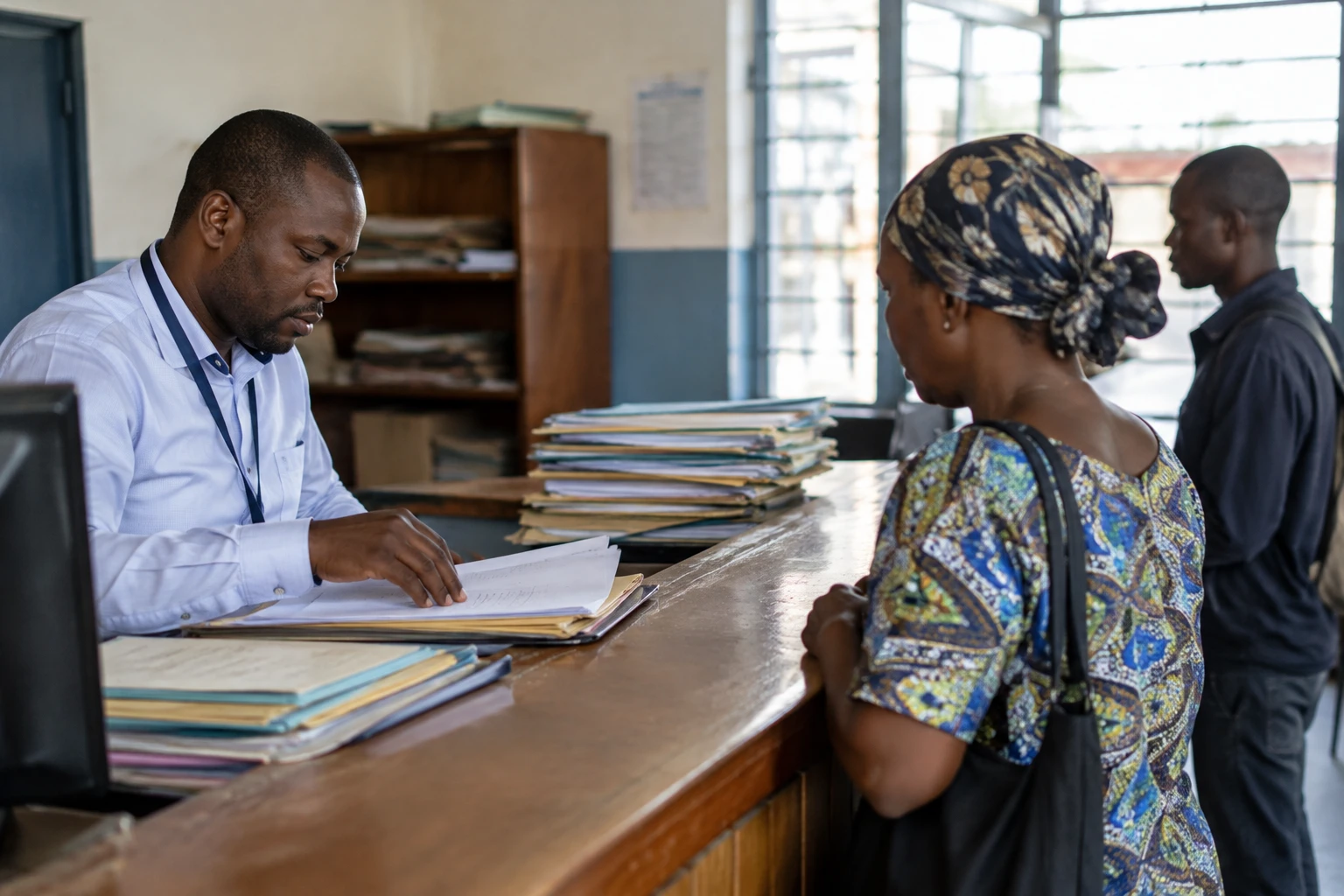
In Kinshasa, a decision to release prisoners can ease the burden for a few inmates. But it is not enough to stem the influx filling Makala prison, or to address the judicial delays keeping thousands of people behind bars before trial.
On 15 October 2026, the Minister of State for Justice, Guillaume Ngefa Atondoko Andali, and the prosecutor general at the Court of Cassation, Firmin Mvonde Mambu, visited the Kinshasa Penitentiary and Re-education Centre, known as Makala prison. They announced measures to reduce overcrowding, with particular attention to sick people, women detained with young children and minors.
A prison over capacity
Makala is designed to hold 1,500 people. According to figures presented during the visit by the facility’s director, André Kanza wa Kanza, it houses 16,238. More than 11,000 are in pre-trial detention, meaning they are being held pending a court decision. These figures were also reported by several Congolese media outlets, including Enquête.cd.
The figure is a snapshot of the facility, not an independent count of each case. It nevertheless highlights extreme pressure on space, staff and basic services. During the visit, inmates spoke of a shortage of beds and called for clemency. Women said they had to share beds, according to the account of the visit published by Actualité.cd.
The minister also noted that the prison population had almost doubled in a year, rising from about 8,000 to more than 16,000, with no increase in the operating budget. He said the food budget was calculated for fewer than 5,000 inmates. This shortfall directly undermines living conditions and makes the work of prison and medical staff more difficult.
Targeted releases, but limited impact so far
The authorities have announced an accelerated review of cases that could lead to releases, including conditional release, in accordance with judicial rules. The prosecutor general said 108 inmates had been identified for release following individual reviews. The account states that the first releases had taken place. The previous week, 66 inmates had also been granted conditional release.
These initiatives are part of a series of operations already carried out at Makala. In February 2026, the Congolese Press Agency reported the release of 125 people deemed to be in detention unlawfully, following an inspection by the prosecutor general. This precedent shows that administrative checks can rectify some cases. On its own, it does not allow for an assessment of long-term changes in the prison population.
Vulnerable people are at the heart of the announcements. The ministry plans to assess, on the basis of medical reports, inmates whose health could justify a humanitarian measure. Women imprisoned with young children and minors are also to receive appropriate treatment. The visit put a particular focus on access to healthcare and education for children in conflict with the law.
The problem also begins before prison
For Congolese human rights organisations, temporarily emptying cells does not address the reasons they fill up. Emmanuel Adu Cole of the Bill Clinton Foundation for Peace blames arbitrary arrests and slow proceedings. Jean-Claude Katende of the African Association for the Defence of Human Rights, for his part, denounces alleged corrupt practices involving some actors in the judicial system. These allegations should be distinguished from facts established in individual cases.
The debate is therefore as much about prison management as it is about the functioning of prosecutors’ offices and courts. When a hearing is delayed, pre-trial detention is prolonged. When someone is imprisoned for a minor offence or without proceedings being pursued within the time limits, overcrowding worsens. Families, which often provide inmates with some of their material support, also feel the economic consequences.
The high concentration of inmates in Kinshasa makes this crisis particularly visible in the capital. But the situation is not confined to Makala: several facilities in the Democratic Republic of the Congo have a significant gap between their capacity and their population. A lasting response therefore requires resources for prisons, but also regular hearings, transparent case tracking and respect for legal safeguards from the moment of arrest.
Announcements to be assessed over time
The minister has promised to return to Makala before the end of 2026 to assess progress. This deadline will provide an initial concrete measure: will the number of inmates have fallen, and will new admissions have replaced those released? Monitoring must also cover access to healthcare, food, and the situation of women, children and sick people.
For Congolese people, the issue extends beyond the prison walls. It concerns the justice system’s ability to deliver rulings within a reasonable time and to prevent remand detention from becoming a de facto sentence. The announced releases may address some urgent cases. Without reform of case processing and oversight of arrest practices, however, efforts to reduce overcrowding may prove temporary.
Across Africa, Makala highlights a challenge shared by several judicial systems: reconciling security, fundamental rights and effective access to a trial. The Congolese response will be judged less by the promise of a return visit than by verifiable results in cells and courts.



