
 Algeria
 Egypt
 Libya
 Morocco
 Sudan
 Tunisia
 Benin
 Burkina Faso
 Cabo Verde
 Côte d'Ivoire
 Ghana
 Guinea
 Guinea-Bissau
 Liberia
 Mali
 Mauritania
 Niger
 Nigeria
 Senegal
 Sierra Leone
 The Gambia
 Togo
 Cameroon
 Central African Republic
 Chad
 Equatorial Guinea
 Gabon
 Republic of the Congo
 São Tomé and Príncipe
 Burundi
 Comoros
 Djibouti
 Eritrea
 Ethiopia
 Kenya
 Madagascar
 Malawi
 Mauritius
 Mozambique
 Rwanda
 Seychelles
 Somalia
 South Sudan
 Tanzania
 Uganda
 Angola
 Botswana
 Eswatini
 Lesotho
 Namibia
 South Africa
 Zambia
 Zimbabwe
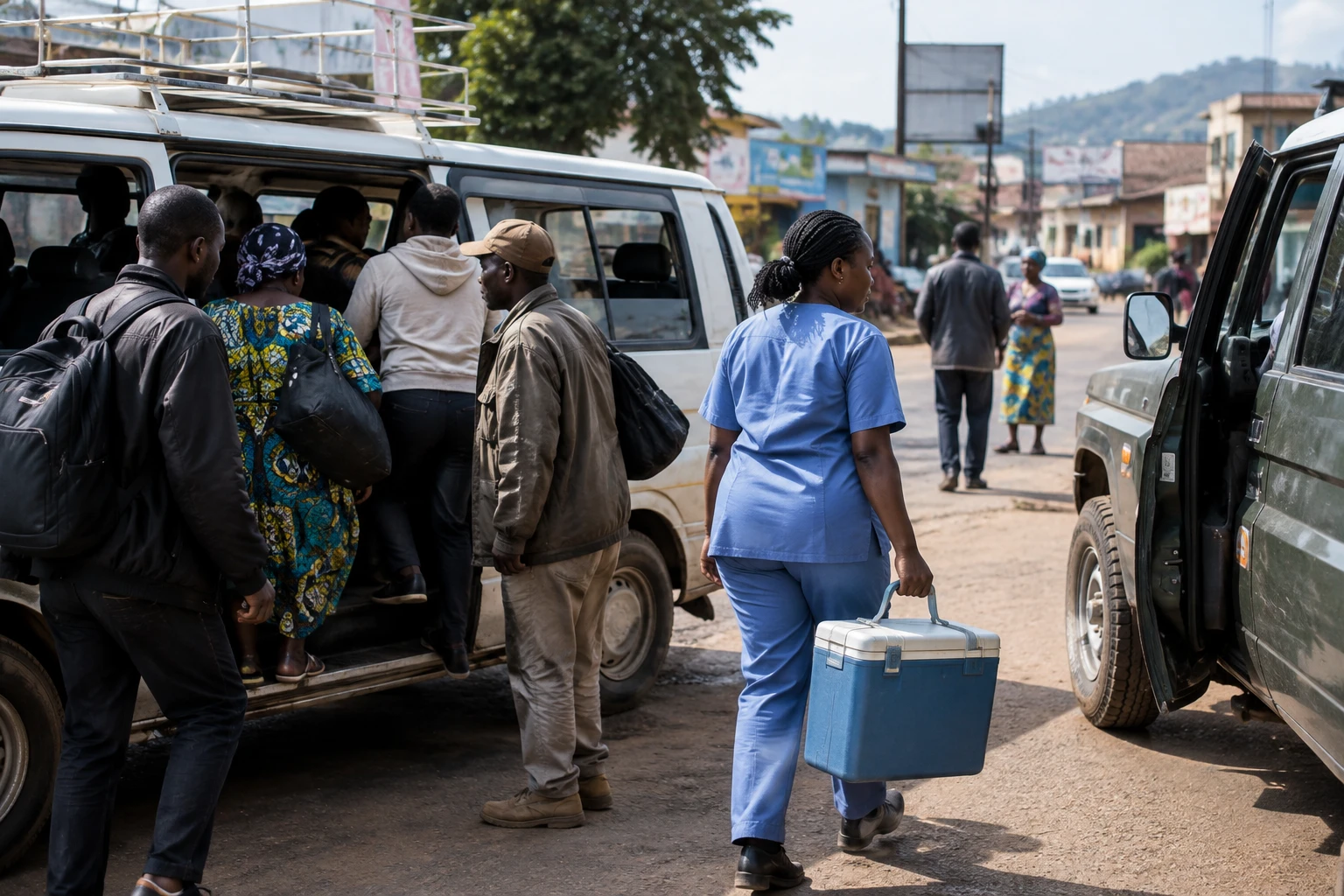
In Mambasa territory, going to a field or a gold-mining site can now expose residents to violence as well as a tax imposed by armed men. This insecurity comes as Ituri faces an Ebola outbreak and health teams need to reach affected communities.
Attacks reported around mining sites
On the night of Thursday 15 to Friday 16 October 2026, several mining sites in the Bakaheku groupement, in the Babila Babombi chieftaincy, were reportedly attacked. Local actors attribute the incursions to the Allied Democratic Forces (ADF), an armed group originating in Uganda and affiliated with the Islamic State organisation.
A local monitoring organisation, APDEF Mambasa, reported ten deaths, including a woman, in the attack on Makimbilio, Biasiko and Makamanda. A witness quoted by the Congolese press said the attackers then headed towards Mangadi. This death toll remains attributed to the organisation: the information consulted does not allow it to be confirmed by an independent official source.
Earlier in the week, residents had also denounced the alleged introduction of paid tokens to access fields and gold-mining areas. If these accounts are accurate, the practice represents a form of control imposed on civilians and their daily activities. However, the available information does not establish its precise extent or the amounts involved.
Mambasa between insecurity and a health emergency
The reports come amid a series of recent incidents in the territory. On 7 October, two civilians were killed in Longela, according to the New Congolese Civil Society, which also reported a house being set on fire. These local death tolls should be distinguished from figures verified by the authorities.
The situation is weighing on a health response already facing access difficulties. The World Health Organization (WHO) describes an outbreak of Bundibugyo virus disease, a strain of Ebola, declared in May 2026. Its 10 September bulletin reported cases in six provinces, including Ituri, and highlighted obstacles linked to insecurity, population displacement and contact tracing.
In Mambasa, this constraint is not merely theoretical. Congolese media have reported difficulties faced by response teams in the Mandima health zone, including threats and incidents in Biakato at the beginning of October. The information does not show that the attacks attributed to the ADF directly halted any specific operation. It does, however, point to an environment in which travel by health workers and residents can become more dangerous.
Effects extending beyond the direct victims
The first to be affected are families in the areas concerned: village residents, workers at mining sites and people who depend on fields for their livelihoods. An attack or threat of taxation can lead households to limit their movements or temporarily leave their locality. It also complicates access to healthcare and the circulation of health information.
For health teams, insecurity can reduce their ability to investigate new cases, trace people who have been in contact with a patient and refer patients quickly. These are essential links in an Ebola response. The WHO has already reported that insecurity and population movements were hampering contact tracing in some areas of the outbreak.
Residents are not only concerned as recipients of aid. Their trust and participation also matter in reporting symptoms, accepting care and facilitating health activities. When the authorities and teams cannot travel regularly, the response risks becoming less accessible, particularly in localities far from urban centres.
A regional security and public health concern
DR Congo is a member of the Southern African Development Community (SADC) and the East African Community (EAC). The ADF’s activity in the eastern provinces and its Ugandan origins give the threat a cross-border dimension. Meanwhile, the Bundibugyo outbreak has also affected Uganda, making health surveillance and coordination between countries particularly important.
The reported attacks in Mambasa are a reminder that security and public health intersect on the ground, without being one and the same. The immediate priority is to protect civilians and maintain safe access to healthcare, while clarifying the death tolls and facts with the relevant authorities. The next developments to watch are confirmation of the victims, the evolution of health alerts in the territory and the ability of teams to continue their work without hindrance.
Background sources: local report on the 16 October attack in Mambasa, corroboration by Election-net, epidemiological situation published by the WHO, recent incidents in Longela reported by Radio Okapi and difficulties reported in Biakato.



