Algeria
 Egypt
 Libya
 Morocco
 Sudan
 Tunisia
 Benin
 Burkina Faso
 Cabo Verde
 Côte d'Ivoire
 Ghana
 Guinea
 Guinea-Bissau
 Liberia
 Mali
 Mauritania
 Niger
 Nigeria
 Senegal
 Sierra Leone
 The Gambia
 Togo
 Cameroon
 Central African Republic
 Chad
 Equatorial Guinea
 Gabon
 Republic of the Congo
 São Tomé and Príncipe
 Burundi
 Comoros
 Djibouti
 Eritrea
 Ethiopia
 Kenya
 Madagascar
 Malawi
 Mauritius
 Mozambique
 Rwanda
 Seychelles
 Somalia
 South Sudan
 Tanzania
 Uganda
 Angola
 Botswana
 Eswatini
 Lesotho
 Namibia
 South Africa
 Zambia
 Zimbabwe
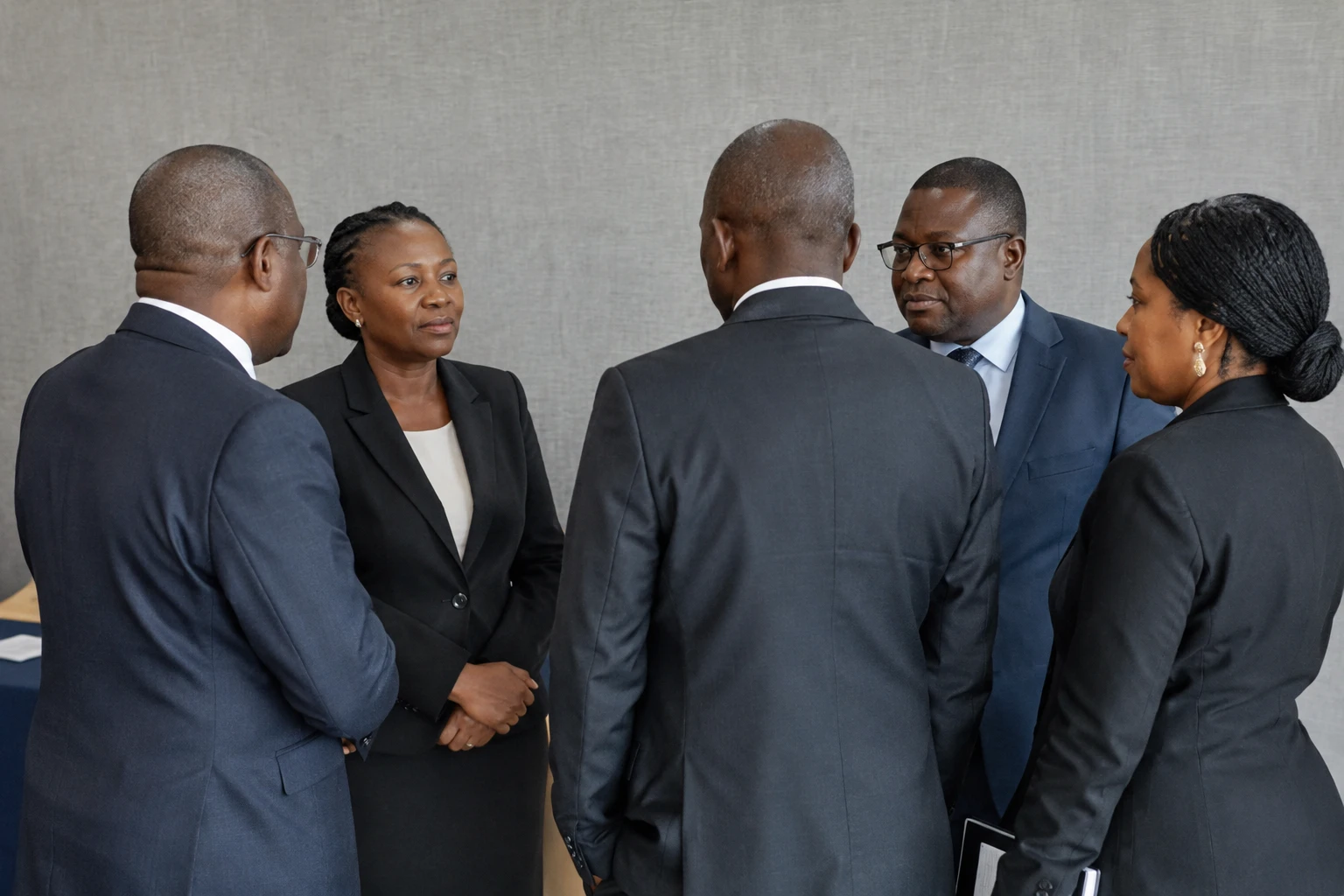
In the Democratic Republic of the Congo, banning a party’s activities does not necessarily amount to dissolving it. But when such a measure targets 13 groups at once, its effects reach beyond their leadership: it also affects activists, elected officials and the ability to challenge those in power in a country already facing a major security crisis.
A national decision amid war in the east
On 12 October 2026, in Goma, former president Joseph Kabila was announced as head of the Front for the Refoundation of the Nation (FRN), a new political-military platform. AFC/M23 officials are among its leadership. This realignment comes as armed groups control territory in the east of the DRC and diplomatic efforts seek to advance a resolution to the conflict.
The FRN adds a political dimension to a crisis that is already regional. In an analysis published on 12 October, Congolese media outlet Actualite.cd recalled that United Nations experts had referred, in a report dated 11 June 2026, to a possible restructuring of the AFC/M23 and a greater role for Kabila. The contours of the new front and the links between its political leadership and its armed components nevertheless remain to be clarified.
The DRC is also a member of the Southern African Development Community (SADC), a regional organisation involved in peace and security issues. The crisis in the east also affects neighbouring countries and is the focus of diplomatic processes beyond Kinshasa. In this context, political decisions taken in the capital can have repercussions for negotiations as well as domestic tensions.
13 groups targeted by the ban
On Thursday 15 October, Deputy Prime Minister for the Interior Jacquemain Shabani signed a message ordering the immediate ban of the activities of 13 political parties and groups across the country. Provincial authorities are to enforce the measure. The document, reported the following day by Radio Okapi and UNE.CD, is also addressed to administrative and security officials.
The parties concerned include the People’s Party for Reconstruction and Democracy (PPRD), associated with Joseph Kabila; the Leadership and Governance for Development (LGD) of former prime minister Matata Ponyo; PISTE-E, led by Seth Kikuni; and Claudel Lubaya’s Original African Democratic Union. The list also includes the MPCR, MLP, UPC, AAP, ATD, PNEL, ADCP, COFEDEC and AARC.
One point remains central: the message cited by the media does not detail the reasons for the ban. Nor does it specify how long it will last. Published reports say it bans the groups’ activities but does not dissolve them. These distinctions matter in understanding the measure’s legal scope and any appeals open to the parties.
Criticism from officials of the targeted groups describes the decision as a restriction of political space. By contrast, officials close to the government defend the authorities’ role in protecting public security. These positions reflect the political balance of power; they do not replace an examination of the text, its legal basis and how it is to be enforced.
Between public security and political freedoms
The question in Kinshasa is how to balance security and pluralism. In a country where the authorities face a rebellion in the east, the security risk is a real concern. But a restriction affecting political organisations must also be clearly justified, limited and subject to review. Without a public explanation of the alleged offences, it becomes difficult to distinguish a targeted measure from collective punishment.
The consequences are not limited to party leaders. Activists may lose places to meet and organise. Elected officials from these groups may find their ability to express themselves politically affected, depending on how the authorities enforce the decision. The effects may also vary between Kinshasa and the provinces, where governors and local services are responsible for implementation.
In January 2026, a ministerial order had already suspended the activities of the Congolese People’s Movement for the Republic (MPCR). The text cited, among other things, the participation of its president, Jean-Claude Vuemba, in a conclave associated with Joseph Kabila. This precedent shows that suspending a party has already become part of recent administrative practice. On its own, however, it is not enough to establish the legality of the new decision targeting 13 groups.
Effects to watch well beyond the parties
For the authorities, the stated priority is security during a period of confrontation with the FRN and armed groups in the east. For the opposition, the challenge is to retain the means to express itself and organise. For citizens, the practical consequences will depend in particular on how the order is enforced locally and whether the parties concerned can bring their case before the competent institutions.
The decision comes as the realignment around Joseph Kabila further blurs the line between political opposition and a political-military movement. The banned groups should not be conflated with the FRN: their inclusion in the measure does not, in itself, show that they take part in its activities or in armed operations.
At the regional level, developments will weigh on peace efforts in Central and Southern Africa. The next points to watch are the possible publication of detailed reasons, the duration of the ban, any appeals filed and the conduct of provincial authorities. Their handling of the matter will show whether the measure remains a limited administrative decision or permanently changes the conditions for political debate in the DRC.
The 15 October decision therefore confronts Congolese institutions with a dual imperative: to address security risks without reducing the political guarantees provided for pluralism. The balance will be judged by what happens in practice — the justification, legal scrutiny and implementation on the ground.