Algeria
 Egypt
 Libya
 Morocco
 Sudan
 Tunisia
 Benin
 Burkina Faso
 Cabo Verde
 Côte d'Ivoire
 Ghana
 Guinea
 Guinea-Bissau
 Liberia
 Mali
 Mauritania
 Niger
 Nigeria
 Senegal
 Sierra Leone
 The Gambia
 Togo
 Cameroon
 Central African Republic
 Chad
 Equatorial Guinea
 Gabon
 Republic of the Congo
 São Tomé and Príncipe
 Burundi
 Comoros
 Djibouti
 Eritrea
 Ethiopia
 Kenya
 Madagascar
 Malawi
 Mauritius
 Mozambique
 Rwanda
 Seychelles
 Somalia
 South Sudan
 Tanzania
 Uganda
 Angola
 Botswana
 Eswatini
 Lesotho
 Namibia
 South Africa
 Zambia
 Zimbabwe
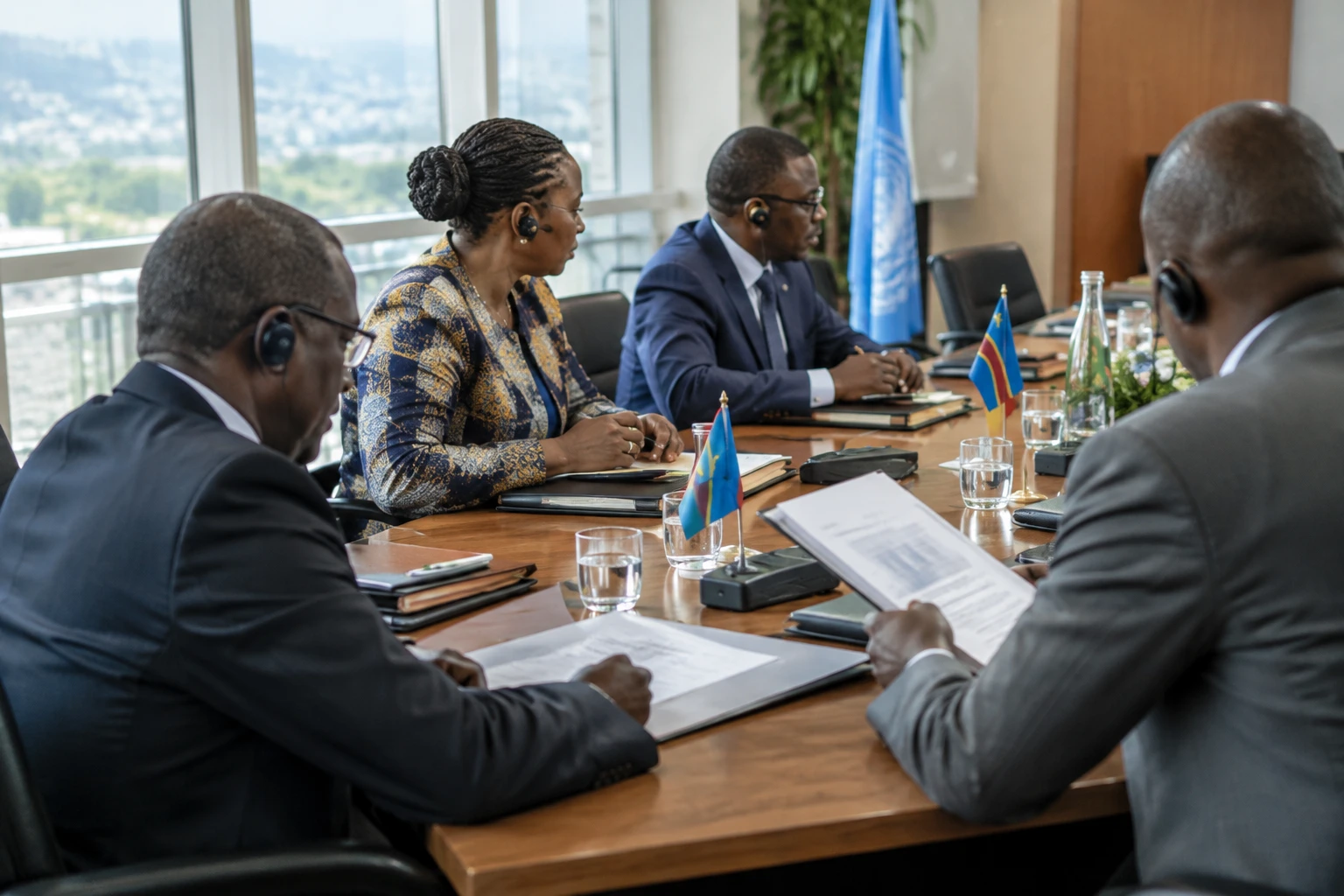
In Kinshasa, the creation of a politico-military movement led by a former president raises an immediate question: can political opposition still be separated from the war in the east of the Democratic Republic of Congo? For the governing majority, the announcement of the Front for the Refoundation of the Nation (FRN) revives accusations against Joseph Kabila. But it also highlights the gap between political statements and the expectations of people in the affected provinces: security and a return to normal life.
A new name for an already armed coalition
The FRN was announced on 12 October 2026 in Goma, a city in North Kivu controlled by AFC/M23. Joseph Kabila, president of DR Congo from 2001 to 2019, is leading it. The new structure brings together officials from the Congo River Alliance (AFC) and the 23 March Movement (M23), according to several reports of the announcement. Corneille Nangaa, a former leader of the AFC, is among its officials.
Its promoters present the FRN as a new politico-military platform and the successor to AFC/M23. Adviser Claude Ibalanky said the movement intended to “end tyranny”, including by force. This statement describes the objective claimed by its leaders; it does not constitute independent confirmation of their accusations against the government.
The context goes beyond a change of name. AFC/M23 controls territory in North Kivu and South Kivu, while Kinshasa and the movement have begun talks in Doha. The FRN now places the former head of state at the top of a coalition that includes armed actors. This development could alter the balance of power around the negotiations, but its concrete effects remain to be seen.
The majority condemns the move, but its voices are not all the same
The first reactions from allies of President Félix Tshisekedi denounced the initiative. The Alliance of Democratic Forces of Congo (AFDC), a member party of the Sacred Union of the Nation, described the FRN as a “new form of rebellion” in a statement dated 13 October. Kinshasa Governor Daniel Bumba called on the capital’s residents to support the institutions of the Republic.
These statements express the position of majority officials, not necessarily a common response from all its constituent groups. Other reactions reported in the Congolese press criticise the creation of an armed structure, while some officials are calling for national unity to be preserved. It is therefore important to distinguish political condemnation from analysis of the consequences: no reaction, on its own, indicates how firmly the new front is established or whether it can broaden its support.
Kabila’s movement itself faces a political contradiction. It presents itself as a force for national refoundation, but relies on armed groups active in the east of the country. For the authorities, this alliance reinforces the accusation that it poses a threat to the state. For its leaders, it is a means of challenging the government and uniting opposition forces. These accounts are in competition; the established facts are the creation of the FRN and the presence of AFC/M23 officials in its leadership.
Negotiations and the population at the heart of the issues
The realignment comes as talks between Kinshasa and AFC/M23 are under way in Doha. The inclusion of officials from this coalition in the FRN risks complicating the discussions: mediators must now take account of a structure led, as claimed, by Kabila. But it is too early to conclude that the process has been halted. Public announcements are no substitute for the negotiators’ decisions or actions on the ground.
The stakes extend beyond the leaders. In areas controlled by armed groups, residents experience the direct consequences of changes in command: uncertainty over local authority, movements of fighters and the future of public services. In Kinshasa, statements of support for the institutions are addressed to an opinion far from the front lines, but concerned about the country’s territorial integrity. Urban realities and those of the affected territories are not the same.
The crisis also has a regional dimension. DR Congo is a member of the Southern African Development Community (SADC) and the East African Community (EAC), two organisations involved in initiatives concerning regional security. The conflict involves strained relations with Rwanda, which Kinshasa accuses of supporting M23; Kigali denies providing direct support. This dimension makes peace initiatives more complex: a bilateral agreement or mediation cannot ignore the Congolese actors present on the ground.
An announcement to be judged by what follows
The creation of the FRN opens a new phase in Congolese politics, but it is not yet possible to predict the outcome. It remains to be seen whether other opposition parties join the movement, whether AFC/M23 officials change their organisation or strategy, and whether the Doha talks continue with the same interlocutors.
For Félix Tshisekedi’s majority, the response for now is to defend the institutions and denounce an armed threat. For Kabila and his allies, the FRN is becoming an instrument for challenging the government. Between the two, people in the east are waiting for results measured less by the names of coalitions than by a reduction in violence and the chance to regain stable services and administrations. It is these developments, rather than the political announcement alone, that will determine the significance of the new front.
Information cross-checked in the Congolese and regional press, including Actualite.cd on the realignment around the FRN, Radio Okapi on the creation of the movement and L’Objectif on political reactions. The FRN’s statements and intentions are reported as such, without prejudging their implementation.