Algeria
 Egypt
 Libya
 Morocco
 Sudan
 Tunisia
 Benin
 Burkina Faso
 Cabo Verde
 Côte d'Ivoire
 Ghana
 Guinea
 Guinea-Bissau
 Liberia
 Mali
 Mauritania
 Niger
 Nigeria
 Senegal
 Sierra Leone
 The Gambia
 Togo
 Cameroon
 Central African Republic
 Chad
 Equatorial Guinea
 Gabon
 Republic of the Congo
 São Tomé and Príncipe
 Burundi
 Comoros
 Djibouti
 Eritrea
 Ethiopia
 Kenya
 Madagascar
 Malawi
 Mauritius
 Mozambique
 Rwanda
 Seychelles
 Somalia
 South Sudan
 Tanzania
 Uganda
 Angola
 Botswana
 Eswatini
 Lesotho
 Namibia
 South Africa
 Zambia
 Zimbabwe
In the Democratic Republic of the Congo, five months after the first official report, Ebola is no longer confined to Ituri. The disease has now reached seven provinces. This spread is testing screening, contact tracing and teams’ ability to treat patients early enough.
An outbreak spreading beyond its epicentre in Ituri
The Congolese health ministry declared the outbreak on 15 May 2026, after the Bundibugyo virus was confirmed by the National Institute of Biomedical Research (INRB) in Kinshasa. On 17 May, the World Health Organization (WHO) classified the event as a public health emergency of international concern. The procedure is intended to strengthen cooperation between countries in response to a cross-border health threat. It is the 17th Ebola outbreak recorded in the DRC since the virus was identified in 1976.
As of 13 October, Congolese authorities reported 9,066 confirmed cases and 4,381 deaths. Infections had been reported in 65 health zones across Ituri, North Kivu, South Kivu, Haut-Uele, Bas-Uele, Tshopo and South Ubangi. This tally, published by the authorities and reported by the Associated Press news agency, describes a changing situation: confirmed cases do not necessarily include all infections.
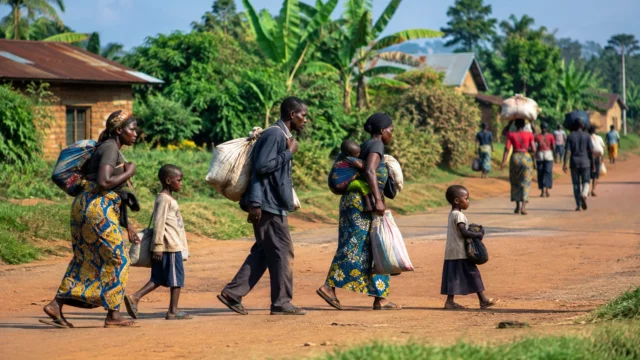
Ituri remains the main focus of the outbreak, but its geographical spread is changing the nature of the response. Health authorities must detect cases in remote areas, trace people on the move and co-ordinate teams across provincial boundaries. Travel, difficulties accessing healthcare and insecurity in some areas make these tasks harder. They do not make transmission inevitable, but they can delay diagnosis and transfer to an appropriate facility.
Bundibugyo requires tailored responses
The Bundibugyo virus is a distinct species from the Ebola viruses more commonly associated with major outbreaks in the DRC. Vaccines and treatments developed against certain other species cannot automatically be considered effective against it. At the start of the outbreak, the WHO said that specific medical countermeasures remained limited. The strain makes clinical research particularly important, without replacing proven prevention and care measures.
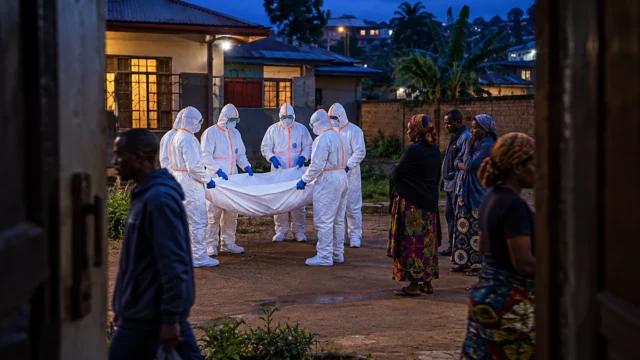
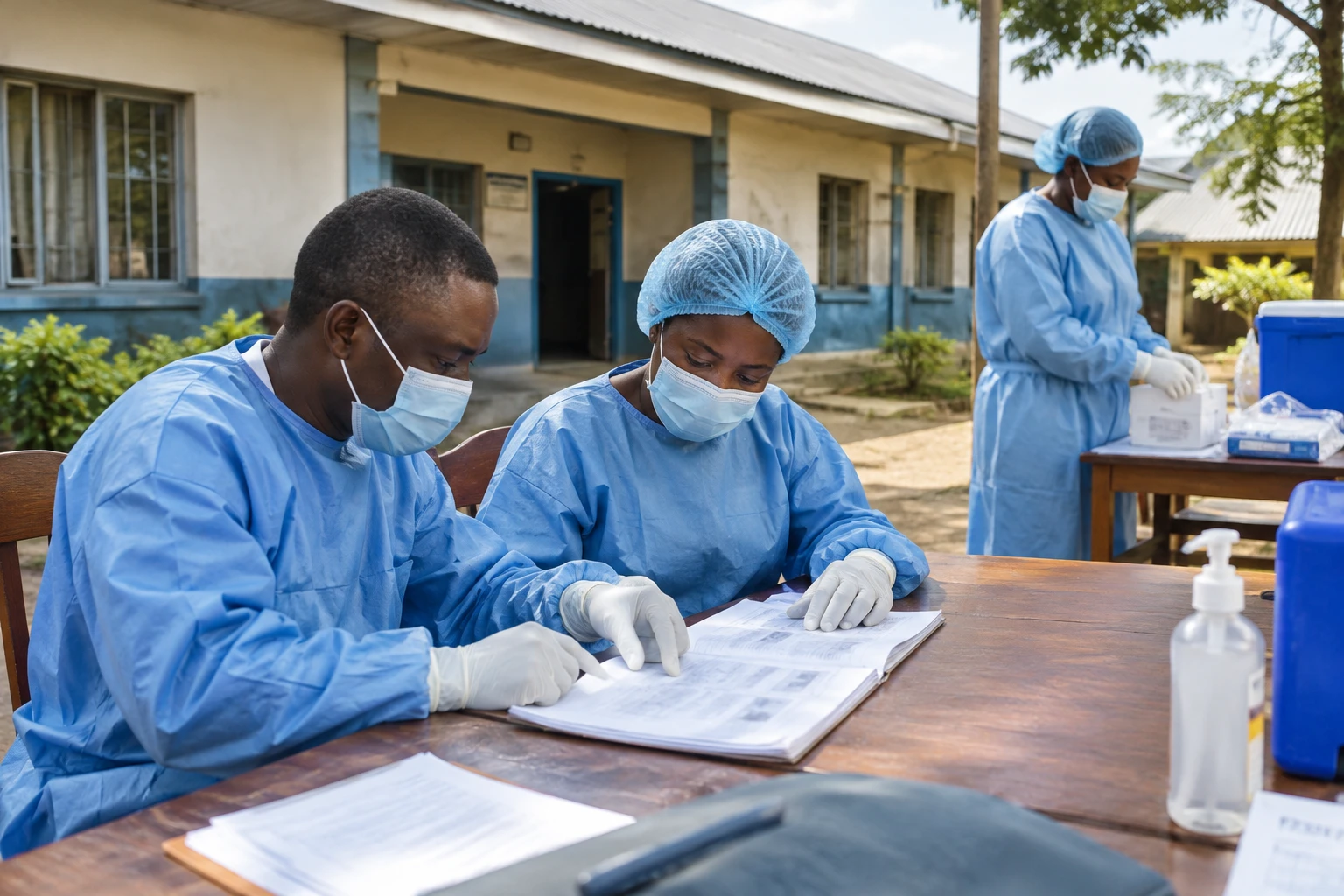
At treatment centres, the work involves isolating sick people, confirming diagnoses, treating symptoms and preventing infections among healthcare workers and relatives. Hand hygiene, protective equipment and separate patient pathways reduce the risk of transmission. But the effectiveness of these measures also depends on their accessibility and on communities’ trust in the teams.
Contact tracing is another essential link. After a case is identified, health workers seek out exposed people and monitor their condition. An incomplete list or a contact who is difficult to reach can delay the isolation of a new patient. Clear communication, by contrast, helps families report symptoms and seek care before a condition worsens.
Trials to protect people exposed to the virus
In Kinshasa, the INRB is taking part in the EBO-PEP clinical trial, which is assessing obeldesivir as post-exposure prophylaxis. This approach involves testing an antiviral in people recently exposed to the virus, before they develop the disease. The trial, launched with research partners and the NGO ALIMA, does not mean that the drug has already been recognised as effective against Bundibugyo. Its results are intended to establish whether it offers protection and under what conditions.
The protocol targets contacts considered to be at high risk. It complements rather than replaces symptom monitoring, testing, rapid referral for care and precautions to prevent further exposure. Research must also protect participants: explaining uncertainties to them, obtaining their consent and carefully monitoring the effects of the product being studied.
Survivors also need follow-up after recovery. This can address medical and psychosocial needs and help teams understand any lasting effects. It must be provided without stigma: a person who has recovered should not be defined by their past infection. Support for survivors and prevention among their relatives rely on tailored advice and reliable medical information.
A national response, a regional challenge
The spread across provinces calls for co-ordination between the health ministry, the INRB, the National Institute of Public Health, local teams and frontline partners. Surveillance data must circulate quickly enough to guide testing, teams and resources. However, national figures alone do not tell the story of differences between the capital and rural areas, or the constraints faced by frontline facilities.
The regional dimension is already tangible. In May, the WHO included the DRC and Uganda in its international emergency declaration. Proximity to borders and population movements make information-sharing and health-service preparedness in neighbouring countries valuable. This co-ordination does not mean that border communities are a threat: its purpose is to identify cases quickly and ensure care without unnecessarily disrupting daily exchanges.
For Congolese people, the immediate priority remains access to rapid screening, nearby care and clear information. For researchers, it is to produce evidence on a little-studied strain. For the authorities, it is to maintain a coherent response across seven provinces while strengthening local trust. The next epidemiological data and trial results will help assess whether these efforts are slowing transmission and improving protection for people exposed to the virus.