
 Algeria
 Egypt
 Libya
 Morocco
 Sudan
 Tunisia
 Benin
 Burkina Faso
 Cabo Verde
 Côte d'Ivoire
 Ghana
 Guinea
 Guinea-Bissau
 Liberia
 Mali
 Mauritania
 Niger
 Nigeria
 Senegal
 Sierra Leone
 The Gambia
 Togo
 Cameroon
 Central African Republic
 Chad
 DR Congo
 Equatorial Guinea
 Gabon
 Republic of the Congo
 São Tomé and Príncipe
 Burundi
 Comoros
 Djibouti
 Eritrea
 Ethiopia
 Kenya
 Madagascar
 Malawi
 Mauritius
 Mozambique
 Rwanda
 Seychelles
 Somalia
 South Sudan
 Tanzania
 Uganda
 Angola
 Botswana
 Eswatini
 Lesotho
 Namibia
 Zambia
 Zimbabwe
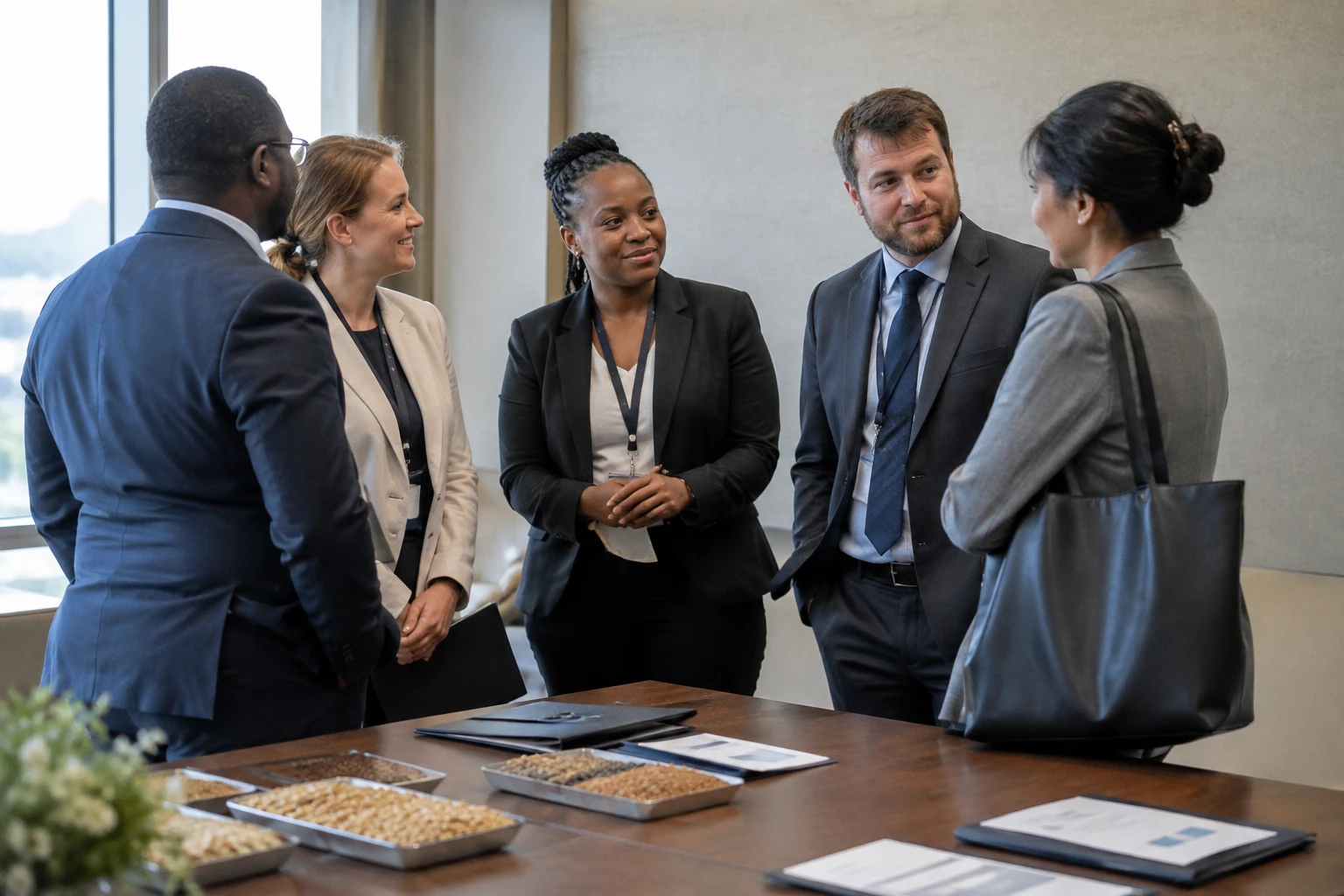
South African shelves still depend on foreign suppliers for several commodities, including wheat. This demand attracts new sellers, but it does not guarantee Russia a lasting foothold in an already contested market.
An open but highly competitive market
South African agriculture looks in two directions. It exports fruit, grain and other products to the region and the rest of the world. At the same time, it imports wheat, palm oil and poultry, among other commodities. These purchases meet domestic demand and reflect limits on local production of certain products.
In 2025, the country’s agricultural imports reached $7.8 billion, up 4% year on year, according to data from Agbiz, the Agricultural Business Chamber of South Africa. In the first half of 2026, they totalled $3.9 billion, 5% more than in the same period a year earlier. Wheat represents a significant market: the country imports nearly half of its annual consumption. Palm oil also relies heavily on foreign supplies, partly because growing conditions are unfavourable.
These figures do not, however, portray a national agricultural sector reduced to imports. South African agricultural exports reached a record level in 2025, according to figures cited by the authorities and industry organisations. Africa is their main regional destination. This dual reality — importing some commodities while exporting others on a large scale — explains the country’s commercial appeal.
Russia seeks to broaden its markets
From 12 to 14 October 2026, Russia’s Ministry of Agriculture and Agroexport, an organisation tasked with supporting Russian agri-food exports, led a trade mission to South Africa. Its stated aim was to meet potential partners and explore ways to develop trade.
The programme included discussions with the South African Meat Processors’ Association and the South African Association of Meat Importers and Exporters. Meetings between Russian and South African companies were also planned. The discussions therefore focused on more than grain: Russian players were also seeking to present their products to local processors and buyers.
According to Agroexport figures reported by Interfax, Russia supplied about 230,000 tonnes of agricultural products to South Africa between January and September 2026, worth more than $54 million. Grain, particularly wheat, accounted for most of these deliveries. These figures are attributed to the Russian organisation; on their own, they are not an independent measure of sales recorded by South African authorities.
The mission forms part of a broader bilateral relationship. Pretoria and Moscow have an intergovernmental mechanism for economic and trade co-operation, as well as an agricultural co-operation agreement signed in 2018. In February 2026, South Africa’s presidency said the two countries were working on a trade and investment framework. The October meetings give practical expression to this intention to strengthen ties, without prejudging the results.
Contracts still to be won
Growth in South African purchases from abroad does not mean Russian suppliers will automatically secure new contracts. They face established competitors, including Brazil, Thailand, China, Indonesia, Australia and European countries. South African buyers weigh up prices, quality, reliability of deliveries and health requirements.
For the wheat sector, the question includes the ability to deliver predictably and comply with import rules. For meat processors, discussions must also address veterinary standards, the cuts in demand and the needs of processing chains. A business meeting can open doors; it does not replace the required permits or supply agreements.
The potential effects vary among stakeholders. Importers and processors may seek to diversify their suppliers or negotiate costs. South African grain producers and livestock farmers, meanwhile, monitor incoming volumes, which can affect local competition. Consumers may benefit from a wider range of products, but the impact on prices also depends on the exchange rate, transport, harvests and commercial margins. Small retailers and households will not necessarily feel changes at the same pace as large importing companies.
SADC, another scale of trade
The stakes extend beyond relations between Pretoria and Moscow. South Africa is a member of the Southern African Development Community, or SADC, which brings neighbouring countries together for economic and trade co-operation. Agricultural flows within the region matter for supply, while South Africa also remains an important market and supplier for its partners.
South Africa’s strategy is to preserve its external markets while diversifying its suppliers and partners. Russia, for its part, is seeking to consolidate grain sales and explore other segments. This approach is unfolding as states and companies expand trade partnerships, without these closer ties erasing competition among suppliers.
What happens next will depend on whether October’s discussions lead to contracts, on effective access to processing sectors and on companies’ ability to meet South African rules. Future trade data will show whether the mission has resulted in new volumes. For now, it primarily signals Moscow’s interest in a market where opportunities are real, but competition and buyers’ requirements remain decisive.
Background sources: Agbiz on South African agricultural trade, analysis of agricultural imports in the first half of 2026, report on the trade mission and Agroexport figures, South African presidency on bilateral relations, parliamentary response on agricultural co-operation between South Africa and Russia, SADC publication on regional integration.



