
 Algeria
 Egypt
 Libya
 Morocco
 Sudan
 Tunisia
 Benin
 Burkina Faso
 Cabo Verde
 Côte d'Ivoire
 Ghana
 Guinea
 Guinea-Bissau
 Liberia
 Mali
 Mauritania
 Niger
 Nigeria
 Senegal
 Sierra Leone
 The Gambia
 Togo
 Cameroon
 Central African Republic
 Chad
 Equatorial Guinea
 Gabon
 Republic of the Congo
 São Tomé and Príncipe
 Burundi
 Comoros
 Djibouti
 Eritrea
 Ethiopia
 Kenya
 Madagascar
 Malawi
 Mauritius
 Mozambique
 Rwanda
 Seychelles
 Somalia
 South Sudan
 Tanzania
 Uganda
 Angola
 Botswana
 Eswatini
 Lesotho
 Namibia
 South Africa
 Zambia
 Zimbabwe
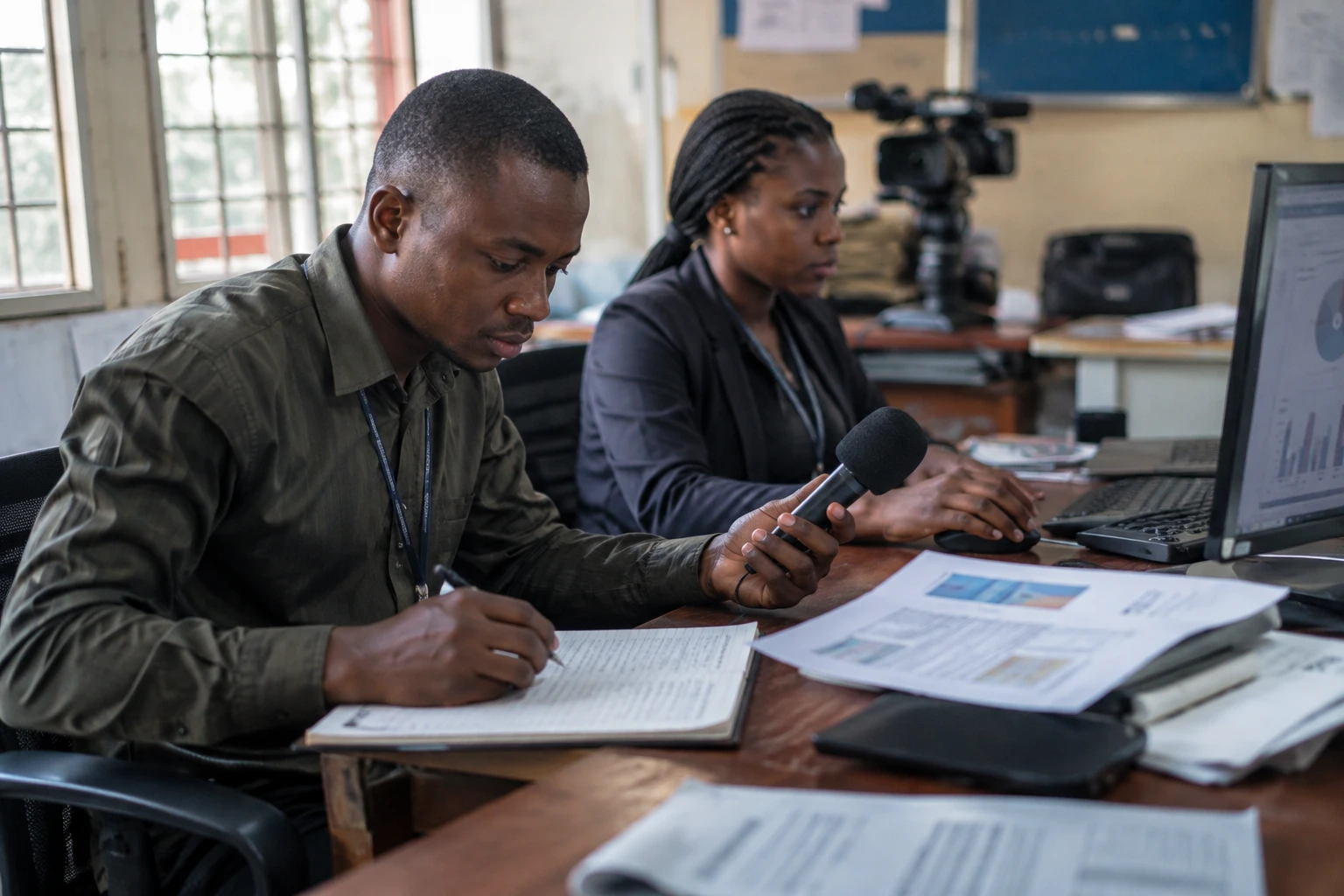
Containing Ebola in Bunia depends on more than treatment centres. People must also be willing to take their relatives there, women must continue to access care, and children separated from their parents must be protected. In the east of the Democratic Republic of the Congo (DRC), the response is taking shape as much in neighbourhoods and maternity units as in medical facilities.
An emergency that extends beyond treatment centres
The current outbreak, the 17th recorded in the DRC, was declared in May 2026. The National Institute of Biomedical Research identified the Bundibugyo virus. On 17 May, the World Health Organization (WHO) declared the outbreak a public health emergency of international concern. Cases were also confirmed in Uganda, following travel from the DRC.
The outbreak spread rapidly. By 29 September, more than 8 224 cases and 3 982 deaths had been confirmed in seven provinces, according to Health Ministry data cited by UNICEF. On 2 October, the Associated Press reported that the death toll had passed 4 000. These figures describe an evolving outbreak: they should not be confused with the toll from an earlier phase of the crisis.
Ituri, in the country’s north-east, remains at the centre of transmission. Bunia, the provincial capital, is a hub for travel and trade. Insecurity and population movements make contact tracing more difficult, while mistrust can delay people seeking care. The outbreak also affects North Kivu and South Kivu. The DRC is a member of the East African Community and SADC, two regional frameworks in which health co-ordination and cross-border movement are practical concerns.
Trust is built close to communities
In neighbourhoods and villages around Bunia, community health workers explain symptoms, address rumours and direct people to health facilities. Their role is vital when residents initially attribute signs of the disease to malaria or other causes. Information that is understood and shared by people known locally can encourage earlier reporting.
Trust cannot be taken for granted. Deaths in communities, fear of isolation and past experiences of health services that were difficult to access all influence families’ decisions. Teams must therefore listen as well as inform. A fall in the number of detected cases does not, by itself, prove that transmission is declining: insecurity or residents’ refusal to co-operate can also reduce the number of cases reported.
This distinction matters in a province where access to care also depends on security, roads and the presence of health workers. WHO has highlighted the risks posed by insecurity and mobility in the region. The response therefore relies on medical surveillance as well as relationships of trust with communities.
Maintaining maternal care despite the fear
An outbreak can keep people who do not have Ebola away from health centres. Pregnant women may fear infection, while health workers need suitable equipment and protocols to continue receiving families. Yet antenatal appointments, assisted births and reproductive health care cannot wait until the emergency is over.
The consequences are measurable in Ituri. UNFPA reports, based on national data, that maternal mortality has doubled since 25 May, averaging more than six deaths a week. The agency also says that more than 150 midwives have been deployed to support safe deliveries. These figures underline that continuity of care is part of the response, not a secondary service.
Women are exposed both as health workers and as family caregivers, particularly when looking after a sick relative. But they also bear the indirect effects of the crisis: missed appointments, disrupted services and greater risks when giving birth without assistance. In Bunia and rural areas of Ituri, the availability of protective equipment, staff and transport can make the difference between a swift referral and a dangerous delay.
Protecting children and supporting recovery
For children whose parents are hospitalised or die, separation adds a social emergency to the medical one. By 28 September, UNICEF had recorded more than 1 900 children who had lost a parent or been separated from their families in the east of the DRC. The organisation supports 12 nurseries near treatment centres in Ituri, North Kivu and South Kivu. These facilities provide appropriate care and allow children exposed to the virus to be monitored.
By 29 September, UNICEF also estimated that more than 2 076 children had tested positive and that at least 1 162 had died. Children accounted for more than one in four confirmed cases. These figures show why paediatric care, child protection and the search for relatives must be combined, rather than limiting the response to medical isolation.
Leaving a treatment centre does not always bring an end to difficulties. Survivors may face bereavement, stigma or the loss of their home and income. Psychosocial support and livelihood assistance are therefore important to their reintegration. They also help reduce the barriers that prevent other families from seeking care.
Regional response also depends on frontline services
The outbreak is a reminder that health security does not stop at borders. Travel between Ituri, neighbouring provinces and Uganda makes information-sharing and co-ordination between health authorities essential. WHO confirmed the cross-border nature of the emergency in May. For neighbouring states, preparedness must go hand in hand with a response involving affected communities, without turning mobile populations into scapegoats.
In Bunia, the immediate challenge is to maintain case detection, trust, maternal care and child protection at the same time. Nurseries, community health workers and maternity units are not extras: they enable families to seek help without abandoning their relatives or other essential care. The course of the outbreak will also depend on teams’ access to affected areas, the continuity of services and the resources available to support local facilities.



