Algeria
 Egypt
 Libya
 Morocco
 Sudan
 Tunisia
 Benin
 Burkina Faso
 Cabo Verde
 Côte d'Ivoire
 Ghana
 Guinea
 Guinea-Bissau
 Liberia
 Mali
 Mauritania
 Niger
 Nigeria
 Senegal
 Sierra Leone
 The Gambia
 Togo
 Cameroon
 Central African Republic
 Chad
 Equatorial Guinea
 Gabon
 Republic of the Congo
 São Tomé and Príncipe
 Burundi
 Comoros
 Djibouti
 Eritrea
 Ethiopia
 Kenya
 Madagascar
 Malawi
 Mauritius
 Mozambique
 Rwanda
 Seychelles
 Somalia
 South Sudan
 Tanzania
 Uganda
 Angola
 Botswana
 Eswatini
 Lesotho
 Namibia
 South Africa
 Zambia
 Zimbabwe

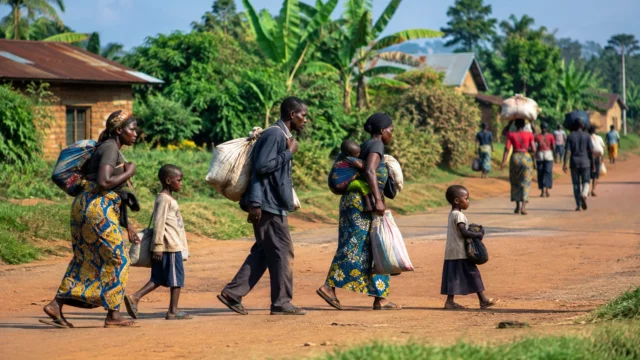
For people living in remote villages, a few kilometres of network coverage can transform access to calls, mobile payments and online services. In the Democratic Republic of the Congo (DRC), the authorities are relying on compact antenna sites to reach communities that conventional equipment struggles to serve.
Reducing the cost of the last mile in sparsely populated areas
The challenge is geographical and economic. The population is spread across a vast territory, while telecoms sites need electricity and a transmission link. When few subscribers live near an antenna, expected revenues may not cover installation and operating costs. Operators therefore have an incentive to concentrate investment in the most densely populated areas.
This logic leaves many rural communities without access to high-speed mobile internet. It also affects small towns and outskirts, where neighbourhoods can grow faster than infrastructure. Coverage does not automatically mean that everyone can connect: the cost of phones and data, signal quality and digital skills also matter.
The DRC is a member of the Southern African Development Community (SADC), which brings together countries in southern and central Africa around regional cooperation goals. For Kinshasa, the issue goes beyond telecommunications: connecting communities also facilitates trade, access to information and some economic activities. But the country’s vast size makes network expansion particularly costly.
Microsites trialled with several operators
On 8 October, Minister of Posts and Telecommunications José Mpanda Kabangu brought together the Universal Service Development Fund (FDSU), mobile operators and Africa Mobile Networks (AMN), a company that offers this equipment. According to information reported by Scoop RDC, the discussions aimed to extend to other operators a technology already used by Orange in the DRC.
The proposed scheme includes 50 pilot microsites, notably for Airtel, Vodacom and Africell. These are compact antennas powered by solar panels. Specifications shared at the meeting indicate a height of about five metres, installation in less than two hours and a cost four times lower than that of a conventional antenna. These figures describe the project as presented; they are not yet an independent assessment of its performance.
According to the same information, each site could cover a radius of four to five kilometres and serve several villages. The model is primarily aimed at communities of 3,000 to 4,000 people. AMN says that actual range varies according to terrain and that capacity can be increased by adding equipment. Announced coverage therefore does not guarantee the same service quality everywhere or the same number of users connected at any one time.
The launch of pilot sites will primarily make it possible to assess performance on the ground: service continuity, equipment resilience, capacity during periods of high demand and maintenance costs. It will also be necessary to establish who will fund repairs and the replacement of batteries or panels. Without long-term monitoring, a site that is quick to install can become difficult to operate.
The figures show the scale of the task
Figures cited for 2024 put 2G, 3G and 4G network coverage at 75%, 55% and 45% of the Congolese population respectively. In other words, around 55% of the population was not covered by 4G that year. The national statistical document published by the ARPTC, the Congolese telecommunications regulator, also sets out coverage levels by technology at the end of 2024. These indicators describe the presence of a network, not the number of people actually using the internet.
The target announced by the authorities is to connect 68 million people living in rural areas by 2035. Feasibility will depend on the pace of deployment, funding and coordination between the FDSU and operators. The fund has an important role to play: supporting areas where commercial calculations alone are not enough to trigger investment.
Another initiative illustrates the scale of the task, although it is not necessarily part of the same programme as the 50 microsites. In 2026, the FDSU announced agreements with Airtel, Africell, Orange and Vodacom to subsidise 40 pilot sites. This announcement, published by the fund itself, shows that several forms of intervention are being considered. Announcements must be distinguished from completed projects: the figures for sites funded, built and actually operational are not interchangeable.
Across the sector, costs are not limited to the antenna. They include energy, data transmission, site security and maintenance. The GSMA, a mobile industry association, notes in its 2025 report on coverage and infrastructure that the last areas to be connected are often far from electricity grids. Its global estimates should not, however, be presented as a budget specific to the DRC.
Coverage will be only the first step
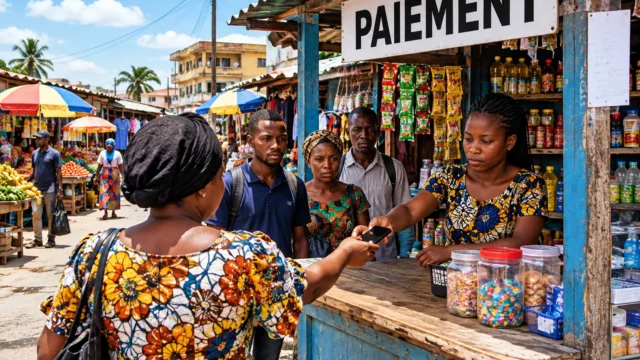
For operators, microsites can reduce upfront costs and make some deployments viable. For residents, their value will depend on the price of data plans, signal stability and the availability of compatible phones. For small businesses and local services, a reliable network can support digital payments and remote communications, provided access is affordable.
The next steps will come down to implementation: the location of the 50 sites, the timetable, trial results and the sharing of costs between the state, the FDSU and operators. The DRC will also need to measure coverage and actual use separately. The programme will only reduce the digital divide if the new antennas remain operational and people are able to use the network.