
 Algeria
 Egypt
 Libya
 Morocco
 Sudan
 Tunisia
 Benin
 Burkina Faso
 Cabo Verde
 Côte d'Ivoire
 Ghana
 Guinea
 Guinea-Bissau
 Liberia
 Mali
 Mauritania
 Niger
 Nigeria
 Senegal
 Sierra Leone
 The Gambia
 Togo
 Cameroon
 Central African Republic
 Chad
 Equatorial Guinea
 Gabon
 Republic of the Congo
 São Tomé and Príncipe
 Burundi
 Comoros
 Djibouti
 Eritrea
 Ethiopia
 Kenya
 Madagascar
 Malawi
 Mauritius
 Mozambique
 Rwanda
 Seychelles
 Somalia
 South Sudan
 Tanzania
 Uganda
 Angola
 Botswana
 Eswatini
 Lesotho
 Namibia
 South Africa
 Zambia
 Zimbabwe
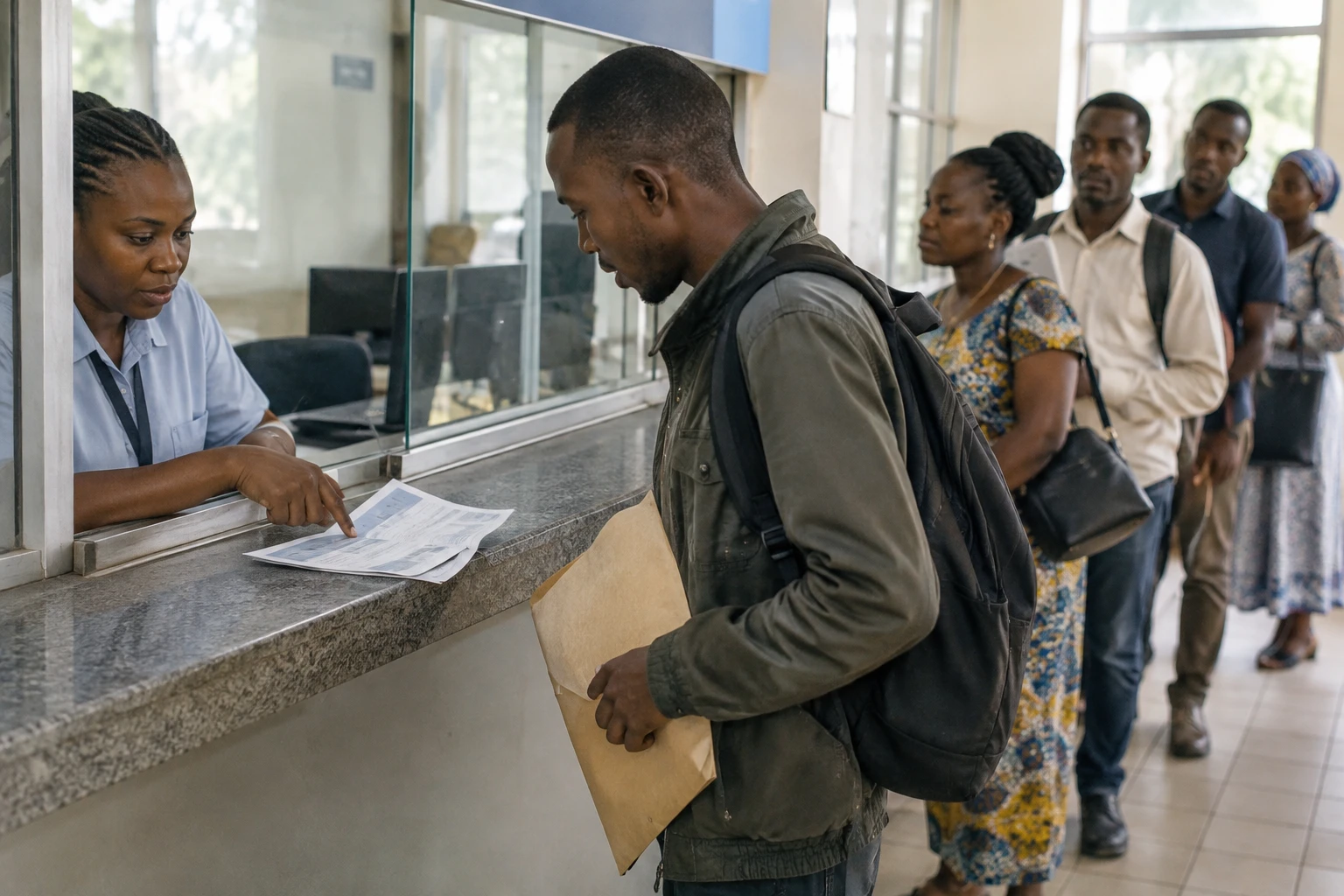
In Kinshasa, a journey between the east of the city and the centre still depends largely on a frequently congested road. The return of the train on a limited route and preparations for new rail networks now raise a decisive question: how can announced projects be turned into reliable journeys for residents?
A metropolis seeking to move beyond road transport
The capital of the Democratic Republic of the Congo is expanding rapidly, while public transport remains under pressure. The urban transport master plan drawn up with support from the Japan International Cooperation Agency (JICA) already projected a population of more than 20 million by 2030. It also highlighted the shortage of transport infrastructure suited to this growth.
Against this backdrop, several rail solutions are advancing in parallel. MetroKin is behind an urban train project. A separate tramway project is also being prepared for Kinshasa and Lubumbashi. Their complementarity is not a given, however: routes, connections, funding and timelines will need to be clarified to prevent networks from competing with one another or intersecting without making journeys easier.
The existing line between the central station and N’Djili International Airport resumed service in 2026, after a long interruption. Congolese media reported that operations restarted on 19 August, on a route serving Masina among other areas. The link provides a tangible option for some residents of eastern Kinshasa, but it does not yet constitute a network covering the entire urban area.
Contracts to organise MetroKin
On 8 October 2026, Deputy Prime Minister for Transport Jean-Pierre Bemba chaired the signing of several contracts related to MetroKin in Kinshasa. The Congolese Press Agency reports that a support and guarantee agreement formalises the state’s backing, with the participation of the ministries of Transport, State Portfolio and Finance.
An interface contract is intended to organise coordination between MetroKin, the Régie des voies aériennes (RVA) and the Office national des transports (Onatra). It concerns, in particular, the links between the central station, 12e Street and N’Djili Airport. The issue is operational: timetables, station access and connections must work across several entities.
The timetable should be distinguished from the contractual commitments. MetroKin’s managing director said that work was expected to begin from December 2026. The project website, meanwhile, lists financial close and the start of works as target milestones for October. These indications do not mean that funding is in place or that construction has begun. The actual mobilisation of funds remains a point to verify.
According to figures released for the project, its first phase would target a capacity of 520,000 passengers a day. This figure is a design ambition, not recorded ridership. The tramway project, estimated at $9 billion in Congolese press reports, envisages several lines in Kinshasa and an ambitious extension to Lubumbashi. This announced budget should not be confused with funding already secured.
The challenge goes beyond the rails
For residents, the value of a train or tramway will be measured first by time saved, ticket prices and service reliability. People in outlying neighbourhoods will need to reach the stations. Without buses, shared taxis or safe routes for the first and last legs of a journey, a line that performs well on paper could remain difficult to access.
The benefits may also vary depending on location and activity. Airport passengers and workers travelling towards the centre do not necessarily have the same schedules or constraints. Traders and workers in the informal economy often depend on flexible stops and affordable fares. Services to peripheral neighbourhoods, where road journeys are long, will therefore matter as much as links between major hubs.
The announced infrastructure must also meet local realities. Information available on the tramway refers to underground sections, water-management systems and a dedicated electricity supply. These are important considerations in a city facing flooding risks and constraints on energy supply. But detailed costs, technical studies and maintenance arrangements remain essential to assessing long-term feasibility.
The resumption of the line to N’Djili provides an initial test of operations. Congolese media have reported the return of trains after around 15 years out of service and highlighted expectations for frequency, safety and punctuality. A relaunched service does not yet guarantee stable operations: its continuation also depends on the condition of the tracks and rolling stock, and on the resources available for maintenance.
A national and regional issue
Mobility in Kinshasa depends first and foremost on the DRC’s planning choices: coordination between institutions, control of public costs and integration with existing transport. According to the Prime Minister’s Office, the African Development Bank has mentioned MetroKin among the structural projects discussed with the government. This indicates dialogue on financial and technical support, but is not enough to establish that all funding needs are covered.
At regional level, Kinshasa is a major hub in Central Africa, facing Brazzaville on the other side of the Congo River. More predictable urban transport can support access to jobs, services and mobility hubs. However, the capital’s rail projects alone will not resolve the challenges of cross-border integration or national transport.
The next steps will therefore be decisive: confirmation of MetroKin’s financial close, the actual timetable for works, publication of costs and details on fares and connections. The tramway’s technical and financial development also remains to be followed. In Kinshasa, success will not be measured only in kilometres of track, but in whether residents of different neighbourhoods can cross the city at an affordable cost and according to predictable timetables.



