Algeria
 Egypt
 Libya
 Morocco
 Sudan
 Tunisia
 Benin
 Burkina Faso
 Cabo Verde
 Côte d'Ivoire
 Ghana
 Guinea
 Guinea-Bissau
 Liberia
 Mali
 Mauritania
 Niger
 Nigeria
 Senegal
 Sierra Leone
 The Gambia
 Togo
 Cameroon
 Central African Republic
 DR Congo
 Equatorial Guinea
 Gabon
 Republic of the Congo
 São Tomé and Príncipe
 Burundi
 Comoros
 Djibouti
 Eritrea
 Ethiopia
 Kenya
 Madagascar
 Malawi
 Mauritius
 Mozambique
 Rwanda
 Seychelles
 Somalia
 South Sudan
 Tanzania
 Uganda
 Angola
 Botswana
 Eswatini
 Lesotho
 Namibia
 South Africa
 Zambia
 Zimbabwe
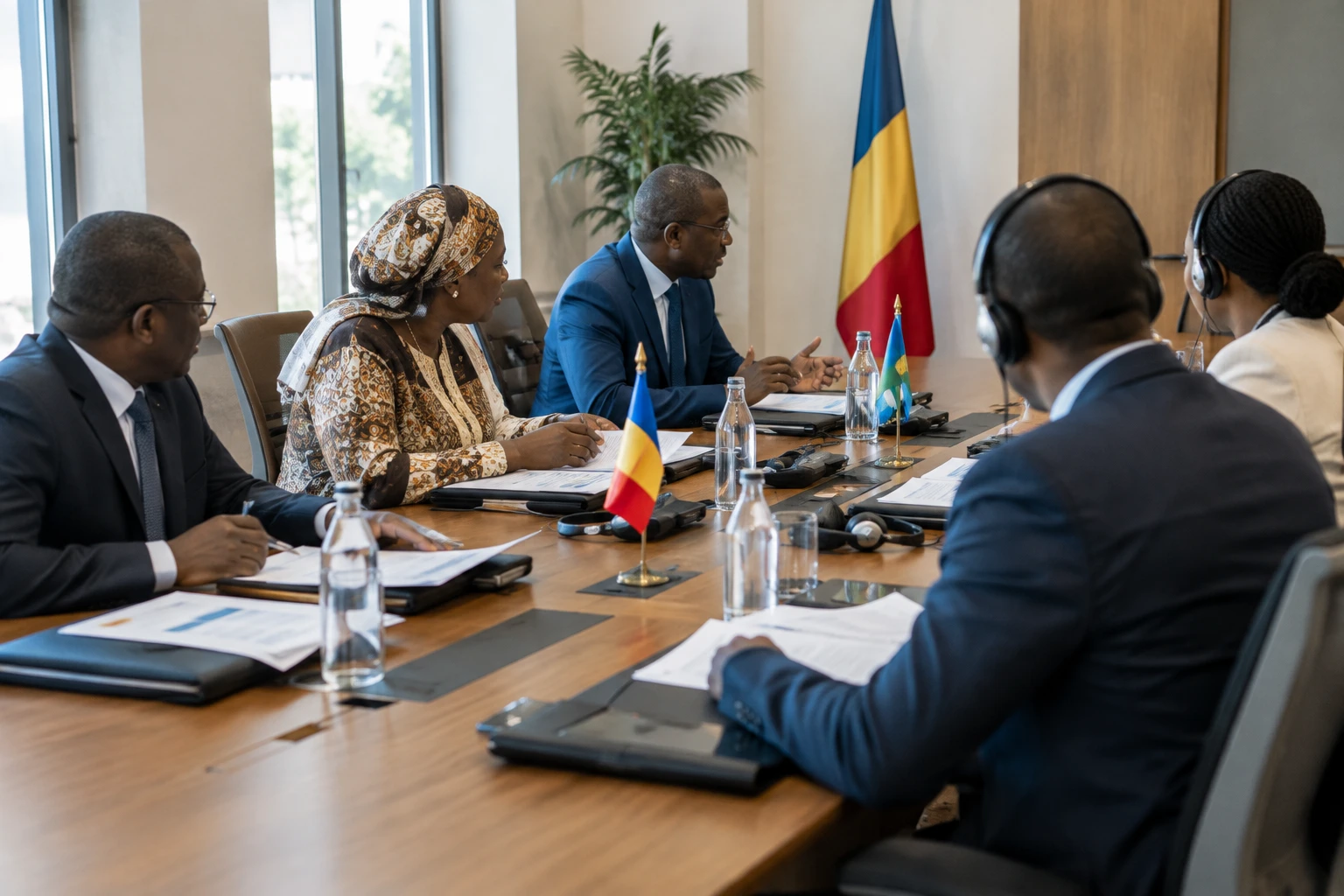
The withdrawal of French troops closed a military chapter between N’Djamena and Paris. It did not erase shared interests, but it shifted the question: how can the two countries cooperate now without returning to a permanent presence that Chad has decided to rule out? Mahamat Idriss Déby Itno’s visit to the Élysée, scheduled for Tuesday 13 October 2026, comes as the two governments seek practical answers.
Rebuilding a relationship after the military break
The rapprochement is taking place in a transformed regional context. Chad is a member of the Economic and Monetary Community of Central Africa (CEMAC), which brings together six countries in a common market with a shared currency. It also occupies a pivotal position between the Sahel, Central Africa and Sudan, where the war that began in 2023 has direct repercussions for neighbouring countries.
At national level, the relationship with Paris was redefined after the transition that began in 2021 and the presidential election of May 2024. Chadian authorities have asserted their determination to make their own decisions on defence partnerships. This approach is part of a broader reshaping of relations between African states and external partners, although Chad’s choices should not be conflated with those of its Sahelian neighbours.
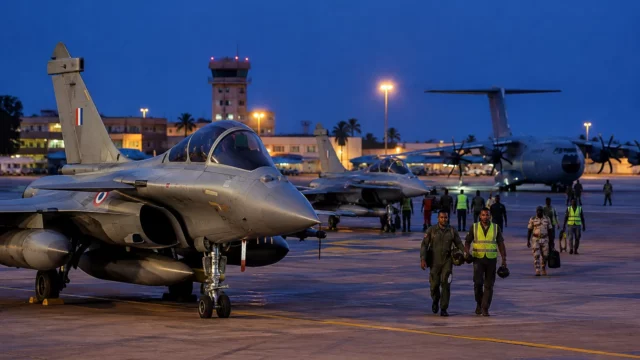
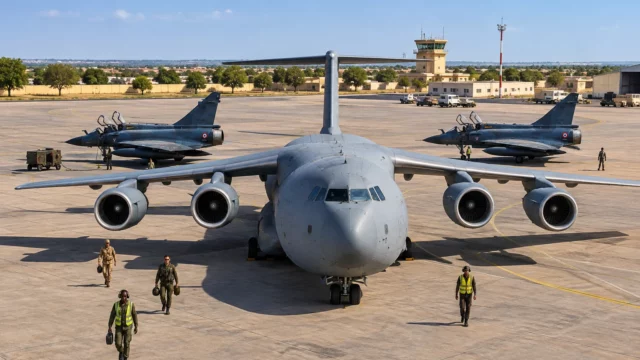
On 28 November 2024, N’Djamena announced the end of its military cooperation agreement with France. The withdrawal of around 1,000 French troops was completed at the end of January 2025, with the handover of the last French military facility in N’Djamena. The departure ended a longstanding French presence, but not diplomatic relations, trade or contacts between the two governments. The French Senate has documented the withdrawal timetable.
The first public sign of a resumption in dialogue came on 29 January 2026, when the two presidents met in Paris. They expressed their determination to establish a renewed partnership. The visit announced for 13 October continues that sequence. The Chadian president left N’Djamena on 12 October for the meeting, according to two Chadian media outlets. Talks are expected to cover economic cooperation and regional issues. Tchadinfos and Tchadactu report his departure and the schedule for the visit.
From economic promises to measurable results
The economy could give the renewed relationship tangible substance. Trade between the two countries remains marked by an imbalance. Figures cited in the available material show that in 2023 French exports to Chad amounted to €117 million, while French imports from Chad totalled €414 million, mainly linked to hydrocarbons. These figures should be treated with caution: they describe a particular year and do not, by themselves, show who captures the value produced or how many jobs remain in the country.
The Chadian government is seeking capital and expertise to implement its national development plan, “Chad Connection 2030”. It includes 268 projects and reforms, with a target of around $30 billion in investment. The United Nations in Chad confirms that the plan was presented to partners at a round table held in Abu Dhabi in November 2025. The United Nations presentation of the plan and the Chadian programme’s website set out its scope.
Against this backdrop, Franco-Chadian discussions have covered health, livestock, training, research and logistics. Proposals mentioned include health centres, animal health initiatives and a dry port project in Toukra. A dry port is an inland hub that facilitates the storage and handling of goods without direct access to the sea. These projects could be of interest to businesses and public services alike, but their announcement does not guarantee either final funding or implementation.
The difference will be measured by the details: what funding is committed, on what timetable, and what role will Chadian companies have? The benefits will also vary from one area to another. Infrastructure can reduce costs for formal businesses and improve access to services. For small businesses and workers in the informal economy, the impact will depend in particular on the jobs created, prices and genuine access to the new facilities. The projects will therefore need to move beyond memorandums of understanding to deliver verifiable results.
Security without a return to the old arrangement
The end of the French military presence does not make security concerns disappear. Chad must manage the risks posed by armed groups in its regional neighbourhood and the consequences of the conflict in Sudan, particularly the displacement of people into its territory. These issues involve the authorities, host communities and humanitarian services, but they do not mean that the two countries automatically share the same view of how to respond.
Discussions on training, intelligence or air cooperation have been mentioned in the press. On the eve of the meeting, no official information reviewed supports the claim that a new military agreement will be announced. The distinction matters: discussing occasional support or expertise does not mean restoring bases or a permanent presence. For N’Djamena, sovereignty over defence decisions remains a major political issue; for Paris, the question is how to maintain regional dialogue without presuming a privileged military role.
Sudan is also expected to be among the issues discussed. Its war is weighing on Chad’s security and its capacity to host displaced people. Talks between the two presidents, both in January and at the announced meeting, could facilitate diplomatic coordination. They cannot, however, replace African initiatives or the relevant regional mechanisms. The African Union and CEMAC have a role to play in a response that cannot be limited to one-to-one talks between Paris and N’Djamena.
A partnership to be judged by its actions
For the leaders, the visit provides an opportunity to reopen a political channel after a significant rupture. For residents, the question is more practical: will cooperation improve infrastructure, services and employment opportunities without making such progress conditional on a return to the former military arrangement? Both capitals will also have to take account of other partners that Chad can turn to in making its economic and diplomatic choices.
The meeting’s regional significance lies in this new balance. The 2024 break showed that defence agreements can be renegotiated at the initiative of an African state. The 13 October meeting will show whether Paris and N’Djamena can translate this reality into precise economic and diplomatic commitments. The next indicators will be the funding actually secured, the launch of announced projects and the nature of the security arrangements adopted. For now, dialogue is resuming; its results remain to be seen.