Algeria
 Egypt
 Libya
 Morocco
 Sudan
 Tunisia
 Benin
 Burkina Faso
 Cabo Verde
 Côte d'Ivoire
 Ghana
 Guinea
 Guinea-Bissau
 Liberia
 Mali
 Mauritania
 Niger
 Nigeria
 Senegal
 Sierra Leone
 The Gambia
 Togo
 Cameroon
 Central African Republic
 DR Congo
 Equatorial Guinea
 Gabon
 Republic of the Congo
 São Tomé and Príncipe
 Burundi
 Comoros
 Djibouti
 Eritrea
 Ethiopia
 Kenya
 Madagascar
 Malawi
 Mauritius
 Mozambique
 Rwanda
 Seychelles
 Somalia
 South Sudan
 Tanzania
 Uganda
 Angola
 Botswana
 Eswatini
 Lesotho
 Namibia
 South Africa
 Zambia
 Zimbabwe
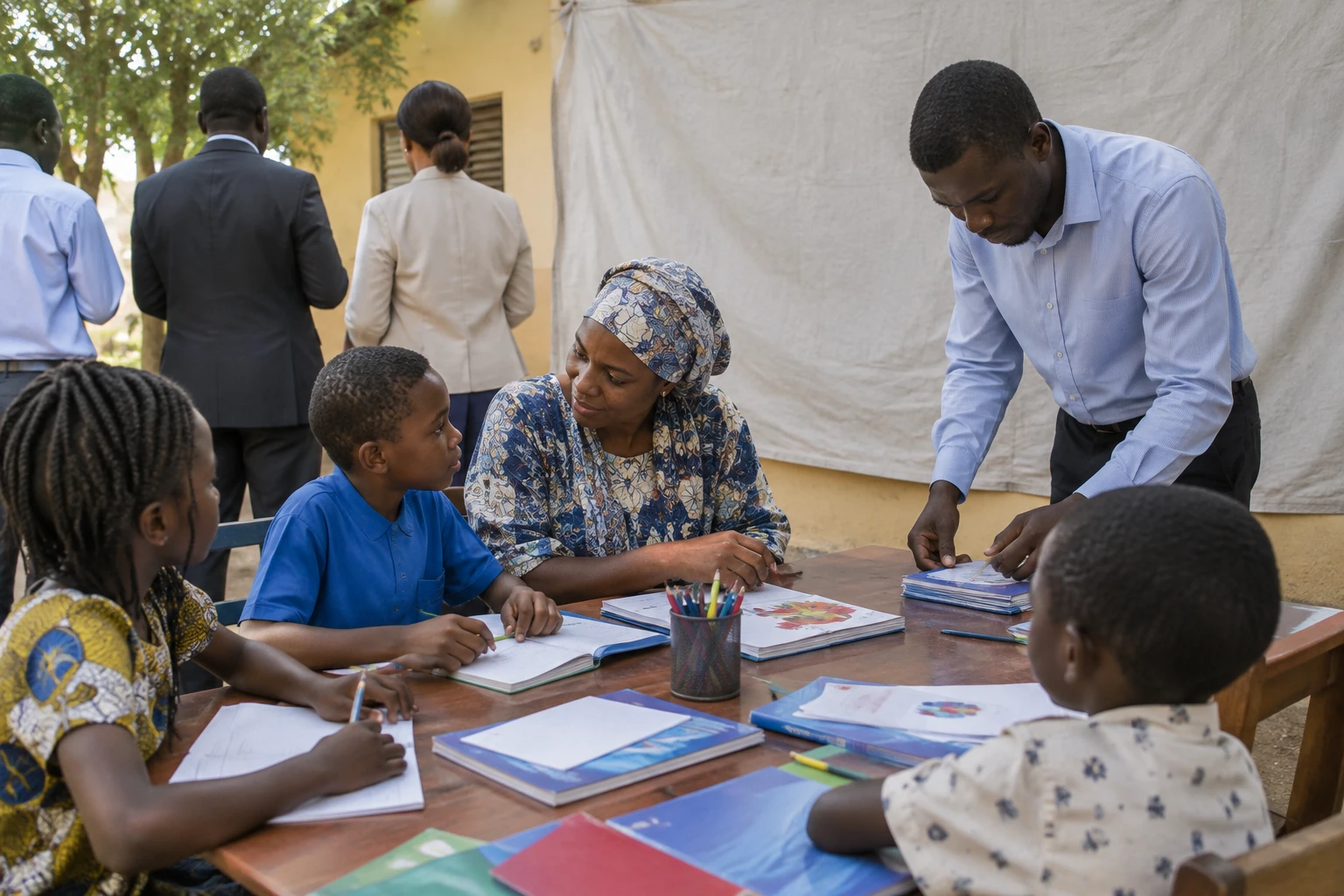
In N’Djamena, giving a child a roof over their head is not enough to guarantee schooling, healthcare and lasting support. At Apsoa orphanage, an initiative led for more than a decade by Mianodji Tabitha Hawa shows both the strength of local commitment and the limits of care that relies largely on private resources.
A home built up over the years
Apsoa is located in N’Djari, in the eighth arrondissement of the Chadian capital. At the time of the report, the facility was caring for around 50 children on a plot of about 500 sq m, with five bedrooms and a living room. About 20 beds were available; other children slept on mats.
Founder Mianodji Tabitha Hawa says she began seeking support after a vision that she says affected her in 2004 and returned in 2009. She says she approached widows, widowers and people willing to help. The operating permit was granted in 2011. These events and dates are based on her account.
A former bank employee, she links her commitment to her personal history, including an early marriage and violence she says she experienced. Her story sheds light on her motivation, but does not, by itself, explain why children need protection. According to the report, the organisation takes in children who have been abandoned or lack family support.
Apsoa says it has cared for nearly 2,000 children since it was founded. This cumulative figure has not been independently corroborated by the sources consulted, and should therefore be understood as a figure reported by the organisation, not a verified count. It does not mean that all these children live at the centre at the same time.
Solidarity cannot replace essential services
Daily life depends on donations and the founder’s own resources. Supporters provide items including school supplies such as notebooks and pens. The orphanage has a small stock of medicines for basic treatment. When a child needs to be taken to hospital, Tabitha Hawa says she pays the costs out of her own pocket.
The centre has neither a school nor a health facility. Children have to travel to attend school. Land is available for a school to be built, but the project is awaiting funding. This hardship falls first on the children and those caring for them: without services on site, every additional need brings costs and journeys, and greater dependence on irregular support.
Life at Apsoa is not limited to accommodation. Rapper and former lawyer Laouré Paulin runs music activities and games there. He says he hopes to pass on values such as respect, love and dignity through these sessions. His involvement contributes to the children’s development, but cannot replace regular access to education, healthcare and professional social support.
The available information does not provide a complete picture of Apsoa’s current capacity or services. Other publications cite different numbers of children at different dates. It would therefore be unwise to present the figures in the report as an up-to-date assessment. The clearest account is of the difficulties described at the time of the testimony: a lack of funding, no school and medical care paid for by the centre.
The public challenge: co-ordinating and supporting child protection
Apsoa’s case raises a broader question: how can the work of associations, families and public services be brought together to protect children without placing the entire burden on a handful of people? In Chad, UNICEF identifies ongoing child protection challenges, including violence, abuse, exploitation and barriers to education. The organisation also says that the country adopted its first National Child Protection Policy, accompanied by a costed action plan, in 2023.
A national policy can have a tangible impact only if it is backed by staff, funding and accessible monitoring mechanisms. UNICEF’s co-operation programme refers, in particular, to strengthening social services and establishing standards for care. For residential facilities, this raises practical questions about licensing, safety, access to healthcare, schooling, support for children and the possibility of reuniting them with their families when appropriate.
The word “orphan” does not describe every situation. Some children have lost one or both parents; others are separated from their families, abandoned or temporarily placed in a centre. This distinction matters: the appropriate response may range from support for the family to residential care, with follow-up aimed at safeguarding the child and maintaining family ties. The available information does not specify the circumstances of the individual children cared for at Apsoa.
An issue that extends beyond the capital
Regionally, Chad belongs to the Central African Economic and Monetary Community (CEMAC), which brings together six countries for economic and monetary co-operation. Child protection is primarily the responsibility of national institutions, but the need for social-sector funding, training for social workers and continuity of services crosses borders. In areas affected by displacement, family separations can also make co-ordinated referral and reunification systems essential.
Apsoa offers a glimpse of practical solidarity in Chad: a local organisation, volunteers and donors provide daily support to children. But this mobilisation should not become a permanent substitute for a public system capable of ensuring minimum safeguards. Progress will depend on turning national policy into effective services, in N’Djamena and in the provinces alike: more follow-up, predictable funding solutions and continuous access to school and healthcare.