Algeria
 Egypt
 Libya
 Morocco
 Sudan
 Tunisia
 Benin
 Burkina Faso
 Cabo Verde
 Côte d'Ivoire
 Ghana
 Guinea
 Guinea-Bissau
 Liberia
 Mali
 Mauritania
 Niger
 Nigeria
 Senegal
 Sierra Leone
 The Gambia
 Togo
 Cameroon
 Central African Republic
 Chad
 Equatorial Guinea
 Gabon
 Republic of the Congo
 São Tomé and Príncipe
 Burundi
 Comoros
 Djibouti
 Eritrea
 Ethiopia
 Kenya
 Madagascar
 Malawi
 Mauritius
 Mozambique
 Rwanda
 Seychelles
 Somalia
 South Sudan
 Tanzania
 Uganda
 Angola
 Botswana
 Eswatini
 Lesotho
 Namibia
 South Africa
 Zambia
 Zimbabwe
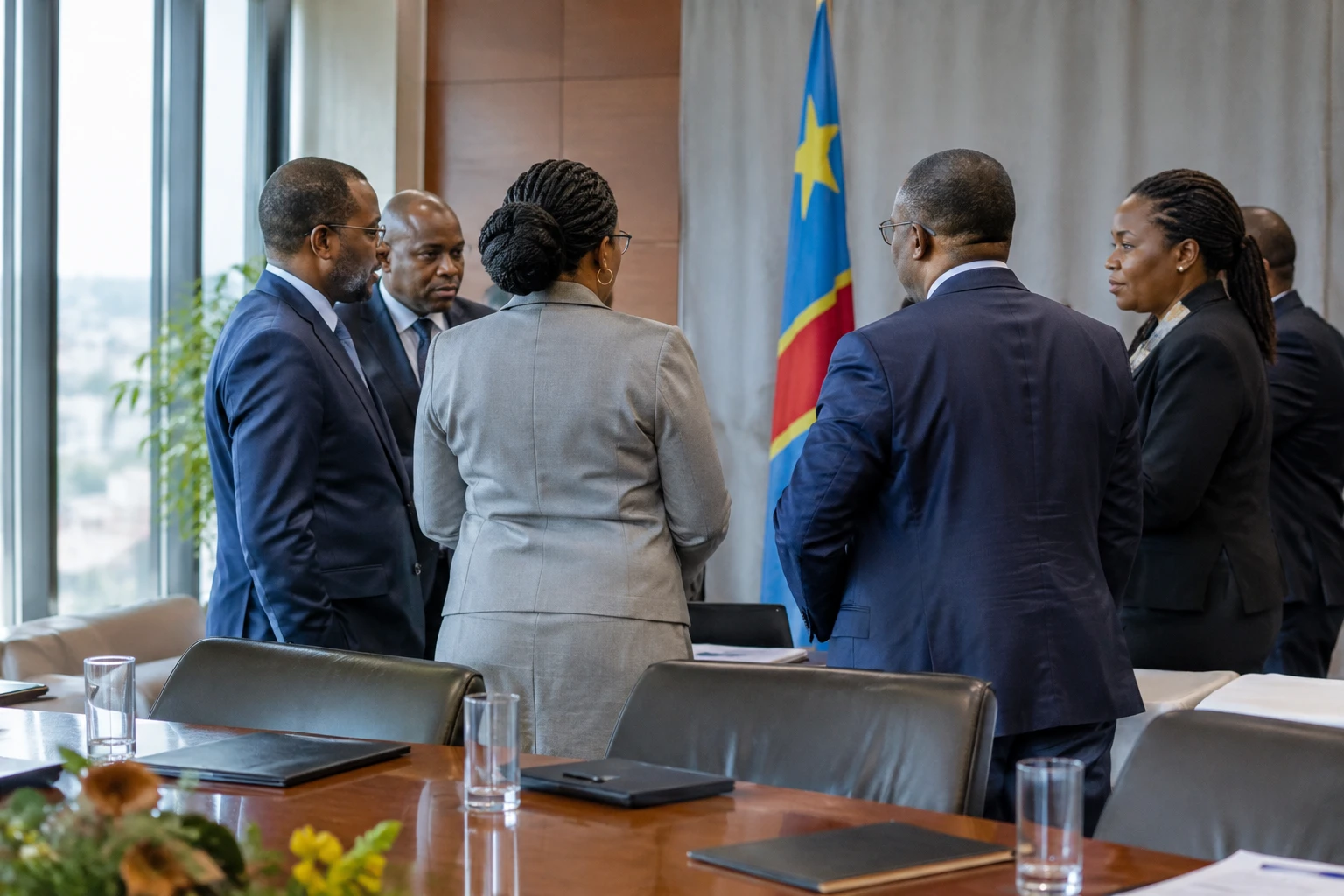
Between diplomatic statements and the front lines, the gap remains decisive for people living in the east of the Democratic Republic of the Congo. The visit to Kinshasa by African Union (AU) facilitators now puts the Congolese government under the same demands already made of the AFC/M23 and Rwanda: respect the ceasefire and make commitments verifiable.
A mediation that must connect several processes
The mission is taking place in a region where several mediation efforts are advancing in parallel. The Doha process brings Kinshasa and the AFC/M23 together under Qatari facilitation. The Washington accords concern relations between the DRC and Rwanda. The AU is seeking to coordinate these efforts without replacing the parties directly involved.
This diplomacy is also part of a broader regional framework. The East African Community (EAC) and the Southern African Development Community (SADC) held joint summits on the crisis in 2025. The DRC is a member of both organisations. Their coordination remains important, because the fighting and its consequences extend beyond the borders of the Congo. The communiqué from the joint EAC-SADC summit had already called for a coordinated response.
The crisis worsened with the offensives in early 2025 and the AFC/M23 capture of Goma, the capital of North Kivu, followed by Bukavu, the capital of South Kivu. These cities are major administrative and economic centres. Control of them affects transport, public services and trade in the provinces concerned.
From Goma and Kigali to the Congolese capital
The AU panel of facilitators brings together former Ethiopian president Sahle-Work Zewde, former Kenyan president Uhuru Kenyatta and former Botswana president Mokgweetsi Masisi. After consultations in Goma, the delegation travelled to Kigali, then to Kinshasa.
In Goma on 5 October, the facilitators met representatives of the AFC/M23, the United Nations Organization Stabilization Mission in the DRC (MONUSCO), humanitarian actors and members of the ceasefire verification mechanism. A visit to Nyiragongo territory also allowed them to observe sites linked to population displacement. The African Union panel’s communiqué confirms the meetings and calls for the truce to be respected.
On 7 October in Kigali, the facilitators held talks with Rwandan President Paul Kagame. According to the Rwandan presidency, their discussions focused on the next steps in the peace process and the root causes of the conflict. On 8 October, the delegation arrived in Kinshasa. A meeting with President Félix Tshisekedi was scheduled for Friday 9 October, according to information released by the Congolese presidency and reported by several media outlets.
The panel is to submit the results of its consultations to the Congolese government and the AU mediator, Togo’s President Faure Gnassingbé. So far, no new agreement between the parties has been announced. The tour therefore provides an opportunity to gather positions; it does not, by itself, constitute a peace agreement.
From the ceasefire to the effects on daily life
After its talks in Goma, the panel called on the parties to continue the Doha negotiations in good faith, respect the ceasefire and co-operate with the verification mechanisms. These demands address a practical problem: without shared monitoring, each side can accuse the other of violating the truce, while civilians remain exposed to fighting and displacement.
AFC/M23 political co-ordinator Corneille Nangaa is calling for commitments backed by a monitoring mechanism. He has also said his movement would fight to prevent government forces from retaking Minembwe, in South Kivu, where clashes have been reported in recent months. These remarks, reported in the context of the consultations, illustrate the distance between calls for de-escalation and stated military positions. On their own, they do not foreshadow future operations.
For residents, the stakes are not limited to territorial control. Security determines access to aid, the resumption of classes, travel to markets and the functioning of essential services. The consequences vary by location: urban neighbourhoods depend on supply routes, while rural communities can become isolated when roads are dangerous or impassable.
Humanitarian organisations also depend on access guarantees and co-operation from the parties. The facilitators’ call to protect civilians will have a real impact only if aid organisations can reach those in need and commitments are monitored on the ground.
A test for African co-ordination
The AU initiative comes after several years of diplomatic efforts, including the Nairobi and Luanda processes, followed by the efforts in Doha and Washington. The SADC communiqué on the meeting with the facilitators shows that co-ordination between the AU, EAC and SADC has already been identified as an issue. But multiplying frameworks is not enough if commitments remain unverified and unimplemented.
The Kinshasa-Goma-Kigali leg of the mission gives the panel an opportunity to hear from actors at different levels of the conflict: an armed group, the Rwandan authorities and the Congolese government. It does not, however, resolve the political disagreements or security issues driving the crisis. The next indicator will be whether the calls are translated into observable measures: a reduction in hostilities, more regular humanitarian access and monitoring mechanisms accepted by the parties.
For the DRC and its neighbours, the credibility of African mediation is also at stake. Its influence will depend less on the number of meetings than on its ability to bring existing processes closer together and secure monitored commitments. In the east of the country, residents will judge peace first by its impact on their security and daily lives.