Algeria
 Egypt
 Libya
 Morocco
 Sudan
 Tunisia
 Benin
 Burkina Faso
 Cabo Verde
 Côte d'Ivoire
 Ghana
 Guinea
 Guinea-Bissau
 Liberia
 Mali
 Mauritania
 Niger
 Nigeria
 Senegal
 Sierra Leone
 The Gambia
 Togo
 Cameroon
 Central African Republic
 Chad
 Equatorial Guinea
 Gabon
 Republic of the Congo
 São Tomé and Príncipe
 Burundi
 Comoros
 Djibouti
 Eritrea
 Ethiopia
 Kenya
 Madagascar
 Malawi
 Mauritius
 Mozambique
 Rwanda
 Seychelles
 Somalia
 South Sudan
 Tanzania
 Uganda
 Angola
 Botswana
 Eswatini
 Lesotho
 Namibia
 South Africa
 Zambia
 Zimbabwe
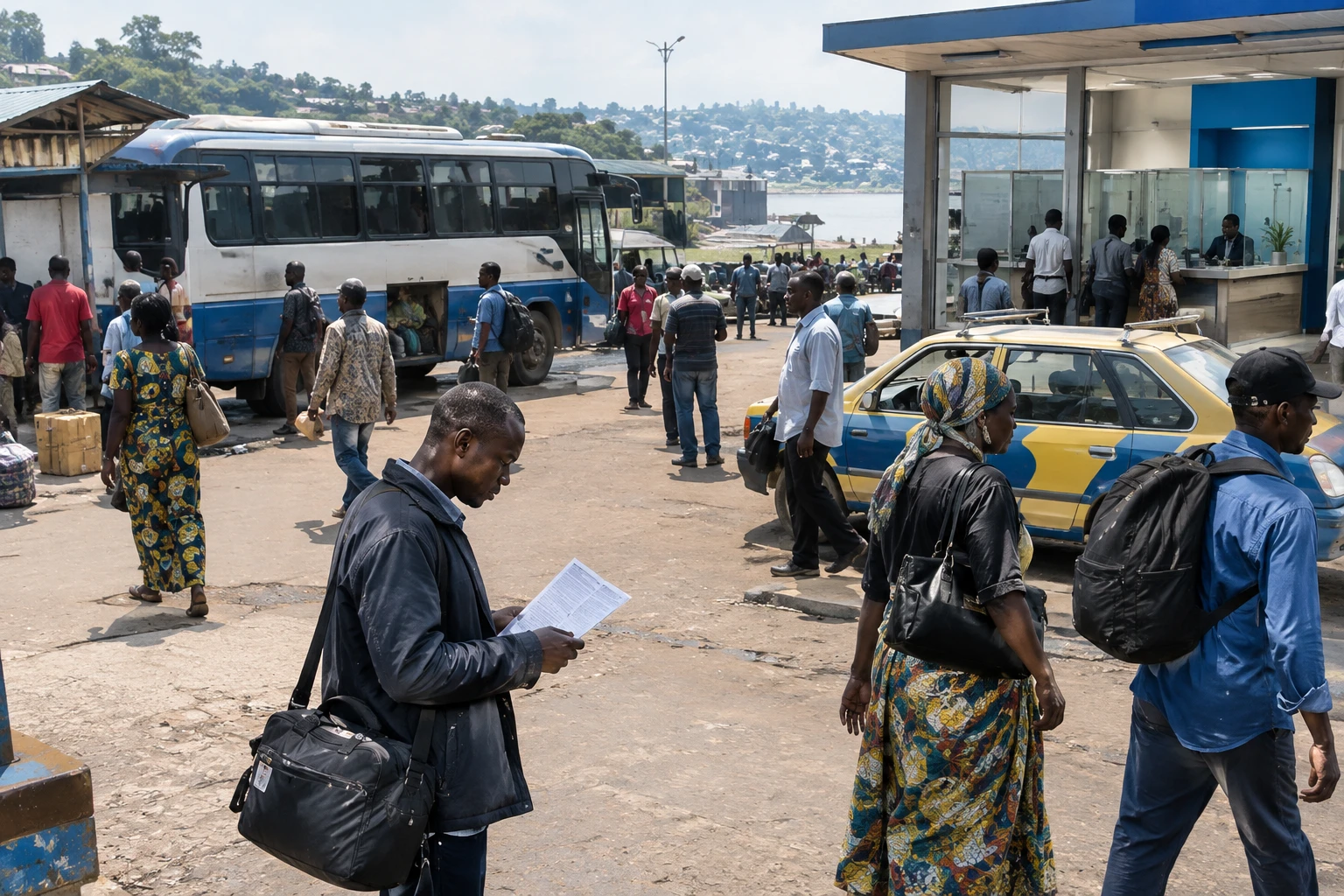
In Kindu, selling artisanal gold could soon mean carrying less cash and having more transactions recorded. But bringing a bank closer to buyers is not, by itself, enough to bring an entire sector into official channels for the long term.
On 5 October 2026, Equity BCDC inaugurated a counter at the premises of DRC Gold Trading SA, in the capital of Maniema province. The move adds a banking service to the system set up by the state-owned company to buy and market artisanal gold in the Democratic Republic of the Congo (DR Congo).
A banking point at the heart of transactions in Kindu
The new counter is aimed at traders, cooperatives and artisanal miners who sell or buy gold. They are to be able to access banking services at the same site as marketing operations. The Congolese Press Agency reports that the facility is intended in particular to make it easier to pay sellers and reduce the need to transport cash.
According to Patient Ngongo, Equity BCDC’s provincial head, the partnership is also intended to help trace financial flows and combat mining fraud. These are objectives announced by the partners, not yet measured results. Practical arrangements — payment times, fees, availability of funds and foreign-exchange terms — have not been detailed in the public information reviewed.
This caveat matters on the ground. A bank payment is only worthwhile to a trader if it is still quick, accessible and competitive. Those working far from Kindu may also have to bear the cost of travel. For miners, often organised in cooperatives or small groups, the procedures for opening an account and access to financial services will weigh in their choice of sales channel.
A banking network being built in stages
Equity BCDC’s counter is not the first banking link established around DRC Gold Trading. In March 2025, when opening its office in Maniema, the company had referred to a partnership with Rawbank. At the time, it sought to reassure cooperatives and traders that it could buy their production and make payments.
In August 2026, DRC Gold Trading and the General Savings Bank of the Congo (CADECO) also announced an agreement providing for satellite counters at the company’s facilities. The Congolese Press Agency reported that these service points were to enable traders to be paid on site and encourage them to open an account. Equity BCDC’s presence in Kindu is therefore a further piece in a network taking shape.
The respective roles of Rawbank, CADECO and Equity BCDC have not, however, been specified publicly. It also remains to be seen how the counters will work together, where services will be available and whether participants will be able to choose their bank. Without these details, the expansion of banking provision does not yet make it possible to assess the system’s actual coverage.
Maniema’s importance gives Kindu particular significance
Maniema was chosen because of the province’s importance in declared artisanal gold exports. The 2025 mining statistics of the Technical Unit for Coordination and Planning of Mining (CTCPM), cited by Congolese business media, attribute 1.15 tonnes of exports to the province, worth $125.41 million. This would represent about 41% of the declared national volume, estimated at 2.834 tonnes.
These figures describe recorded exports, not necessarily all the gold extracted in the province. This gap is central: formalising transactions means persuading sellers to use approved buyers, but also making that option viable compared with informal or cross-border channels. Official figures therefore shed light on activity captured by declared mechanisms, but do not on their own measure the flows that escape them.
For provincial authorities, more traceable sales could make economic and fiscal monitoring easier. For banks, transactions could open up a market for deposits, foreign exchange and financial services. For sellers, the appeal will depend first on the price offered, the speed of settlement and fees. The expected benefits are therefore not automatically distributed in the same way among the state, financial institutions and workers in the sector.
Traceability will depend on how the system is used, not just on counters
DRC Gold Trading is seeking to channel more artisanal gold through an official system. A bank’s presence on its premises could reduce some risks associated with transporting cash and create a financial record of payments. It does not, however, guarantee the origin of every batch of gold, or compliance with all the rules governing purchases and marketing. Financial traceability and verification of provenance are connected, but they are not the same thing.
The system will also need to be judged by its results: the number of accounts actually used, volumes bought and exported, payment times and the share of transactions settled without cash. Publishing these indicators would help distinguish an institutional inauguration from a lasting change in practices.
The issue extends beyond Maniema. DR Congo is a member of the Southern African Development Community (SADC) and the East African Community (EAC), two regional blocs where mineral trade and traceability issues cross borders. For Kinshasa and the producing provinces alike, the challenge is to better track the value created locally and the channels through which gold moves.
In the short term, the next test will be the day-to-day use of the counter in Kindu. It will be necessary to see whether payments are regular, costs remain affordable and other banks or services complement the network announced. It is at this practical level that the ability of banking access to keep more artisanal gold within declared channels will be measured.
For further reading, see the Congolese Press Agency’s report on the Kindu counter, its report on the agreement between DRC Gold Trading and CADECO, and the mining statistics published by the CTCPM.