
 Algeria
 Egypt
 Libya
 Morocco
 Sudan
 Tunisia
 Benin
 Burkina Faso
 Cabo Verde
 Côte d'Ivoire
 Ghana
 Guinea
 Guinea-Bissau
 Liberia
 Mali
 Mauritania
 Niger
 Nigeria
 Senegal
 Sierra Leone
 The Gambia
 Togo
 Cameroon
 Central African Republic
 Chad
 Equatorial Guinea
 Gabon
 Republic of the Congo
 São Tomé and Príncipe
 Burundi
 Comoros
 Djibouti
 Eritrea
 Ethiopia
 Kenya
 Madagascar
 Malawi
 Mauritius
 Mozambique
 Rwanda
 Seychelles
 Somalia
 South Sudan
 Tanzania
 Uganda
 Angola
 Botswana
 Eswatini
 Lesotho
 Namibia
 South Africa
 Zambia
 Zimbabwe
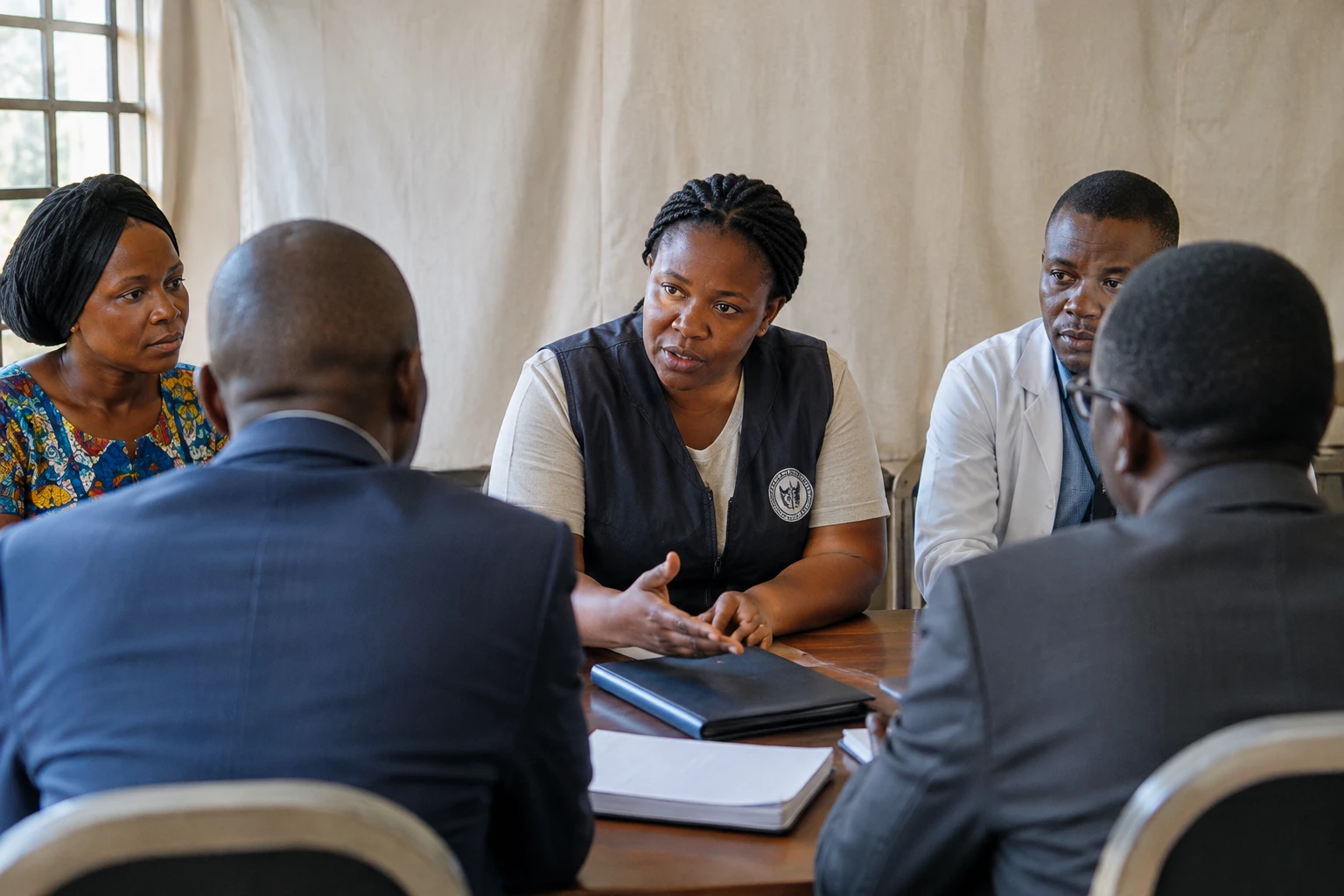
When more than seven in ten cases escape contact tracing, health teams are working without seeing every chain of transmission. In eastern Democratic Republic of the Congo, this gap is compounded by population displacement and insecurity. It makes both testing and rapid access to care more difficult.
An outbreak outpacing surveillance tools
Declared in May 2026, the current outbreak is caused by the Bundibugyo virus, a strain of Ebola virus. As of 26 September, the Congolese health ministry had recorded 8,067 confirmed cases and 3,901 deaths. A few days later, authorities reported more than 8,500 cases and more than 4,000 deaths, according to government data cited by the Associated Press. The toll therefore continues to rise.
On 6 October, Jean Kaseya, director-general of the Africa Centres for Disease Control and Prevention (Africa CDC), described transmission as still out of control. More than 70% of new cases were reportedly not linked to contacts already identified. At least 60% of deaths were said to have occurred outside treatment centres. These estimates, which he attributed to the situation observed on the ground, point to infections being detected late and patients being unable to access care.
Contact tracing involves finding people who have been close to a patient and then monitoring their health for a set period. It is a central tool in the fight against Ebola. Yet, according to Kaseya, only 23% of expected contacts had been monitored. When someone falls ill without having been identified, teams must first discover that person’s existence and then find those they may have exposed.
World Health Organization data available as of 7 September had already recorded 6,757 confirmed cases and 3,267 deaths in the DRC, across 61 health zones and six provinces. The WHO says late detection delays isolation and care. Published before the government’s end-September tally, these figures illustrate the speed of the outbreak’s spread rather than a contradiction between the two counts.
In the east, access to care also depends on security
Ituri remains the hardest-hit province. But North Kivu has become another major hotspot: it accounted for about 40% of new confirmed cases, compared with 24% at the end of August, according to figures cited by Kaseya. This eastern province is beset by armed conflict and displacement. Economic activity, particularly around mining sites, also prompts frequent movement between communities.
In this context, response teams cannot always reach villages or stay there. Displacement complicates the monitoring of patients and their relatives. It also puts pressure on health facilities already facing shortages of staff and equipment. Médecins Sans Frontières has described coordination difficulties and a lack of responders in some areas. Families sometimes hesitate to report a death, allow a sample to be taken or accept care.
This mistrust is not simply opposition to health messages. Trust also depends on the quality of care available, how teams communicate with residents and whether respectful funerals can be arranged. When a patient is isolated far from loved ones without what is considered a convincing explanation, fear can deter others from going to treatment centres. The bodies of people who have died of Ebola can transmit the virus, so safe burials conducted with families are part of the medical response.
The consequences vary according to location and activity. In rural areas or isolated communities, distance makes transfer to a treatment centre more difficult. In towns and markets, movement increases the number of potential contacts. Local health workers, meanwhile, must support their communities while facing the risk of infection. The response therefore depends as much on their protection and resources as on decisions taken in Kinshasa.
Local trust, a decisive link in the response
Jean Kaseya says villages and their leaders must be directly involved in contact tracing, patient isolation and burials. This approach is intended to supplement conventional surveillance with a local presence. It does not replace laboratories, treatment centres or the work of health teams. However, it can help identify symptoms early and make guidance more credible when delivered in partnership with communities.
The current outbreak is particularly difficult to fight because, to date, there is neither an approved vaccine nor a specific approved treatment for the Bundibugyo virus. Early care and supportive treatment therefore remain essential. The WHO also recommends stepping up testing, infection prevention in health facilities and community surveillance. This distinguishes the outbreak from those caused by the Zaire strain, against which vaccines are available.
The DRC has already gained considerable experience in managing Ebola, after several outbreaks since 1976. But expertise is not enough when teams cannot reach every area, staff are in short supply or data arrive late. Efforts must also preserve routine healthcare: residents need health services that are not entirely taken over by the outbreak.
An issue that extends beyond the DRC’s borders
Movement between the DRC and its neighbours makes regional co-ordination necessary. Uganda, which borders North Kivu and is a member of the East African Community, is closely monitoring the cross-border risk. Kenya reported a first case on 6 October linked to travel from the DRC, according to information cited by the AP. Rapid sharing of alerts, screening at border crossings and co-ordination between health authorities are therefore becoming concerns for the entire region.
Africa CDC, the African Union’s public health agency, and the WHO have a role in co-ordination and technical support. But the response depends first and foremost on the ability of Congolese authorities and local teams to identify patients, treat them early and maintain dialogue with residents. The indicators to watch in the coming days are the share of new cases linked to known contacts, the number of deaths outside treatment centres and the evolution of outbreaks in North Kivu. Improvement in these figures would show that surveillance is finally catching up with the virus’s actual spread.



