Algeria
 Egypt
 Libya
 Morocco
 Sudan
 Tunisia
 Benin
 Burkina Faso
 Cabo Verde
 Côte d'Ivoire
 Ghana
 Guinea
 Guinea-Bissau
 Liberia
 Mali
 Mauritania
 Niger
 Nigeria
 Sierra Leone
 The Gambia
 Togo
 Cameroon
 Central African Republic
 Chad
 DR Congo
 Equatorial Guinea
 Gabon
 Republic of the Congo
 São Tomé and Príncipe
 Burundi
 Comoros
 Djibouti
 Eritrea
 Ethiopia
 Kenya
 Madagascar
 Malawi
 Mauritius
 Mozambique
 Rwanda
 Seychelles
 Somalia
 South Sudan
 Tanzania
 Uganda
 Angola
 Botswana
 Eswatini
 Lesotho
 Namibia
 South Africa
 Zambia
 Zimbabwe
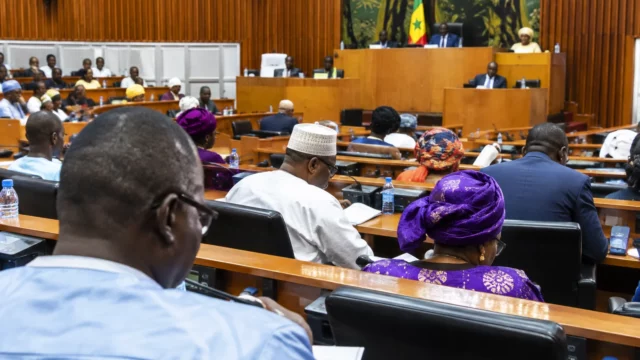
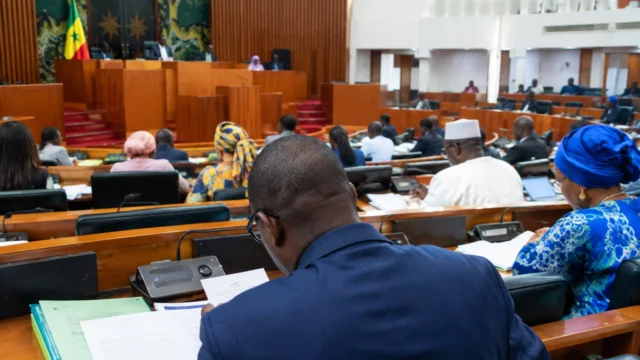
In Dakar, the question is no longer simply how to secure new financing. It is now about reorganising a debt that has become too heavy for public finances, without squeezing social spending or slowing economic activity. Senegal opened a new round of talks with all its external creditors on Tuesday 6 October 2026.
Revised debt figures call for broad negotiations
The meeting was held online, under the auspices of the International Monetary Fund. It brought together bilateral public creditors, holders of international bonds and commercial banks. More than 400 participants followed Dakar’s presentation on the country’s budgetary position and debt treatment strategy.
The Senegalese government presented an 18-page document. It sets out its financial assessment, the measures planned to restore budget balance and the proposed timetable for negotiations. The first meeting did not produce an agreement. It did, however, establish a shared framework for discussion among creditors with differing interests.
The figures presented show the scale of the problem. Central government and public company debt is estimated to have reached 27,132 billion CFA francs at the end of 2025, equivalent to 105.3% of gross domestic product. External debt alone is estimated at 18,394 billion CFA francs, or 71.4% of GDP, according to information presented to creditors and reported by Senegalese business media.
The International Monetary Fund, for its part, puts public and parapublic sector debt at 132% of GDP at the end of 2024. The difference between the figures is due in part to the scope used, the reassessment of public accounts and the inclusion of previously undeclared liabilities. In both cases, the diagnosis is the same: Senegal needs substantial rescheduling of its debt repayments.
Dakar’s timetable runs up against creditors’ constraints
Senegalese authorities want to move quickly. They hope to secure approval from the IMF Executive Board for a $2.2 billion programme, then receive an initial disbursement. The staff-level agreement reached on 1 September 2026 covers a 36-month Extended Credit Facility for the period 2026-2029. It still requires formal approval by the Fund’s governing body.
The government then wants to move towards an agreement with its creditors by the end of the year. A further meeting is scheduled for November 2026, after the IMF has reviewed the programme. Before then, members of the Paris Club — the informal group of public creditor countries — must set out the adjustments they are considering.
The timetable is particularly tight. It requires Dakar to hold discussions in parallel with lending governments, bond markets and commercial banks. These groups do not bear the same level of risk or have the same legal instruments. A solution acceptable to a public creditor may not be acceptable to a private investor.
Senegal is first asking for more time. Extending maturities would allow some repayments to be postponed and ease immediate pressure on the budget. But this option does not necessarily reduce the overall cost of the debt. If interest rates remain unchanged, the financial burden may simply be spread over a longer period.
Other options are available. Creditors can cut interest rates, reduce the coupons paid to bondholders or cancel part of the amounts owed. These solutions provide greater relief, but are also harder to secure. Private investors will seek to protect the value of their holdings. Lending governments, meanwhile, will have to balance support for Senegal against the protection of their own budgetary interests.
Negotiations that also affect everyday life
Restructuring is not simply an exchange between Dakar and financial institutions. It will have a direct impact on national economic policy. The government plans to reduce the deficit gradually, from 11.7% of GDP in 2024 to 5.4% in 2025, according to figures presented to creditors.
To achieve this, the government is relying on higher revenue and spending restraint. The announced measures include reforming subsidies, rationalising some public transfers and controlling the public-sector wage bill. These choices could improve the budget trajectory. They could also affect households, businesses and local authorities in different ways.
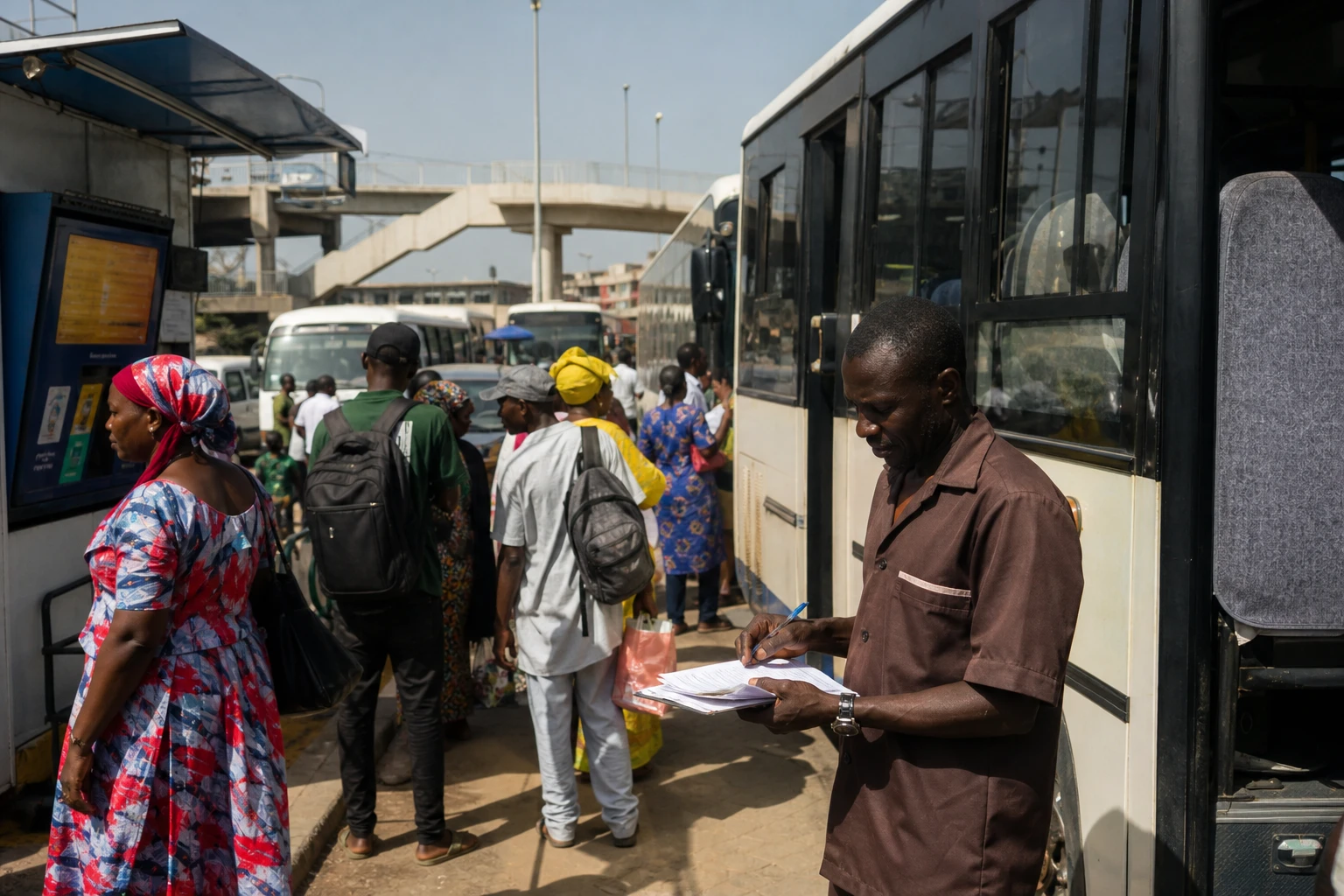
Urban populations could quickly feel the effects of any subsidy cuts, particularly in the energy and transport sectors. In rural areas, the impact will depend more on social transfers, agricultural investment and spending on essential services. Small businesses, which are widespread in the informal economy, remain especially exposed to higher taxes or falling demand.
The government must therefore strike a delicate balance. It needs to reassure creditors while ensuring that budget adjustments do not reduce the resources available for health, education and employment. The IMF has also said that its future programme should help restore debt sustainability while strengthening social safety nets and growth driven by the private sector.
The regional framework and wider African implications
Senegal’s debt issue falls within the West African Economic and Monetary Union (WAEMU), whose common currency is the CFA franc, and the Economic Community of West African States (ECOWAS). Prolonged pressure on Senegal’s public finances could undermine investor confidence in regional markets, particularly through CFA franc bond issuance.
Senegal is also seeking to use the G20 Common Framework, a mechanism designed to co-ordinate debt treatment among public and private creditors. The experience of Zambia, Chad and other African countries shows, however, that these processes can take a long time. They require full transparency about public liabilities and close co-ordination among the various lenders.
The next step will therefore be decisive. The IMF Executive Board will have to review the financial agreement, while creditors set out their proposals ahead of the November meeting. For Dakar, the challenge will be to turn a financial emergency into a sustainable agreement. For Senegalese people, the outcome will be measured above all by the state’s ability to regain fiscal breathing space without cutting services on which a large part of the population depends.