
 Algeria
 Egypt
 Libya
 Morocco
 Sudan
 Tunisia
 Benin
 Burkina Faso
 Cabo Verde
 Côte d'Ivoire
 Ghana
 Guinea
 Guinea-Bissau
 Liberia
 Mali
 Mauritania
 Niger
 Nigeria
 Senegal
 Sierra Leone
 The Gambia
 Togo
 Cameroon
 Central African Republic
 Chad
 Equatorial Guinea
 Gabon
 Republic of the Congo
 São Tomé and Príncipe
 Burundi
 Comoros
 Djibouti
 Eritrea
 Ethiopia
 Kenya
 Madagascar
 Malawi
 Mauritius
 Mozambique
 Rwanda
 Seychelles
 Somalia
 South Sudan
 Tanzania
 Uganda
 Angola
 Botswana
 Eswatini
 Lesotho
 Namibia
 South Africa
 Zambia
 Zimbabwe
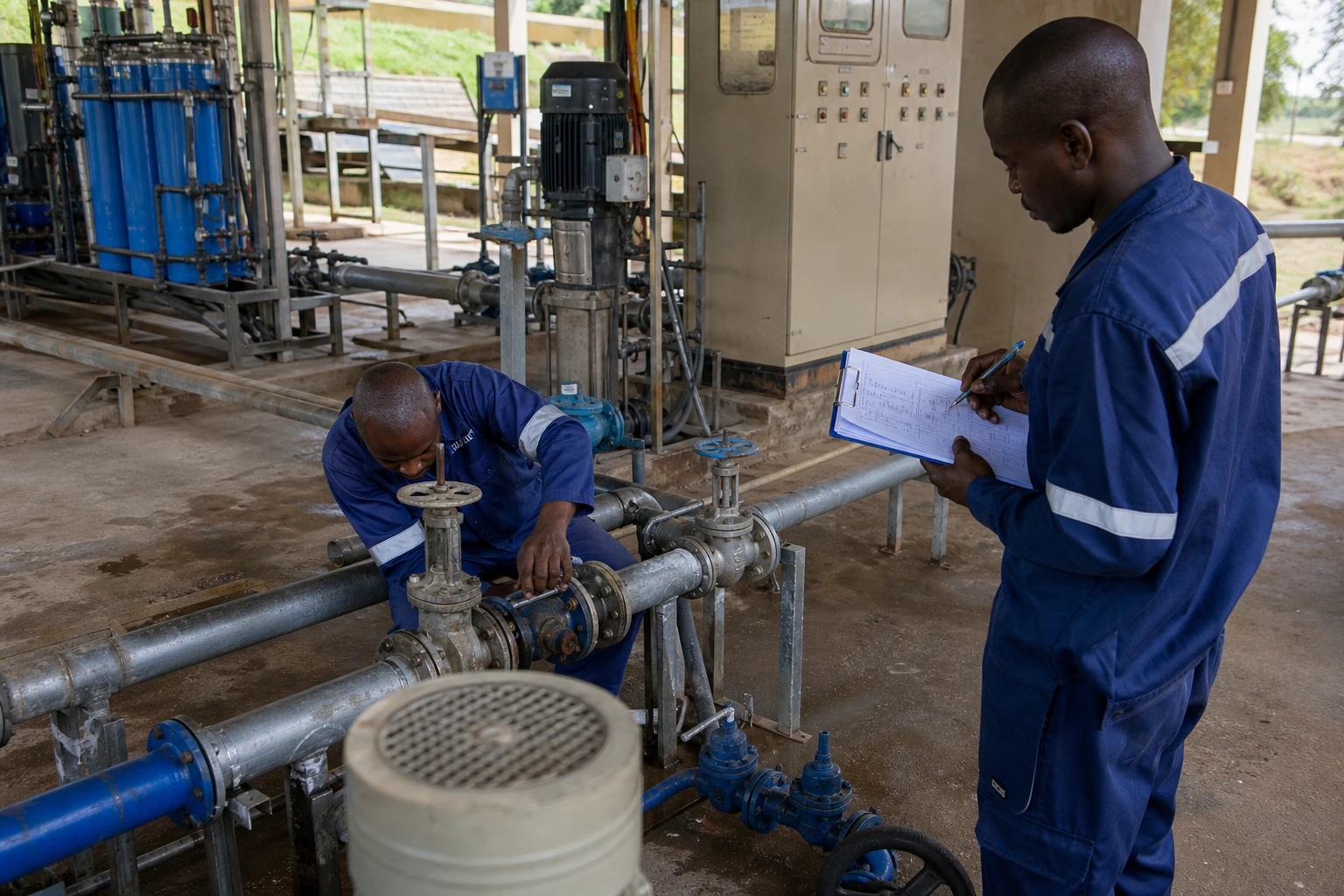
In Kananga, the challenge is not simply to produce more water. It must also be made available in neighbourhoods, the energy supply to facilities secured and a network maintained that can keep pace with the city’s growth. The launch of a major construction project on 5 October 2026 marks a new stage in access to this essential service in Kasaï-Central.
A project designed to increase capacity
The programme mobilises around $164 million with support from the World Bank. It is intended to raise Kananga’s nominal drinking water production capacity to nearly 125,000 cubic metres a day. The stated goal is to serve around 1.5 million people.
DR Congo’s Minister of Hydraulic Resources and Electricity, Aimé Sakombi Molendo, launched the works in Kananga on behalf of the national authorities. The project comes under AGREE, the Electricity and Water Sector Access, Governance and Reform Project. The programme supports the expansion of public services in several provinces of the Democratic Republic of the Congo.
The first component concerns the Lulua River. A new treatment plant is to be built there, along with facilities for water intake, pumping and delivery to the urban network. The first phase provides for a capacity of 75,000 cubic metres a day, according to the project’s tender documents.
The system does not, however, rely on a single facility. The Kanyuka plant is to be rehabilitated and expanded. The Tshibashi water intake facilities, storage reservoirs and distribution pipes are also part of the programme. This approach is intended to reduce the risk of creating production capacity without addressing transport and storage difficulties.
In Kananga, access also depends on network reliability
Kananga, the capital of Kasaï-Central, has experienced irregular water supply for several years. Residents in several neighbourhoods still rely on wells, boreholes or communal water points when taps supplied by REGIDESO run dry.
In June 2026, neighbourhoods in the city went without water for more than two weeks, according to accounts gathered locally. The situation highlighted that the issue is not limited to the volume of water available. Breakdowns, damaged pipes, insufficient storage and difficulties with the electricity supply also affect the continuity of service.
REGIDESO, the state-owned water distribution company, had already reported constraints linked to energy and the age of some equipment in 2024. In Kananga, production and pumping therefore depend on the ability to supply the facilities with power consistently. Without a sustainable energy solution, a new plant could operate below its potential.
The project therefore provides for additional equipment. Studies and technical documents mention reservoirs, a water tower, primary, secondary and tertiary pipes, as well as monitoring systems. They also provide for service connections and standpipes to extend supply beyond areas already connected.
An investment that will need monitoring on the ground
The announced sum gives an idea of the scale of the project. But its real impact will depend on several stages: completion of the works, the gradual commissioning of facilities, the quality of operations and the ability to maintain the equipment.
The first indicator will be the actual delivery of the first unit at the Lulua plant, announced with a capacity of 75,000 cubic metres a day. The pace of new connections, the regularity of supply and changes in network losses will then need to be assessed.
This last issue is central. An increase in production does not automatically guarantee an equivalent increase in the water reaching households. Leaks, non-functioning connections and power cuts can greatly reduce the volume that actually reaches users.
Sector governance will also play an important role. AGREE is not focused solely on building infrastructure. The project also includes measures to reform and improve the performance of the water and electricity sectors. For Kananga, the challenge will therefore be to turn infrastructure funding into a sustainable public service.
The effects will not be the same for all residents. Households connected to the network could benefit from more regular supply. In outlying neighbourhoods, access will probably depend on extending the pipes and installing water points. Small businesses, healthcare facilities and schools also need predictable supplies to operate in good conditions.
A project within DR Congo’s development trajectory
The Democratic Republic of the Congo has substantial water resources, but turning them into accessible services remains uneven. The gap between urban centres, outlying areas and rural zones remains marked. Population growth is also increasing pressure on existing networks.
In this context, the Kananga project forms part of a broader strategy. The AGREE programme operates in several Congolese provinces and links access to water with the issue of electricity. This connection is crucial: treatment, pumping and distribution require a stable energy supply.
At regional level, the project’s success will be watched beyond Kasaï-Central. It will demonstrate the DRC’s ability to deliver complex urban investments in cities far from Kinshasa. It will also raise questions about coordination between the central government, provincial authorities, REGIDESO and financial partners.
For the people of Kananga, however, the most tangible deadline remains the water coming from the tap. The project will be judged neither by its cost nor by its announcements, but by how long water is supplied to neighbourhoods and how regularly it flows. The next steps to watch are construction of the Lulua unit, rehabilitation of Kanyuka and the effective expansion of the network.



