
 Algeria
 Egypt
 Libya
 Morocco
 Sudan
 Tunisia
 Benin
 Burkina Faso
 Cabo Verde
 Côte d'Ivoire
 Ghana
 Guinea
 Guinea-Bissau
 Liberia
 Mali
 Mauritania
 Niger
 Nigeria
 Senegal
 Sierra Leone
 The Gambia
 Togo
 Cameroon
 Central African Republic
 Chad
 Equatorial Guinea
 Gabon
 Republic of the Congo
 São Tomé and Príncipe
 Burundi
 Comoros
 Djibouti
 Eritrea
 Ethiopia
 Kenya
 Madagascar
 Malawi
 Mauritius
 Mozambique
 Rwanda
 Seychelles
 Somalia
 South Sudan
 Tanzania
 Uganda
 Angola
 Botswana
 Eswatini
 Lesotho
 Namibia
 South Africa
 Zambia
 Zimbabwe
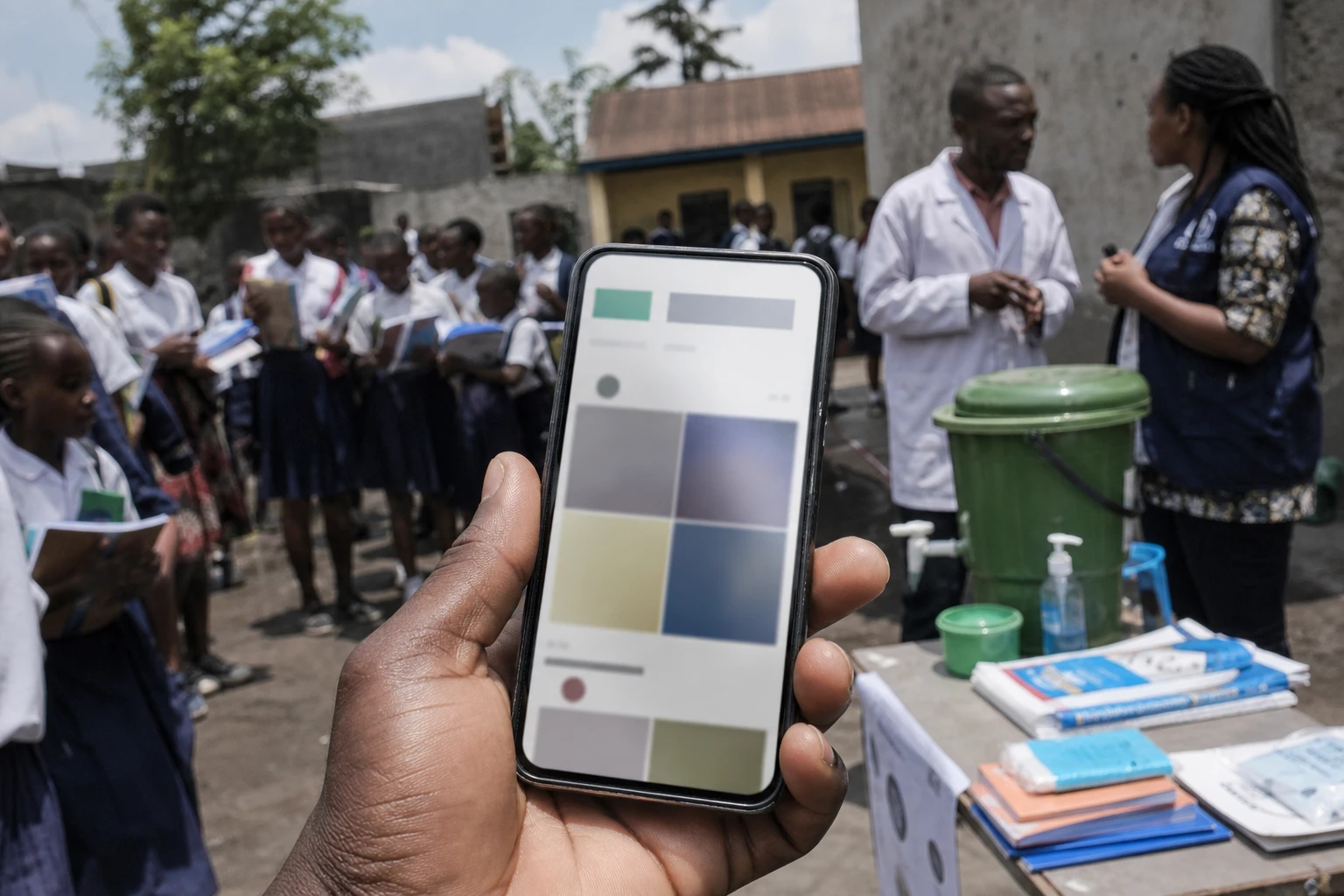
In Goma, a day of singing and dancing offered a respite to children whose daily lives remain marked by displacement, family separations and uncertainty. But behind this moment of collective relief, one question remains: how can a generation exposed to successive crises be protected in the long term ?
On 5 October 2026, the Congolese NGO Assistance Samaritaine aux Vulnérables organised a solidarity event in the capital of North Kivu. Children considered vulnerable received school supplies and kits designed to strengthen Ebola prevention practices. The initiative therefore combined material assistance, health information and psychosocial support.
In Goma, schools are also becoming places of protection
For children without a stable family environment, an exercise book or uniform is more than school equipment. These items can help them return to class and restore a sense of continuity, at a time when conflict and displacement have often disrupted their education.
Espoir Kikuni, head of the organisation, says orphaned children are regularly overlooked in awareness campaigns. The NGO therefore wants to give them the same health information as other residents, to limit misunderstandings and the risk of exclusion.
This approach reflects lessons from previous epidemics in the Democratic Republic of the Congo. Children separated from their parents, bereaved or stigmatised need support that goes beyond medical care alone. UNICEF highlights the importance of psychosocial support and child protection in Ebola responses.
The health context must nevertheless be presented accurately. The Congolese government announced the end of the 16th Ebola outbreak on 1 December 2025. Prevention and preparedness efforts remain necessary, however, particularly in areas where population movements, weak public services and insecurity make access to healthcare more difficult.
Trauma does not end when people leave a conflict zone
In Goma, the NGO’s support also includes a mental health programme in the beneficiary schools. It is aimed at children exposed to violence, hardship, the loss of a loved one or life away from their families.
The signs seen in the classroom are sometimes subtle. Some pupils struggle to concentrate. Others become aggressive, withdraw into themselves or stop attending school. Such behaviour does not automatically constitute a medical diagnosis. It can, however, signal distress that requires the attention of a trained adult.
John Mwamba, headteacher of EPAIMOG school, describes pupils facing severe material deprivation and family instability. For education teams, school therefore cannot be reduced to the transmission of knowledge. It must also provide stability, routine and a sufficiently safe environment.
This role is particularly important in a city that has hosted families displaced by fighting in North Kivu for several years. The proximity of areas affected by clashes weighs on households, but its effects are not the same for everyone. Children separated from their parents, those living with foster families and those who have left school are more exposed to disruption in their lives.
In urban neighbourhoods, schools can sometimes act as a link in identifying distress and referring a child for help. In rural or hard-to-reach areas, families often have access to fewer specialist services. Community support then plays a central role.
A local response to overlapping crises
The work of Assistance Samaritaine aux Vulnérables illustrates the role of local organisations in responding to crises. They know the neighbourhoods, the languages spoken, community leaders and the obstacles that impede access to services. This proximity can build trust, particularly when a disease gives rise to fear or rumours.
It does not, however, replace public responsibilities. Child protection, access to education, psychological care and health surveillance require lasting services. Associations can respond quickly, but they cannot shoulder alone a response that must be sustained over time.
Congolese institutional partners and specialist agencies have already documented the value of psychosocial workers in treatment centres and in supporting families. In July 2026, UNICEF described the role of social workers with children and families affected by Ebola in Ituri. These professionals help reduce fear, maintain family ties and facilitate access to care.
The challenge now is to link these services. A one-off distribution of supplies can meet an urgent need. Regular support, combined with teacher training and referral mechanisms, offers a better chance of preventing school drop-out and isolation.
North Kivu at the heart of regional issues
Goma’s situation cannot be separated from that of North Kivu and the Great Lakes region. Displacement crosses borders. Families move between the Democratic Republic of the Congo, Rwanda and Uganda. Health risks follow the same routes as people, goods and commercial activities.
Regional co-operation is therefore essential. It includes disease surveillance, information-sharing and vaccination where available, as well as protection for children separated from their relatives. It involves the Congolese authorities, East African Community mechanisms and African Union institutions.
For Goma’s residents, the issue is less a choice between security, school or health than access to all three forms of protection at once. A child who returns to class but remains exposed to violence is still vulnerable. A child informed about Ebola but denied someone to listen can continue to live with invisible distress.
The next step will be to assess whether these efforts continue beyond solidarity events. The number of children supported, the regularity of psychological support, teacher training and co-ordination with public services will help measure their real impact. In Goma, rebuilding a generation will also depend on these patient, local and lasting interventions.



