
 Algeria
 Egypt
 Libya
 Morocco
 Sudan
 Tunisia
 Benin
 Burkina Faso
 Cabo Verde
 Côte d'Ivoire
 Ghana
 Guinea
 Guinea-Bissau
 Liberia
 Mali
 Mauritania
 Niger
 Nigeria
 Senegal
 Sierra Leone
 The Gambia
 Togo
 Cameroon
 Central African Republic
 Chad
 Equatorial Guinea
 Gabon
 Republic of the Congo
 São Tomé and Príncipe
 Burundi
 Comoros
 Djibouti
 Eritrea
 Ethiopia
 Kenya
 Madagascar
 Malawi
 Mauritius
 Mozambique
 Rwanda
 Seychelles
 Somalia
 South Sudan
 Tanzania
 Uganda
 Angola
 Botswana
 Eswatini
 Lesotho
 Namibia
 South Africa
 Zambia
 Zimbabwe
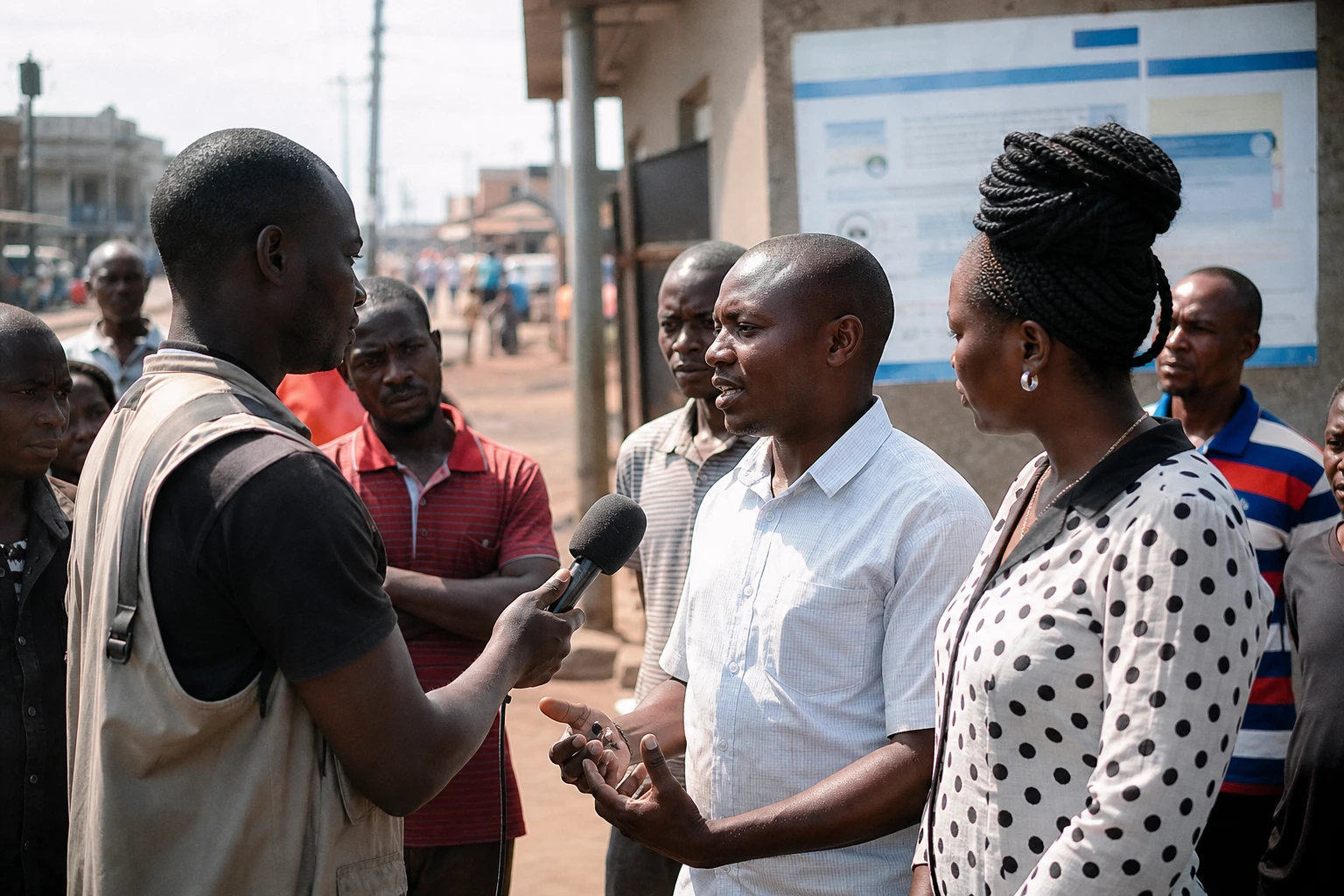
In Bunia, the Ebola response is unfolding as much in treatment centres as on the difficult roads of Ituri. In this eastern province of the Democratic Republic of the Congo, medical teams must screen rapidly, provide prompt treatment and maintain community trust, while insecurity complicates every journey.
The current outbreak is linked to the Bundibugyo Ebola virus. It is not the Zaire strain, which has been responsible for most previous outbreaks in DR Congo. This difference calls for a specific scientific and operational response, without diminishing the experience Congolese staff have gained during earlier crises.
An outbreak that began in Ituri and became national
The first signs appeared in May 2026 in the Mongbwalu and Rwampara health zones in Ituri. The National Institute of Biomedical Research’s reference laboratory in Kinshasa confirmed the presence of the Bundibugyo virus in eight of the 13 samples analysed.
The Congolese health ministry then activated emergency mechanisms. The World Health Organization strengthened its teams in epidemiology, diagnostics, clinical care, logistics and community engagement. This coordination relies on national and provincial structures rather than on an external response separated from the Congolese health system.
As of 7 September 2026, the WHO had recorded 6,757 confirmed cases and 3,267 deaths in the Democratic Republic of the Congo. The crude case fatality rate stood at 48.3%. These figures are reported in the WHO’s latest epidemiological bulletin available before 2 October 2026.
The outbreak affected 61 health zones across six provinces: Ituri, North Kivu, South Kivu, Haut-Uélé, Bas-Uélé and Tshopo. Ituri remained the epicentre, with 5,406 confirmed cases. North Kivu followed with 1,066 cases. The geographical spread shows that the challenge is no longer confined to a few forest communities.
According to the WHO, 51 health zones had still reported cases in the 21 days before 7 September. This trend reflects both continued transmission and improved surveillance. A rise in the figures can therefore indicate more infections, but also the detection of cases that had previously gone unnoticed.
Insecurity weighs on every part of the response
In Ituri and neighbouring provinces, armed violence disrupts access to villages and health facilities. Teams must sometimes contend with impassable roads, population displacement and areas where the state’s presence remains limited.
This situation delays the identification of patients. It also complicates contact tracing, meaning the monitoring of people who have been exposed to a confirmed case. This follow-up enables new patients to be isolated quickly before they pass the virus on to others.
Households play a central role in this chain. When patients receive care late at home, relatives may be exposed before a medical team arrives. Funeral rites are also a sensitive moment. Care and burial procedures must protect families while respecting the dignity of the deceased and local practices.
An Associated Press dispatch from Bunia published on 28 May 2026 described tensions over medical protocols, as well as difficulties in supplying equipment. The arrival of supplies funded by international partners has supported teams, but needs remain tied to continuity of care, staff safety and access to communities.
The health response cannot therefore be measured solely by the number of beds available. It also depends on trust. People who fear stigma or doubt official messages may delay seeking care. Community health workers, local leaders, associations and Congolese staff are essential to explaining symptoms, routes of transmission and protective measures.
Scientific urgency around a little-studied virus
The Bundibugyo virus was first identified in 2007 in western Uganda. That outbreak caused 131 cases and 42 deaths. In DR Congo, an initial episode linked to this species was documented in 2012. The 2026 epidemic is nevertheless the largest Ebola outbreak ever recorded in the country, across all species.
The main scientific challenge is the lack of tools specifically validated against this species. The Ervebo vaccine, licensed against the Zaire Ebola virus, cannot be presented as a solution already proven against Bundibugyo. The WHO now recommends that its use be incorporated into a randomised clinical trial, in order to produce reliable data on its potential benefit.
This distinction matters. It would be excessive to say the vaccine is completely ineffective. It would be equally excessive to claim that it is already proven to protect against Bundibugyo. The priority is to rapidly assess vaccine candidates, possible treatments and care protocols, while maintaining measures that save lives regardless of the variant: early diagnosis, supportive care, staff protection and infection prevention.
The WHO says Bundibugyo remains one of the least-studied orthobolaviruses and that no vaccine or treatment is currently licensed specifically against it. Research must therefore advance during the epidemic, amid considerable ethical, logistical and security constraints.
A regional risk that extends beyond DR Congo’s borders
Uganda’s proximity gives the crisis a regional dimension. In May 2026, Kampala confirmed a case linked to a person who had arrived from DR Congo. The country activated surveillance, screening and the preparation of its teams. The two states must now share information quickly on contacts, population movements and risk areas.
The WHO classified the risk as very high in DR Congo and high for countries sharing a land border with it. The regional and global risk was assessed as low, but that assessment depends on the ability to contain transmission in affected areas.
Numerous informal crossings in border regions make official checks incomplete. Cooperation therefore cannot be limited to airports and customs posts. It must include border communities, health centres, transport networks and local authorities.
For the Democratic Republic of the Congo, the immediate challenge is to reduce mortality without interrupting other essential care. For Central Africa and the Great Lakes region, it is to prevent the virus from spreading further. The next data will need to show whether geographical spread is slowing, whether the fatality rate is falling and whether the vaccine tools under evaluation finally provide protection suited to Bundibugyo.



