Algeria
 Egypt
 Libya
 Morocco
 Sudan
 Tunisia
 Benin
 Burkina Faso
 Cabo Verde
 Côte d'Ivoire
 Ghana
 Guinea-Bissau
 Liberia
 Mali
 Mauritania
 Niger
 Nigeria
 Senegal
 Sierra Leone
 The Gambia
 Togo
 Cameroon
 Central African Republic
 Chad
 DR Congo
 Equatorial Guinea
 Gabon
 Republic of the Congo
 São Tomé and Príncipe
 Burundi
 Comoros
 Djibouti
 Eritrea
 Ethiopia
 Kenya
 Madagascar
 Malawi
 Mauritius
 Mozambique
 Rwanda
 Seychelles
 Somalia
 South Sudan
 Tanzania
 Uganda
 Angola
 Botswana
 Eswatini
 Lesotho
 Namibia
 South Africa
 Zambia
 Zimbabwe
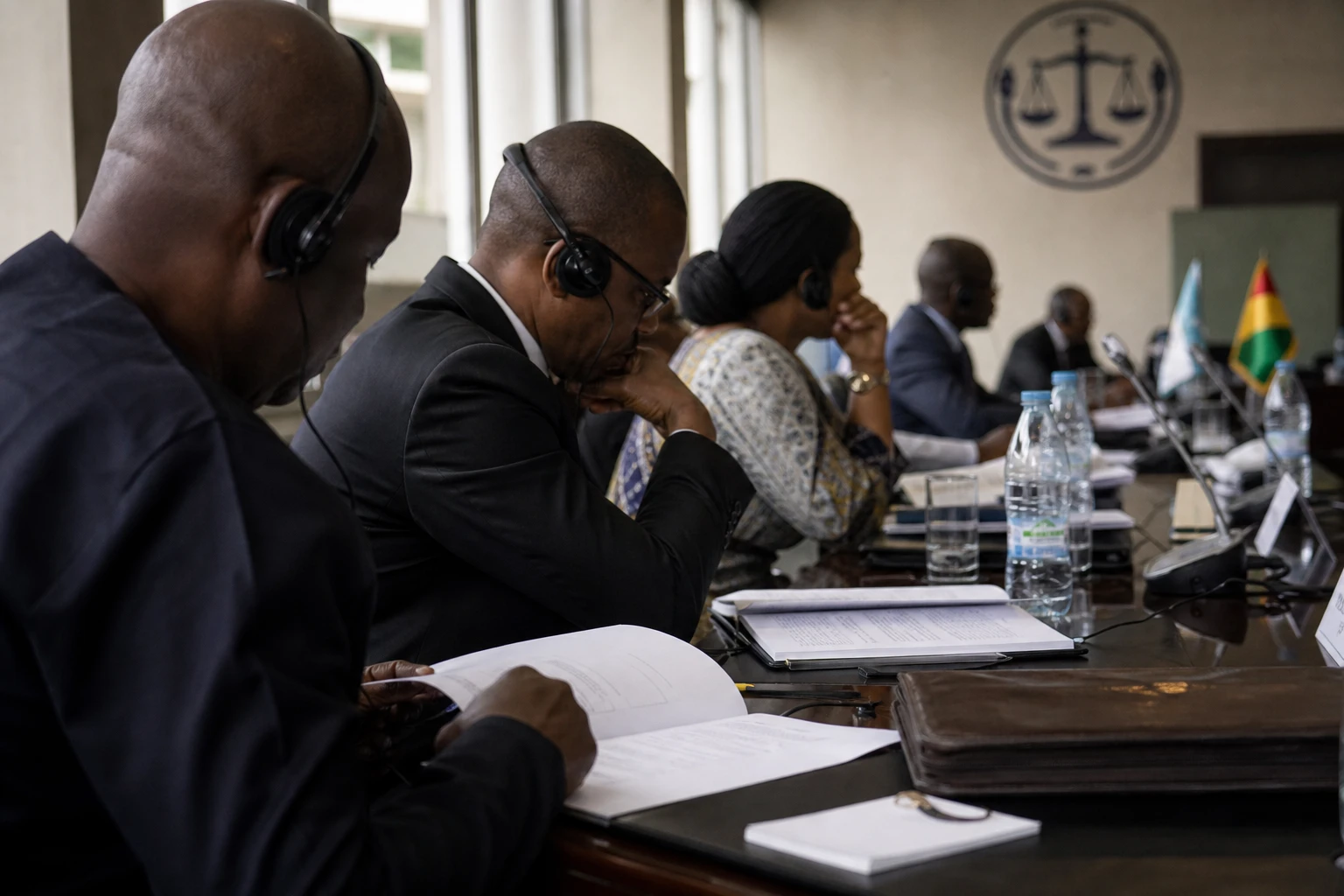
In Conakry, justice for the events of 28 September 2009 is entering a decisive new phase. Seventeen years after the repression of an opposition rally at the stadium in the Guinean capital, victims are still waiting for two concrete guarantees: a timetable for appeal hearings and reparation that goes beyond a financial payment.
A judicial case that remains unfinished
On 28 September 2009, thousands of Guineans gathered at Conakry stadium to protest against the possibility that the head of the then-junta, Moussa Dadis Camara, would run in the presidential election. The crackdown left at least 156 people dead and more than a hundred women suffered sexual violence, according to human rights organisations.
The trial opened in September 2022 marked a major step for Guinean justice. On 31 July 2024, the Dixinn court convicted several senior officials, including Moussa Dadis Camara, of crimes linked to the events at the stadium. The ruling marked the culmination of nearly 15 years of proceedings and waiting for victims.
The case has not, however, been closed. Several of those convicted have appealed, and the proceedings remain pending before the competent court. In an assessment published in 2026, the International Federation for Human Rights noted, among other things, the absence of a clear timetable for some hearings, as well as decisions that had weakened proceedings against several defendants.
On Monday 28 September 2026 in Conakry, the FIDH, the Guinean Organisation for the Defence of Human Rights and the Citizen, and the Association of Victims, Relatives and Friends of 28 September therefore called for appeal hearings to be scheduled “without delay”. Their request also concerns the transparency of the proceedings and regular updates for civil parties.
Compensation has yet to reach all victims
The second part of their demands concerns reparations. A mechanism funded by the national budget provides for compensation for 334 victims recognised in the first-instance judgment. The decision meets an obligation of the state, but leaves many civil parties outside the scheme.
Victims’ organisations say that more than 400 other civil parties remain excluded or are still waiting for clarification of their situation. A group of uncompensated victims, for its part, has cited more than a hundred people who have yet to receive reparation. These figures do not necessarily cover the same legal categories, reinforcing the need for a precise, up-to-date public register.
For Asmaou Diallo, president of AVIPA, the efforts made by the authorities must continue. She points out, however, that reparation is not simply a matter of handing over a cheque. It also includes access to healthcare, psychological support, assistance for people with disabilities, recognition of sexual violence and the restoration of survivors’ dignity.
This distinction is essential. Individual compensation can address material harm. It is not enough to repair the medical, social and family consequences of violence committed 17 years ago. Some victims have lost their jobs, live with physical after-effects or still bear the burden of silence among those around them.
Guinean justice confronts the question of impunity
The 28 September trial showed that a national court could try acts classified as crimes against humanity, despite the exceptional length of the proceedings. This progress remains fragile, however. The appeal must make it possible to test the strength of the convictions, uphold the rights of the defence and ensure that victims’ claims receive a full hearing.
The issue became more complicated after Moussa Dadis Camara, the former head of the junta, was released under a clemency measure announced by the Guinean authorities in 2025. Victims’ associations challenged the decision, saying it came while the judicial proceedings had not yet been finally concluded. The debate reignited concerns about the separation of executive power and the judiciary.
The organisations gathered in Conakry also raised the alarm over the broader human rights situation in Guinea. FIDH president Alexis Deswaef called for independent investigations into reports of mass graves and enforced disappearances. These claims must be established through judicial investigations, with victims identified and families given access to the truth.
This demand comes amid a tense political climate. Since the overthrow of Alpha Condé in September 2021, Guinea has been governed by a military transitional administration. Debate over the election timetable, restrictions on civic space and tensions between the authorities and human rights organisations remain at the heart of public life.
An issue that extends beyond Guinea’s borders
The case also resonates across West Africa. Guinea is a member of the Economic Community of West African States, ECOWAS, an organisation tasked in particular with promoting regional cooperation and democratic principles. Alongside Mali, Burkina Faso and Niger, it is part of a period of acute tensions between transitional regimes and the regional organisation.
In this context, the conduct of the 28 September trial is an institutional test. Resuming proceedings with a clear timetable would strengthen the credibility of Guinean justice. Further delays, incomplete reparations or decisions perceived as political could, by contrast, deepen victims’ distrust and weaken the message that impunity will be tackled.
The next point to watch will therefore be the effective scheduling of appeal hearings. The possible expansion of the compensation scheme, medical care for survivors and clarification of investigations into reported disappearances will also need to be monitored. For families, these steps are not merely procedural: they determine the place given to their story in Guinea’s national memory.