Algeria
 Egypt
 Libya
 Morocco
 Sudan
 Tunisia
 Benin
 Burkina Faso
 Cabo Verde
 Côte d'Ivoire
 Ghana
 Guinea
 Guinea-Bissau
 Liberia
 Mali
 Mauritania
 Niger
 Nigeria
 Sierra Leone
 The Gambia
 Togo
 Cameroon
 Central African Republic
 Chad
 DR Congo
 Equatorial Guinea
 Gabon
 Republic of the Congo
 São Tomé and Príncipe
 Burundi
 Comoros
 Djibouti
 Eritrea
 Ethiopia
 Kenya
 Madagascar
 Malawi
 Mauritius
 Mozambique
 Rwanda
 Seychelles
 Somalia
 South Sudan
 Tanzania
 Uganda
 Angola
 Botswana
 Eswatini
 Lesotho
 Namibia
 South Africa
 Zambia
 Zimbabwe
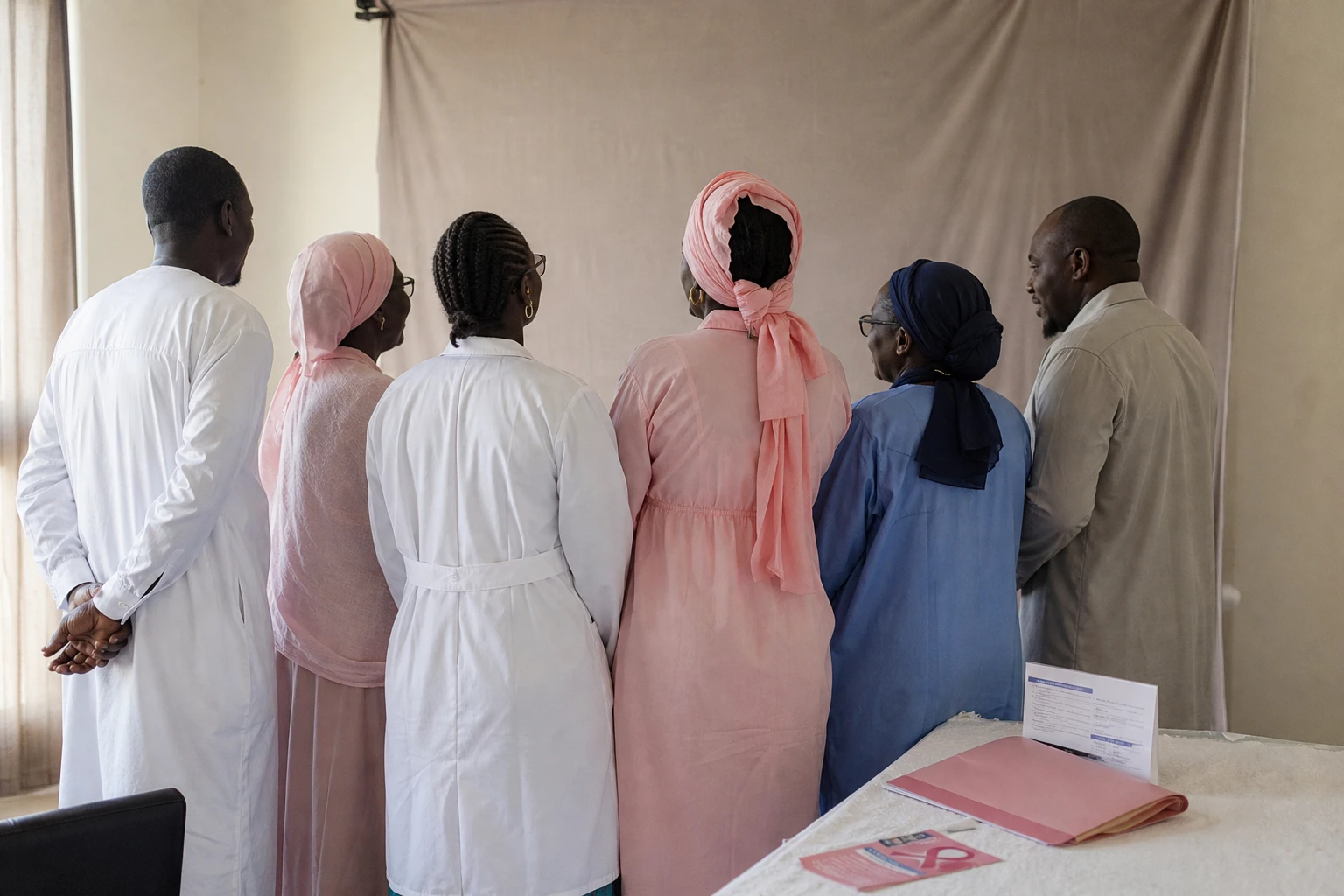
In Dakar, the fight against cancer went beyond a message of awareness. On Sunday 27 September 2026, a walk organised by the Senegalese League Against Cancer (LISCA) brought together thousands of participants around a practical goal: encouraging screening and reducing delays in treatment.
The event comes just days before the official start of Pink October, a campaign devoted mainly to breast cancer prevention and screening. In Senegal, the period also focuses on cervical cancer, a disease linked in most cases to persistent infection with human papillomavirus.
A campaign launched in Dakar, but intended for all of Senegal
The event took place at Place de la Nation in Dakar on the morning of 27 September. LISCA had presented the walk as the official launch of the 2026 edition of Pink October. The organisation is encouraging women in particular to take advantage of consultations and screening operations announced from 1 October.
According to the Senegalese Press Agency, LISCA president Fatma Guenoune said that women whose screening revealed an abnormality could receive support from the association. This step is essential: a screening test is not a cancer diagnosis. It identifies a situation that needs to be checked through further tests.
A report published by the local press on 28 September put attendance at the walk at more than 3,400. This figure should be attributed to that source, as the first reports available do not all provide the same level of detail on participation. The key point lies elsewhere: the campaign is seeking to turn a one-off mobilisation into consultations that are followed through.
LISCA says its Pink October campaigns usually screen more than 5,000 women in different parts of the country. The association also runs information initiatives, supports patients and helps equip health facilities.
Screening remains the main weak point
LISCA now describes breast cancer as the most common cancer among women in Senegal. Figures released at the campaign launch put the number of new cases at about 2,220 a year and deaths at more than 1,300. These figures, reported by several Senegalese media outlets, should be treated with caution, as cancer registries do not always cover the entire country with the same degree of accuracy.
Late diagnosis remains one of the biggest challenges. When a tumour is detected late, treatment is often more complex, longer and more expensive. The consequences directly affect families, including through medical expenses, travel to Dakar and lost income when the patient or a relative has to stop working.
The problem is therefore not simply whether specialist centres exist in the capital. A woman living in a remote region may have to travel hundreds of kilometres to access a mammogram, a biopsy or appropriate treatment. This concentration of care creates a divide between women in Dakar and those in rural areas or smaller cities.
LISCA regularly advocates decentralising care. This requires strengthening the skills of local staff, ensuring equipment is available and guaranteeing an effective referral system between health posts, regional hospitals and specialist facilities.
Cervical cancer requires a different response
Cervical cancer presents a particular challenge. It can be prevented through vaccination against human papillomavirus and detected before it progresses by screening for precancerous lesions. Treating these lesions can prevent invasive cancer from developing.
The country profile published by the World Health Organization states that in 2019, only 8% of Senegalese women aged 30 to 49 had been screened in the previous five years. This figure shows the scale of the work required, particularly in areas where preventive care remains inconsistent.
Senegal’s health ministry has already supported free screening operations in several areas. A campaign in Khombole, for example, targeted 470 women and included the donation of a cryotherapy device. This technique can be used to treat some precancerous lesions before they worsen.
Vaccination against papillomavirus is another key measure. It forms part of a long-term prevention policy. Its effectiveness, however, depends on informing families, building trust in health services and reaching adolescent girls in every region.
Beyond Pink October, the cost of care
An awareness campaign can produce lasting results only if people screened can quickly access the next steps in their medical care. Funding for tests, surgery, radiotherapy, chemotherapy and supportive care therefore remains central.
Senegalese authorities have already announced that some treatments for breast and cervical cancer will be free in public facilities. But free treatment in theory is not always enough. Patients also need to be able to afford transport, tests unavailable locally, additional medicines and the costs of accompanying them.
For women working in the informal economy, a day spent at a health centre can mean an immediate loss of income. In rural households, the cost of travelling to Dakar or a regional capital can delay a consultation. These realities must be taken into account in any cancer-control policy.
A national and West African challenge
Senegal is a member of the Economic Community of West African States (ECOWAS), which facilitates co-operation among 15 countries in the region. The challenges of screening, treatment costs and the availability of specialists therefore extend beyond Senegal’s borders.
Patient referrals, professional training and equipment procurement could benefit from greater co-ordination at West African level. National campaigns remain essential, but they would benefit from common standards and the sharing of experience between countries.
After the Dakar walk, the key measure will be the number of women actually screened, referred and supported. The success of Pink October 2026 will not be measured solely by the visible mobilisation in the capital. It will also be seen in regional health centres, in continuity of care and in Senegal’s ability to reduce disparities between Dakar and the rest of the country.
Read the Senegalese Press Agency’s report on the launch of Pink October.